There’s a ton of really Un-fascinating stuff happening in the world right now. (Yes, with a capital “U”.) So I thought, let’s talk about one thing that’s actually fascinating (and maybe useful). Here are two that I chose from to discuss today.
1. The idea of “ego” has become the go-to villain in the self-help genera of life. But spoiler alert: it’s not the bad guy.
2. About 12% of all children in the world (yes, all children) have been sexually exploited in some way. Brutal fact.
Since the second is horrifying, soul-crushing, and entirely worthy of major spotlight, let’s put our focus on the first for now.
So, about ego — no, it’s not the devil hiding behind your sofa.
What we’ll call little e (yes, I’m being cute): this little guy sits at the center of the circle of “you.”
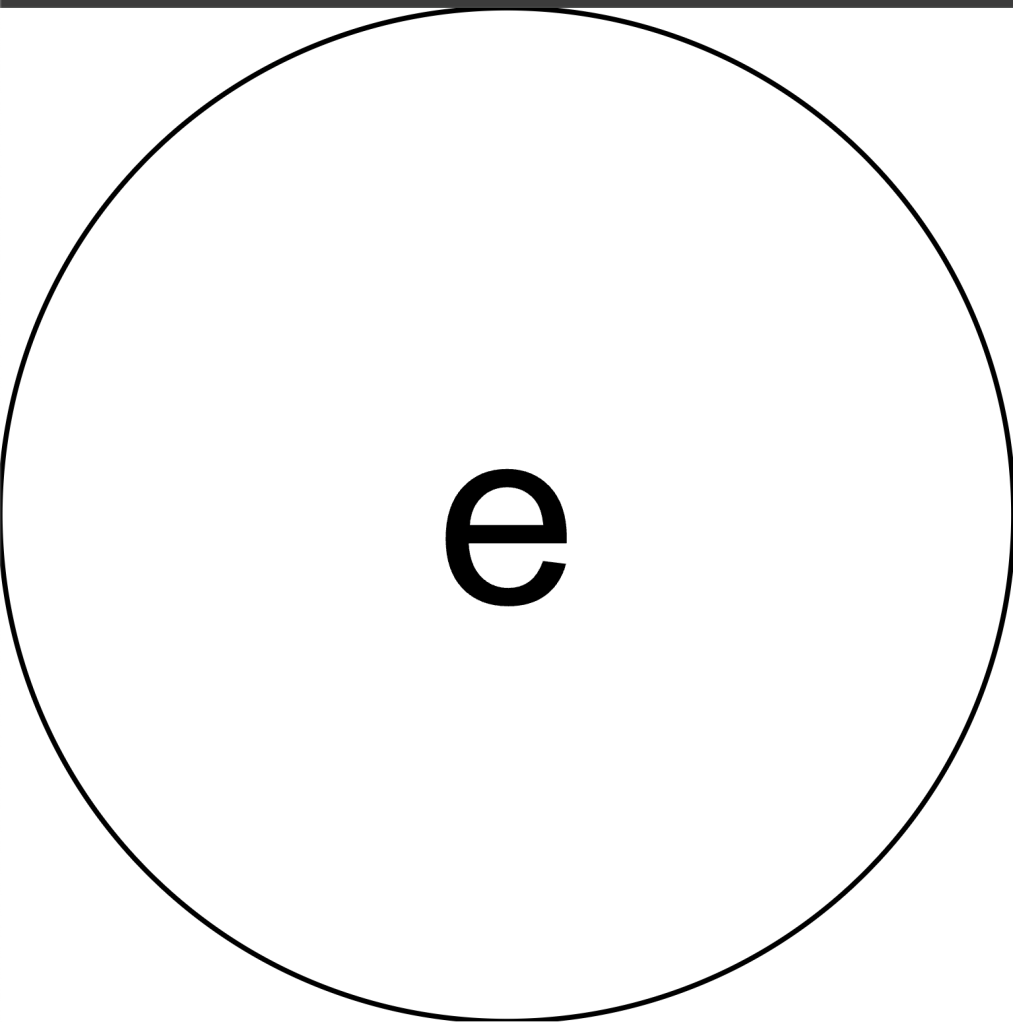
Picture the inner you — the one that knows you’re skimming the surface, the one that whispers “I’m faking it” or “I don’t quite measure up”. That’s little e. That’s your self-barometer, your anchor, your sense-of-self storehouse.
When your little e is solid and established, life runs smoother. You hear a story, you filter it through yourself, you respond (or not) from that place. But when little e is shaky, missing, or more “void” than “voice”? Enter chaos as the ultimate distraction.
What it looks like when little e is missing:
Imagine standing at the edge of a volcano. Or overlooking a cliff. Terrifying.

Now imagine that emptiness — the “center” of your existence — is like that: a gaping, empty void. Scary enough, people would rather live outside themselves than face that emptiness. If you don’t have a strong internal “you” (little e, your ego in the healthy sense), you’ll end up living in relation to the outside world instead of from the inside.
And what happens? Drama. Pure, nonsensical chaos. Because your little e can’t ground you, so you bounce around in the drama. And the “drama” here has no purpose other than to exist for it’s own sake.
That’s where the classic drama show starts: Karpman Drama Triangle
Yep — the Victim-Rescuer-Persecutor triangle.

photo credit:commons.wikimedia Karpman Triangle.png – Wikimedia Commons
Here’s the quick version:
- Victim says: “Poor me, woe is my life.”
- Rescuer says: “Let me fix you, you poor thing.”
- Persecutor says: “It’s your fault. I told you so.”
The sick twist: people flip between these roles. Victim becomes Persecutor. Rescuer becomes Victim. It’s all a game of unconscious pay-offs. Meanwhile, nothing meaningful changes.
(And here’s an advanced idea for those who get stuck in problem-solving: someone who places you in their drama will report a rational problem, “you didn’t do this.” A problem solver will try to solve or explain, but to no avail. Why? Well, because that would satisfy the drama and force someone back to their empty, unsettled self aka little e.)
Why we keep doing this
Because when your little e is weak or missing, you can’t face the inside. So you stay in the outside world: the social drama, the stories, the “who’s out to get me,” the hero-rescuer missions. Because those are easier than the void.
And yes: if you’re always saving someone, or always being saved, or always blaming/being blamed — guess what? You’re probably knee-deep in the drama triangle, either as participant or audience.
So what to do? (Besides rolling your eyes at people in drama)
- Notice your pattern. Are you always the Victim? The Rescuer? The Persecutor?
- Begin to build/strengthen little e: your internal sense of self. Hobbies, interests, commitments that are yours. Not just roles you play for others.
- When someone else is in the drama loop: don’t become the hero-rescuer by default. Ask: What do you want? What can you do?
- If you’re exhausted, unhappy, distant — and drama keeps showing up like an unwanted guest: maybe do the work. With someone (see: “good therapist”).
From where I stand, that was a fascinating thing for the week.
 From Where I Stand
Leave a comment