If you’re 20, maybe you have 60 years left.
If you’re 40, maybe 40 years.
If you’re 60, maybe 20.
You can do the math.
Maybe you’ll live to 85. Maybe 90. Maybe 100. But the point is the same: your time is finite.
Every day is a series of choices based on what you believe about yourself, the world around you, and what you think will be the best thing to do with that day.
Even if you don’t spend much time thinking about your life and mostly run on autopilot, your autopilot is still headed toward whatever matters most to you.
Now imagine if your beliefs about yourself, the world, or what makes for a good life were wrong.
What would you tell your younger self to keep doing? What would you tell them to let go of? Would you give them a hug or a lecture?
Now flip the question.
What would the version of you ten years from now want you to focus on today?
Recently, I injured myself pretty badly. I ruptured my quadriceps tendon. Surgery was quick. Recovery has not been.
For a while, I lost so much of what I normally take for granted. Small things like walking without thinking about it, driving, going to the gym, going outside, even wandering around the house looking for little things to do. It all disappeared almost overnight.
I know it’ll come back. That’s not the point. (Though I am open for financial condolences if you’re wondering).
But during this brief season, as much as I want to “get back to normal,” I’ve had to ask myself another question:
Do I actually want my old normal?
Or do I want something that’s more aligned with the life I really want?
Life is built on sacrifices and habits.
The unhealthy habits we often call vices. The healthy ones we try to protect.
Every day I’m sacrificing time, energy, attention, and resources for something. The question is: for what?
What do I get in return?
Do I actually feel better after watching one more reel?
Usually not.
Do I feel closer to the person I want to become?
Well…that depends.
If my goal is to be entertained or distracted for another five minutes, then sure, I accomplished that.
But if my goal is something bigger, maybe not.
Maybe the wrong question is, “Does this make me feel good?”
A lot of things feel good. That doesn’t automatically make them good.
Sometimes what feels the best today quietly steals tomorrow. Things like our sleep, our focus, our motivation, or our relationships.
This isn’t really about social media. It just happens to be an easy example.
The better questions are:
What do you want the most?
Why do you want it?
What does that say about the person you’re becoming?
And do you like that person?
If my highest goal is simply to feel good, I’ll probably leave a trail of people paying the price somewhere along the way.
If my goal is validation, looking successful, being admired, feeling smart, attractive, or important, it’s amazing what I can justify saying or doing to get there.
Feelings don’t have a moral compass.
They’re powerful, but they’re also impulsive. They don’t naturally stop to count the cost.
But is it really that bad to live for pleasure? For validation? For being liked? For feeling like you’re enough?
Especially if you can’t see yourself hurting anyone?
Here’s the problem.
Just because you can’t see the consequences doesn’t mean there aren’t any.
Most people don’t wake up wanting to become the person who hurts others.
We all want to believe we’re the good guy.
Even when we make poor choices, we usually have what feels like a good reason. Nobody says, “I knew it was a bad reason, but I did it anyway.”
So I’ll ask it again.
What do you want from the years you have left?
A couple of rules for the thought experiment:
You can’t change your past, so don’t spend your time wishing you had.
And don’t answer with “twenty billion dollars” without asking yourself why.
What would it actually change?
What would it give you that you don’t already have?
What are you really chasing?
If you’ve been investing your life into something that isn’t paying off, maybe it’s worth considering a different direction.
Maybe you don’t even have to change your life first.
Maybe you just need to change what you believe deserves your life.
Therapist note: I’m continually surprised by how many people pour enormous amounts of effort into parts of their lives that, when asked, they can’t explain. They don’t know why they’re doing it, or how it’s supposed to move them toward the life they actually want. People get into feuds, and the honest ones, when asked if they really care, will say “no, not really.” If we all met the person we could be by aligning ourselves with the most valuable thing, I think it’d be a lot easier to stop the vices and enter into the disciplines of that ideal version of ourselves.
Tag: personal-growth
-
Something useful: What to do with your time.
-
Most Fascinating Thing This Week (trust me, it’s helpful too)
There’s a ton of really Un-fascinating stuff happening in the world right now. (Yes, with a capital “U”.) So I thought, let’s talk about one thing that’s actually fascinating (and maybe useful). Here are two that I chose from to discuss today.
1. The idea of “ego” has become the go-to villain in the self-help genera of life. But spoiler alert: it’s not the bad guy.
2. About 12% of all children in the world (yes, all children) have been sexually exploited in some way. Brutal fact.Since the second is horrifying, soul-crushing, and entirely worthy of major spotlight, let’s put our focus on the first for now.
So, about ego — no, it’s not the devil hiding behind your sofa.
What we’ll call little e (yes, I’m being cute): this little guy sits at the center of the circle of “you.”
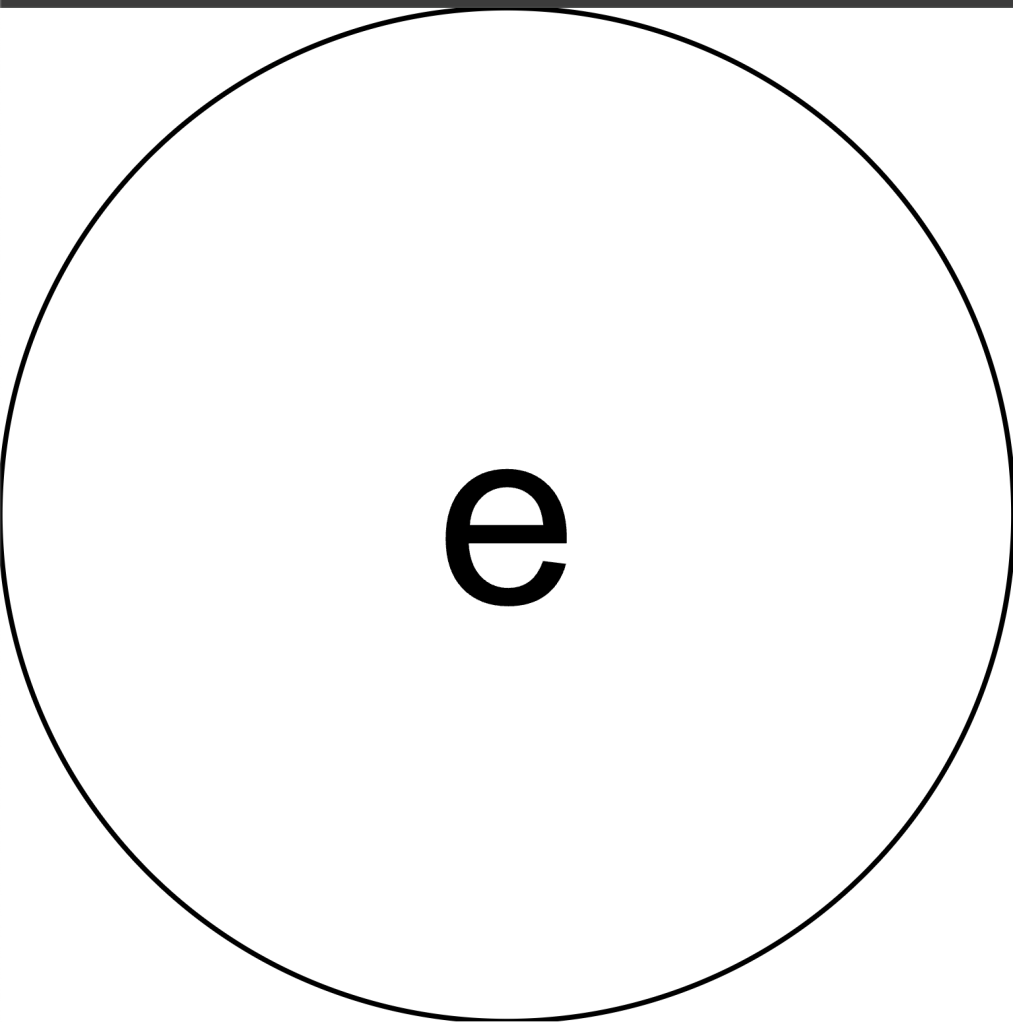
Picture the inner you — the one that knows you’re skimming the surface, the one that whispers “I’m faking it” or “I don’t quite measure up”. That’s little e. That’s your self-barometer, your anchor, your sense-of-self storehouse.
When your little e is solid and established, life runs smoother. You hear a story, you filter it through yourself, you respond (or not) from that place. But when little e is shaky, missing, or more “void” than “voice”? Enter chaos as the ultimate distraction.
What it looks like when little e is missing:
Imagine standing at the edge of a volcano. Or overlooking a cliff. Terrifying.

Now imagine that emptiness — the “center” of your existence — is like that: a gaping, empty void. Scary enough, people would rather live outside themselves than face that emptiness. If you don’t have a strong internal “you” (little e, your ego in the healthy sense), you’ll end up living in relation to the outside world instead of from the inside.
And what happens? Drama. Pure, nonsensical chaos. Because your little e can’t ground you, so you bounce around in the drama. And the “drama” here has no purpose other than to exist for it’s own sake.
That’s where the classic drama show starts: Karpman Drama Triangle
Yep — the Victim-Rescuer-Persecutor triangle.

photo credit:
commons.wikimedia Karpman Triangle.png – Wikimedia Commons
Here’s the quick version:
- Victim says: “Poor me, woe is my life.”
- Rescuer says: “Let me fix you, you poor thing.”
- Persecutor says: “It’s your fault. I told you so.”
The sick twist: people flip between these roles. Victim becomes Persecutor. Rescuer becomes Victim. It’s all a game of unconscious pay-offs. Meanwhile, nothing meaningful changes.
(And here’s an advanced idea for those who get stuck in problem-solving: someone who places you in their drama will report a rational problem, “you didn’t do this.” A problem solver will try to solve or explain, but to no avail. Why? Well, because that would satisfy the drama and force someone back to their empty, unsettled self aka little e.)
Why we keep doing this
Because when your little e is weak or missing, you can’t face the inside. So you stay in the outside world: the social drama, the stories, the “who’s out to get me,” the hero-rescuer missions. Because those are easier than the void.
And yes: if you’re always saving someone, or always being saved, or always blaming/being blamed — guess what? You’re probably knee-deep in the drama triangle, either as participant or audience.
So what to do? (Besides rolling your eyes at people in drama)
- Notice your pattern. Are you always the Victim? The Rescuer? The Persecutor?
- Begin to build/strengthen little e: your internal sense of self. Hobbies, interests, commitments that are yours. Not just roles you play for others.
- When someone else is in the drama loop: don’t become the hero-rescuer by default. Ask: What do you want? What can you do?
- If you’re exhausted, unhappy, distant — and drama keeps showing up like an unwanted guest: maybe do the work. With someone (see: “good therapist”).
From where I stand, that was a fascinating thing for the week.
-
Is Fear Making You a Jerk?
Spend the Ten Bucks, or Spiral Into Existential Dread?
If someone handed you $10 right now, would you A) gleefully march into a coffee shop and upgrade your sad drip sort of life to a life-affirming double shot, sugar free caramel, heavy cream breve? Or B) stand in the middle of the sidewalk, paralyzed, wondering which of your potential dreams you’ll crush by spending that Hamilton? (Spoiler: It’s just ten bucks. Chill out.)
This, oddly enough, mirrors a spiritual moment I had during a self-imposed “growth spurt” —the kind where you decide you’re going to get deep, and then immediately regret how deep you went. I can get obsessed sometimes.
Enter Foxe’s Book of Martyrs. If you’re ever in the mood for a light read that’s actually the opposite of that — like, “ouch-my-soul” level dark — it’s perfect. It’s a collection of stories about early Christians who suffered unimaginable horrors. I used to say unimaginable, but now that I’ve read enough of it to crush any resolve for that week, I wish I couldn’t imagine them anymore. Thanks, John Foxe.
Much like Christ — who was crucified by the Romans with PhDs in Torture Design — these stories are powerful, brutal, and historically necessary to be aware of. But here’s the thing: constantly marinating in the worst of humanity doesn’t actually help us become better humans. I mean, you don’t get joy by doomscrolling martyrdom, right? Or by seeing others great new thing and telling yourself you’re a loser because you don’t have the same.
So here’s the twist: whether you’re a CEO, a stay-at-home parent, a single introvert with a dog named Dan, or someone who still doesn’t know how taxes work — life constantly hands us two roads. One leads forward. The other looks like it’s going forward… but turns out to be a really confusing cul-de-sac with a sign that says “Growth Stunted Here.”
And while we love to say things like, “I just feel stuck,” the truth is, we’re all driving our own little emotional Teslas charged by what we truly desire in life: our mood, our mindset, the narrative we cling to like the cliffhanger of our favorite new show. Nobody’s totally out of control — not even your Aunt Jenny during election season.
In reality: humans were made in God’s image, with the ability to choose. But instead of staying plugged in to God’s mind-blowing wisdom and presence, we veered off, choosing our own “brilliant” ideas. And surprise! That disconnect kicked off a multi-generational game of Operation: Fear edition. (Don’t step out of bounds, you’ll get buzzed).
It’s no wonder we fixate on what’s wrong. The world practically dares us to. But being stuck in that pattern doesn’t mean we’re depressed. Sometimes, we’re just being… well, let’s say “chronically cranky.” Or as the street psychologists say: “negative assholes.” It’s a common diagnosis. No copay required. (Send $35 if you’d like though.)
So the real question is: what are you focusing on today?
Is it what you fear? What you lack? What you wish were different?
Or do you believe — even just a little — that you have the power to shift your focus to the good? To be present, even if the present moment involves spilled coffee, a toddler tantrum, or a boss who thinks “urgent” is a personality trait?
Because choosing to be present — to stop judging, stop spiraling, and just be — that’s the sweet spot. That’s where gratitude lives. That’s where your healthiest self starts waking up and saying, “Hey, this might be okay after all.” After all, life’s a journey, right?
So, next time you have $10 — or a hard decision, or a tough day — ask yourself: am I spending it on growth, joy, presence… or renting space in Downsville?
Choose wisely. And maybe still get the best latte of your life. You’ve earned it.

