If you’re 20, maybe you have 60 years left.
If you’re 40, maybe 40 years.
If you’re 60, maybe 20.
You can do the math.
Maybe you’ll live to 85. Maybe 90. Maybe 100. But the point is the same: your time is finite.
Every day is a series of choices based on what you believe about yourself, the world around you, and what you think will be the best thing to do with that day.
Even if you don’t spend much time thinking about your life and mostly run on autopilot, your autopilot is still headed toward whatever matters most to you.
Now imagine if your beliefs about yourself, the world, or what makes for a good life were wrong.
What would you tell your younger self to keep doing? What would you tell them to let go of? Would you give them a hug or a lecture?
Now flip the question.
What would the version of you ten years from now want you to focus on today?
Recently, I injured myself pretty badly. I ruptured my quadriceps tendon. Surgery was quick. Recovery has not been.
For a while, I lost so much of what I normally take for granted. Small things like walking without thinking about it, driving, going to the gym, going outside, even wandering around the house looking for little things to do. It all disappeared almost overnight.
I know it’ll come back. That’s not the point. (Though I am open for financial condolences if you’re wondering).
But during this brief season, as much as I want to “get back to normal,” I’ve had to ask myself another question:
Do I actually want my old normal?
Or do I want something that’s more aligned with the life I really want?
Life is built on sacrifices and habits.
The unhealthy habits we often call vices. The healthy ones we try to protect.
Every day I’m sacrificing time, energy, attention, and resources for something. The question is: for what?
What do I get in return?
Do I actually feel better after watching one more reel?
Usually not.
Do I feel closer to the person I want to become?
Well…that depends.
If my goal is to be entertained or distracted for another five minutes, then sure, I accomplished that.
But if my goal is something bigger, maybe not.
Maybe the wrong question is, “Does this make me feel good?”
A lot of things feel good. That doesn’t automatically make them good.
Sometimes what feels the best today quietly steals tomorrow. Things like our sleep, our focus, our motivation, or our relationships.
This isn’t really about social media. It just happens to be an easy example.
The better questions are:
What do you want the most?
Why do you want it?
What does that say about the person you’re becoming?
And do you like that person?
If my highest goal is simply to feel good, I’ll probably leave a trail of people paying the price somewhere along the way.
If my goal is validation, looking successful, being admired, feeling smart, attractive, or important, it’s amazing what I can justify saying or doing to get there.
Feelings don’t have a moral compass.
They’re powerful, but they’re also impulsive. They don’t naturally stop to count the cost.
But is it really that bad to live for pleasure? For validation? For being liked? For feeling like you’re enough?
Especially if you can’t see yourself hurting anyone?
Here’s the problem.
Just because you can’t see the consequences doesn’t mean there aren’t any.
Most people don’t wake up wanting to become the person who hurts others.
We all want to believe we’re the good guy.
Even when we make poor choices, we usually have what feels like a good reason. Nobody says, “I knew it was a bad reason, but I did it anyway.”
So I’ll ask it again.
What do you want from the years you have left?
A couple of rules for the thought experiment:
You can’t change your past, so don’t spend your time wishing you had.
And don’t answer with “twenty billion dollars” without asking yourself why.
What would it actually change?
What would it give you that you don’t already have?
What are you really chasing?
If you’ve been investing your life into something that isn’t paying off, maybe it’s worth considering a different direction.
Maybe you don’t even have to change your life first.
Maybe you just need to change what you believe deserves your life.
Therapist note: I’m continually surprised by how many people pour enormous amounts of effort into parts of their lives that, when asked, they can’t explain. They don’t know why they’re doing it, or how it’s supposed to move them toward the life they actually want. People get into feuds, and the honest ones, when asked if they really care, will say “no, not really.” If we all met the person we could be by aligning ourselves with the most valuable thing, I think it’d be a lot easier to stop the vices and enter into the disciplines of that ideal version of ourselves.
Category: Uncategorized
-
Something useful: What to do with your time.
-
What Ice Cream Teaches Us About Jesus.
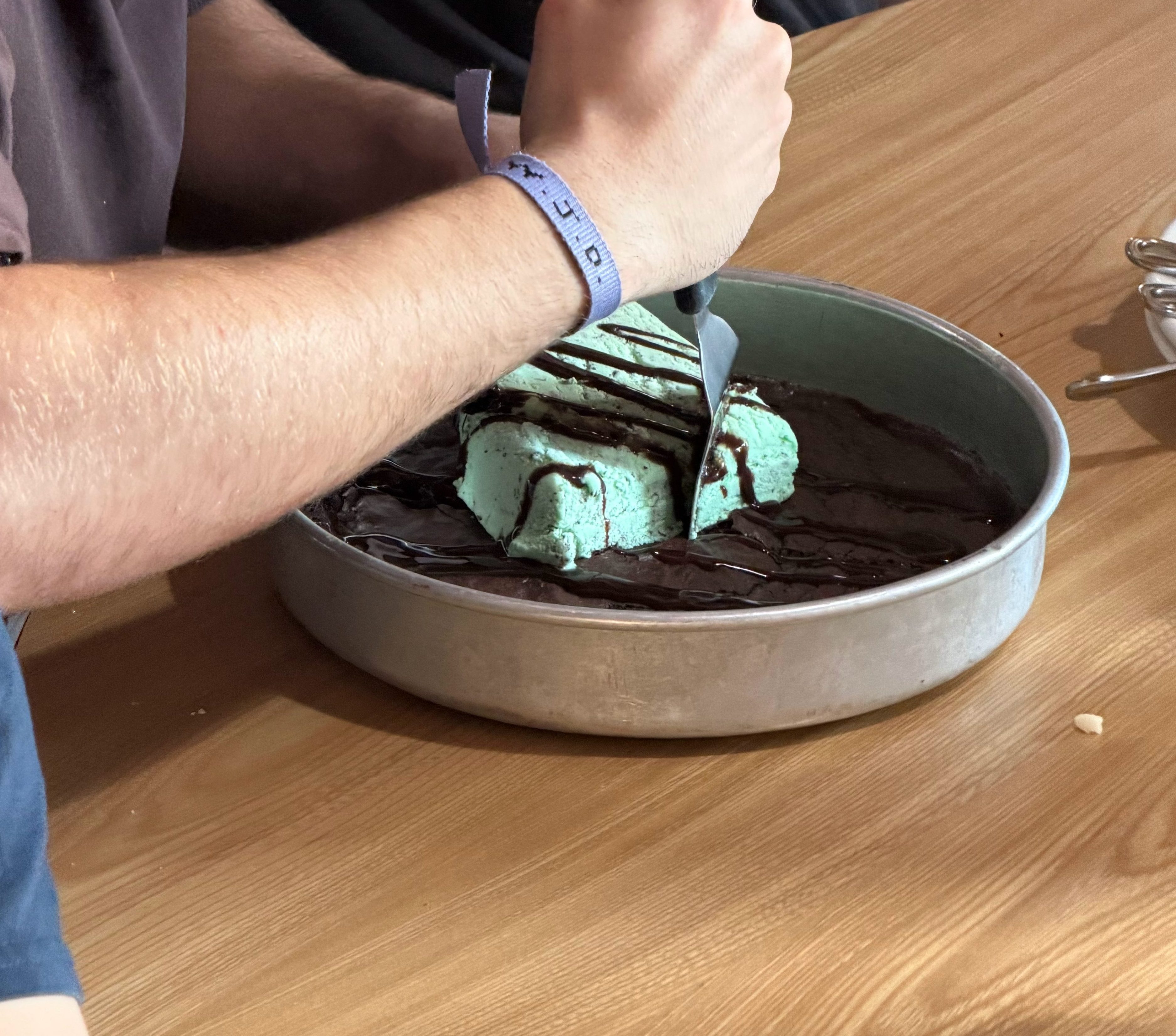
Imagine this: 400 eager students relishing the final morsels of a feast recently delivered hot and fresh from a state-of-the-art kitchen, equipped to satisfy the hunger of an army. Exuberant volunteers parade around with platter after platter of decadent, gourmet offerings. Every imaginable delight—pizza, wings, pasta, sandwiches, and an array of sides—beckons with tantalizing allure. Laughter and joy radiate from every face, as a lively dance of servers weaves through the leaders and wandering students, creating a breathtaking spectacle that is both chaotic and beautifully orchestrated.

Once the last bite is taken. A small quiet fills the room. An announcement booms over the speakers.
“Are you ready?! Let’s bring out the dessert!”
The rumble ignites with a gentle tremor, a few pounds colliding on the table, swiftly escalating into a symphony of clanging silverware, water glasses chattering, and beads of water gracefully dancing to the infectious rhythm of fervent fists and soaring vocals. Servers, like culinary warriors, grasp hot pans with oven mitts as they ceremoniously reveal heavy trays adorned with an ice-cold topping, elevating the visual ecstasy to breathtaking new heights. A magnificent slab of ice cream triumphantly rests atop a decadent cookie/cake/whatever it is, rendering your mom’s beloved homemade cookies pale in comparison to this mouthwatering spectacle.

Abundance feels great, right? It makes us feel loved and cared for. When everyone, no matter their age, can have as much as they want, it brings a sense of peace and comfort.
It’s not wrong to feel good, to have leftovers, to enjoy a full stomach.
Abundance is what we were always meant to feel. We are not made for scarcity. Even though our bodies survive well when in desperation, it shouldn’t have to…it’s stressful.
Ice cream at a summer camp designed to teach students about Jesus may seem like a small detail, but it powerfully encapsulates the essence of God’s Kingdom, a place of infinite abundance and perfect provision. Ice cream served by the slab embodies a celebration of life, requiring ample freezers, dedicated staff to lovingly cut and serve it onto 40-50 plates of delectable cookies, and the finest ingredients to craft this delightful treat. It creates a sanctuary where joy flourishes! Indeed, one could passionately assert that where there is ice cream, there is safety, there is love, and there is vibrant community, uniting us all in the sweetest of moments.
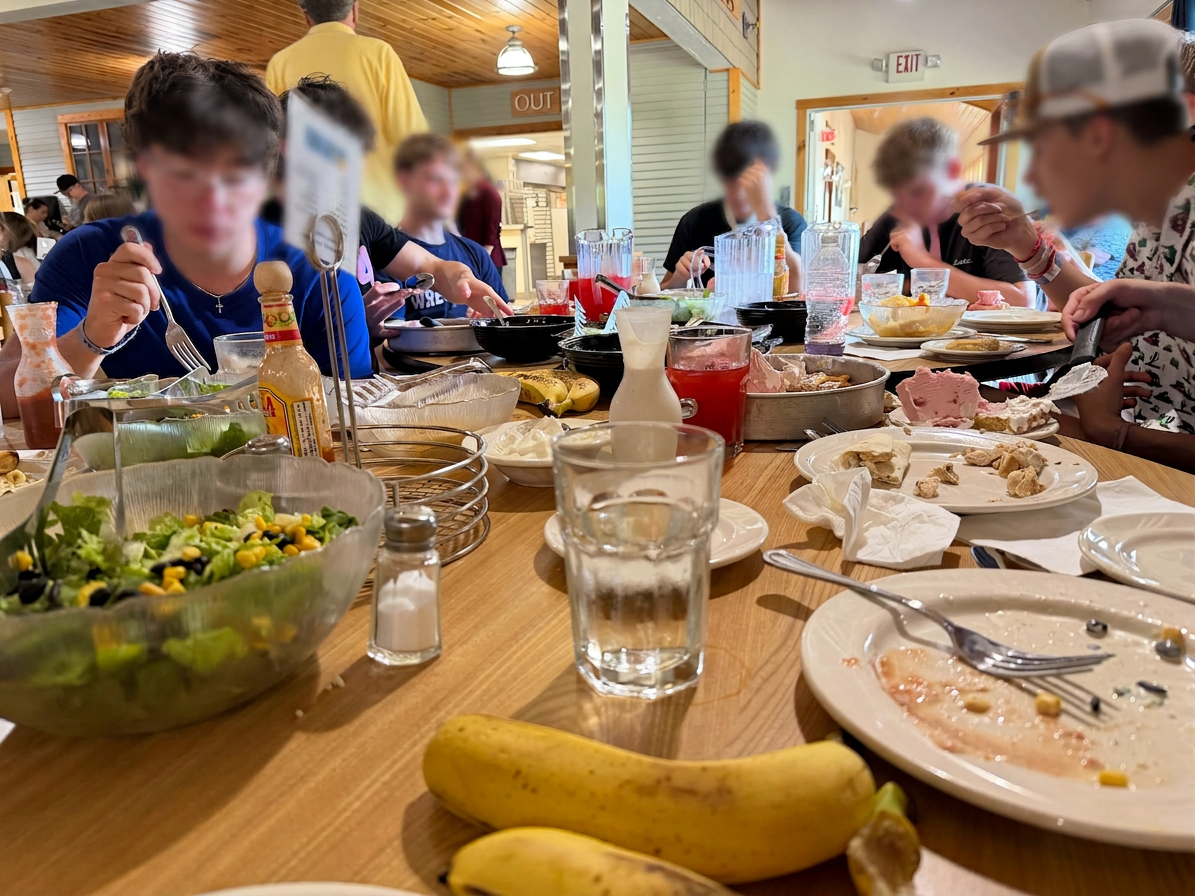
In a world of so much abundance, there is still so much scarcity. Where is the Love? We all crave what we were always meant to have, abundance beyond what we could fathom.
Do we let ourselves feel loved when we are taken care of, when we have all we need? Looking around and seeing all the ice cream lets me know I’m thought about, considered, taken care of, nourished, and there’s nothing wrong with a sweet, good time.
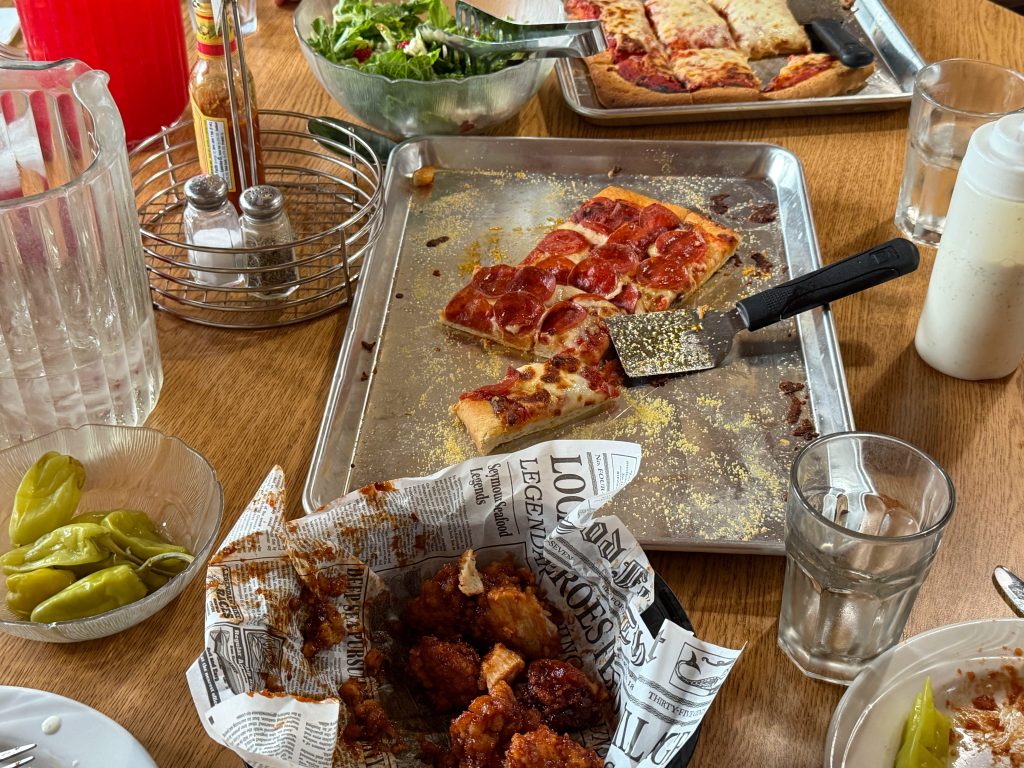
Pause here and ask yourself: What do I feel like when I am cared for? What does it feel like to be considered, thought about, appreciated, worthy even?
We may not always experience Jesus’s love in the ways we deeply desire, often because we’ve been conditioned to expect something different. But what if those fleeting moments of joy—like indulging in ice cream, receiving a thoughtful gift, a heartfelt compliment, or that unexpected message—are reminders of the boundless love we were destined to embrace? Am I truly allowing myself to bask in that goodness, or do I fall into the trap of overanalyzing each moment to “protect” my feelings? Building a barrier against life’s beautiful experiences only serves to rob us of true joy, a struggle many face in our quest for authentic happiness.
What if not allowing yourself to feel good was the most significant problem in your life right now?
Here’s what happens when we fail to let good things be done on our behalf: We reinforce self-centeredness and intellectual thinking that blinds us to a whole side of life we were always meant to experience.
Ice cream will never fix pain, loss, death, resentment, hate, but it can provide just a little release, just a little love, maybe just enough to get by another day to grow and learn from that day’s lesson. Who knows where life will take you, but hopefully there’s a bit of sweetness in it all. Being loved and nourished is how we were always meant to live.
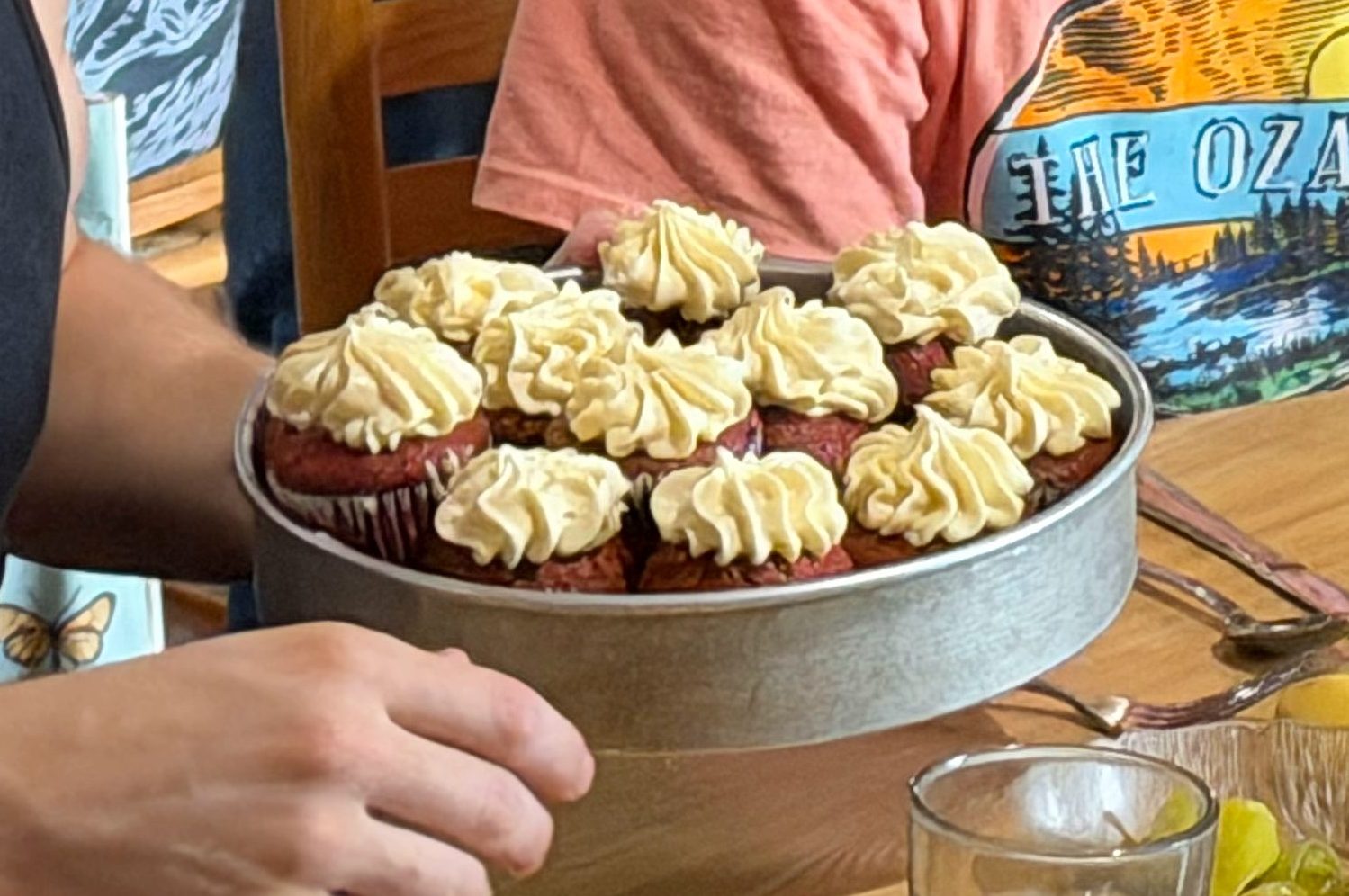
The real question we must grapple with is this: do we allow God to “give us our daily bread?” Or do we falter in our trust, doubting that we are cherished enough to be provided for? While we may not always receive what we desire, rest assured that we will undoubtedly be given all that we truly need.
Next time you go out with friends, and you have that one who wants to provide for you, care for you, and nurture you, really let it sink in. Allow yourself to feel the love and care when someone gets to serve you. These reminders may help us grow in our faith and really experience the love of Christ we were always meant to have in a tangible form.
If people want to celebrate your birthday or surprise you with something they know you like, or just compliment your outfit. Sit in it, bathe in it, take it for all it’s worth- you are seen, considered, worthy of someone’s time.
We don’t just learn as we go through life, but we also gain experiences that teach us a deeper understanding of what life really is. This is wisdom; it goes beyond intellect and reaches out to our entire body: the parasympathetic nervous system, oxytocin, dopamine, endorphins, endocannabinoids, breathing, heart rhythm, gut regulation, and hormonal balance.
We are destined for incredible possibilities beyond merely focusing on our own needs. When the chance to serve arises, embrace it wholeheartedly. If people wish to support us, welcome their kindness and allow yourself to feel truly deserving of their generosity.
I can only pray that in your life, you can experience the kind of love 400 campers and at least a hundred staff members felt when there was more to go around than our simple minds could imagine.
Life is more than just pursuit, accomplishment, and struggle- it’s about finding joy in all things, being merry, and putting faith in a sovereign God and what he provides for us daily.
“May the Lord bless you and keep you. May his face shine upon you and be gracious to you. May the Lord lift up his countenance toward you and give you peace.” – Numbers 6:24-26
-
Local Guy Figured Something Out, Wants Everyone to Know.
Not a single person I talk to in therapy thinks that social media is a good thing.
People do realize they are heavily influenced, but still want the choice.
Also, people believe they make good choices.
People want to be good and do not respond well when you give feedback on behaviors that indicate otherwise.
People realize the thoughts they are having are unhealthy, but still engage them.
People believe they are their thoughts, that their thoughts define them, that because they think something it must be true to them.
Most realize that money won’t make them happier, but are convinced it will relieve just one of their problems. Just this one, just this time.
WE often know the next, highest role at work will require more, but justify it because “this is the way.”
People don’t want to be effective; they want to be right, they want to win.
You aren’t going to convince people through your arguments.
Actions that lead to a person’s experience. Experience Experience draws us in; we gravitate towards what we experience as pleasureable.
You can have all the “right” arguments and still be “wrong” for the way you share them.
Most people don’t want you to solve their problems; they want you to hear them, to feel heard, validated, and commiserated with. Humans way of indicating we are not alone in this life.
If it’s past 8:30 PM (unless you are doing couples therapy with me), you shouldn’t talk about serious things in a relationship, especially if I see you at the gym at 5:00 AM.
It’s not about the money, it’s about what money represents to you. To some, it’s security. To others, it’s freedom. To others still, it shows they are winning- living the good life because of THEIR good decisions.
Nobody needs a 100k vehicle, but 100k vehicles are becoming more regular. We all say we want peace and ease, but then participate in the absurdity of a race towards…..what eactly?
We all want a purpose- to have meaning. Watch little kids; drama is created in the narrative. Watch teenagers; they have an absolute worldview where they demand change. Notice adults who are always in arguments, scrolling on social media, or getting into debt to purchase the latest thing they thought would fix their situation. We create problems to solve them, which gives us more purpose than we realize. If things are too easy, we will create problems. Humans alone will always create destruction.
AI will not take over humanity. We will destroy it and leech out any use of it before it has a chance to actually grow. Take any innovation in human history, and if we could pervert it, we did. Thus, AI doesn’t stand a chance. Humans are deeply flawed and have this way of turning any new thing into something that benefits them no matter the cost to others. We do this effortlessly.
It takes no effort to convince someone to perform a selfish act. Ahh, but a selfless one is praised highly, seen as miraculous.
We don’t really care about a lot of things, but we believe we should care about them.
We are too influenced these days to have organic responses, and thus, I believe, becoming more disconnected from ourselves. How are we supposed to find community if we don’t even know who we are?
People don’t want the couch they saw on TikTok; they want the environment and the life associated with it.
We all believe one of two lies: either we have it figured out the best, or others have it figured out more than us.
Most people, and I do mean most, won’t actually make the change they need to for things to get better. If you understand this then the person in your life you are struggling with is going to require you to accepting them where they are at.
“People go to therapy for those who don’t”
Success has a lot more dependence on chance than people care to admit.
Nobody is self-made, and it’s a delusion of the highest sort to think so.
It’s tough to believe in God. Even if we believe he is sovereign and knows best, even if we believe he cares for us and has our ultimate best interest at heart, we still want to take control of the wheel of a vehicle we have never driven before. We are not rational creatures, but emotional and very ignorant.
Do you think humans throughout history made marvels? Imagine what could have been had we never fallen out of God’s perfect way. We may have actually been smart enough to invest in one another. Smart enough to not need technology and competition for resources- realizing that the God who made us knows us more than we, the finite creatures, ever could.
The good life you think you want isn’t real, but an association of things you’ve put together to believe it is. If you are chasing something material, it’s a lie as to what it will do for you.
The greatest ending to any movie is not that the main character lives, it’s that being alive is put into the finite perspective it is.
Stop romanticisizing things.
Invest in what lasts for eternity.
Some people who truly lived life may go unnoticed, while others seem to have lived fully but did little. If you believe, “seek ye first the Kingdom,” and everything else will follow.
Finding your partner is not going to make you happy. It may actually make your life worse. Enjoy being single. Enjoy not owing that time to someone’s possibly overbearing demands.
Do not get married until you actually know what matters to you and understand how to protect it.
When you start to raise your voice, you sound silly. Stop doing that. If you want to yell because you feel overwhelmed, then go for it, but don’t convince yourself it’s effective- people get too stressed to hear that.
Processed food is often seen as unhealthy, but not eating is also harmful. Hunger and food shortages have caused more deaths than wars. Now, we can maximize calories, which is a blessing. Be grateful, and if something is affecting you negatively, let it go.
Most people suck at being honest with themselves. They don’t know how. They’ve lived a lie so long that they have created a false world with false methods. Liars don’t know what to do otherwise.
If you can’t admit that you’ve done something wrong and why it was wrong, then it’s going to be impossible to keep friends. Spend time learning your shortcomings- lest they take you over.
Nobody is any better or any worse on their own than anyone else. We are all products of more than we are aware of. We did not choose our genetics or what is expressed and when in human history we would have been born. We would have been SS soldiers if given the chance, Cannibals if given another. Murdering “witches” if born at that time. Most of us would have probably owned slaves. Don’t convince yourself you are better than you are.
“Evil” is not the equal alternative to life. Evil was never intended to be a part of the plan for humanity. Evil, then, is more of a cancer to an otherwise healthy person. Evil is not equal to God; the odds are always in God’s favor.
People don’t want to think, they want….who knows….the freedom to do what they want, no matter how stupid it is.
You don’t really know why you do what you do, or what you want, both of which require a deeper understanding of yourself that can only come from a perspective outside of the limits of you. Pray for wisdom.
If you think you know all of something, you are more wrong than the guy who thinks he’s too dumb to get it- at least he’s open to new information.
It’s OK to struggle. It’s OK to be sad. It’s OK to be guilty. It’s OK to be anxious- Instead of trying to sit with all it means to be a human, people want to “fix” what they feel. (Me included, I take medications, I don’t want to feel all of the anxiety in my life).
We can all make the change we need to; we just don’t want to deal with the discomfort of doing so. Just be honest in owning that.
Most people don’t know why they are talking, and show how much life is lived in the subconscious.
We are all terminal- if you discover something that possibly threatens your time, it is no different a condition than you already had (plus or minus a few decades max).
The fortunate people will live long enough to see everyone around them die- life isn’t about staying alive but about living for what matters the most. Many people have lived fuller lives by 20 than an elderly woman who held on to their wealth at 100.
This world is not commanded by God’s will; man decided he didn’t want it that way a long time ago (See Genesis 3). So, quit blaming God for why “bad” things happen.
To oppose God in your music or life makes less sense than ignoring Him altogether. If God is truly greater, you cannot treat Him as less. Therefore, by opposing God, you are challenging something far more powerful and knowledgeable than yourself. The very fact that you resist this power shows it is real and significant enough to oppose.
The bright, eternal flames of Heaven would be the cruelest punishment for a person who didn’t want to be there.
For some people, an early death is mercy- it’s selfish to think otherwise.
If God were cruel, then we wouldn’t know what Cruel was.
We are “made in his image.” Duh, Why He Make us in a lesser image? Therefore, whatever traits we were given would only be in reference to the creator, and we wouldn’t know cruelty as an anomaly, but to be cruel would be to love, and to love as we know it now would be cruel.
Everything changes. Our memories are poor. What REALLY happened is never what ACTUALLY happened.
We all listen to our own thoughts too much. Not all of them need to be considered.
Fear is a good thing; it tells you what matters in life, for we fear losing what matters the most.
If you are addicted to Porn, it’s not a porn issue. Your sights are set too low. You only succumb to the level of temptation you believe to be in service of the most good. Sex is not the most good. Intimacy is not the most good. Thus, admitting to these dominating your life is admitting that the most valuable thing is obviously a low-level desire, and you are going to be stuck in that pit until you realize it’s not the substance that’s the problem, it’s the belief that what the substance provides is better than what God says he offers through faith in Him.
The Bible is the best psychology book ever written. If you share something that isn’t Biblical or aligned with hermeneutic principles of scripture, it’s not going to work….not really.
If you think you are different than your parents, you are blinded. They have influence on you just as influence in them they were not aware of. Stay open to feedback. Reflect.
Tattoos are cool, but so is giving generously to the needy. A good person can do both. With a righteous, well-ordered heart, aligned with God, your decisions will be fruitful.
People evaluate too much; try observing for a while.
You don’t always have to do…being is enough….we do too much.
Discipline in one area will cross into disciplines in other parts of life.
Never underestimate the power of a good, deep breath and a slow exhale. 1….2….3….4…. better.
-
Epiphany at 11:53 PM
It was probably my third extra spoonful of the creamy natural peanut butter at 11:53 PM that pushed me over the edge.
I didn’t feel good at that point.

Photo by Karola G on Pexels.com It may have been the packed caloric intake within a few brief moments of shoveling in spoonfuls of the creamy/grainy goodness combined with the last bit of Diet Pepsi that zoomed me past my comfort zone. It may have been the fan blowing on my feet thereafter causing me to be an uncomfortable temperature.
Whatever it was, the conditions were ripe for, you guessed it, a late-night critical thinking session.
This particular one wasn’t anything special, simply a theological debate in my head about sin, what it means to live, and what in my life needs to change that is holding me back from more.
I don’t necessarily want “more” of any one thing, specifically. I want more space in my stomach for more peanut butter probably. I wanted smaller spoons that I count up when eating the heavenly legume mixture, sure.
I know that it was here, chilly, uncomfortable, in bed where it hit me.
“It’s not about me.”
So, like any rational and uncomfortable person would do, I went to my office to write a blog post about it.
This idea was more than just, “not about me” in the sense of doing good for others. But literally, at the deepest and purest place, my desire to do good isn’t about the version of myself that thinks it needs to not be about me. But from the view of God himself, the me he sees and knows, knows that for life to be full, for things to workout at the highest level, I need to give up the focus of my life being on my life and to seek Him.
“Whoever loves his life will lose it, and whoever hates his life in this world will keep it for eternal life.”- John 12:25
So, there it is. A verse I have heard a thousand times, now hitting my vulnerable and sleepy self like a ton of bricks. Like a release from my own body, like the Hulk being released from Bruce Banner’s body in the Avengers: End Game.
For a brief second, I saw myself outside of myself and sat with the words of life. I saw my body lying there, thinking about myself, what I was going to do the next day, what sins I have committed the day before, what I need to do better on. I saw me thinking about me and felt pity for the guy I saw because of how off the mark he was here.
Why would I get sad about losing my life if in fact, it has always been true that to find one’s best and only life is to give it up?
I briefly thought of the commercials and movies I watched growing up. You know, during the good ol’ 90’s, which depicted a life best lived in scenes. One scene in particular was in the movie Father of the Bride.
In the scene I recall from time to time (for no reason at all) has Steve Martin talking to his about-to-bed-wed daughter outside and I think it starts to snow. I think as a father that would be a really pivotal moment, one that I recall frozen in time. However, then I realized the movie was put out in….1991!
1991! Are you serious?
That means that in that scene, even if it was a real person, which is safe to assume some father at that time was going through it, and that here in 2025, that movie is 34 years old. That means, the already aged father of a 20-something getting married is now probably seeing his grandkids getting married and having children. (Also it means that Steve Martin does not age, he’s been an old man since he was born.)
The scenes of my own life will soon be in the past and life will continue on, thus removing any significant moment I hold now to eventually be nothing because of my own passing and then my child’s passing, and her kids passing etc.
We all age, move forward. Governments grow and fall. Things come and go. There is a season for this and a season for that. Nothing in this world lasts very long anymore, not to mention, lasts forever. Not even the most significant legacies. Warren Buffet’s empire will be gone in a blink of an eye meanwhile there is some sea turtle out there who saw it all come and go.
So then, what stops me from falling into the abyss of nothingness? It’s that none of this, none of the world, none of the plans and outcomes of God’s plan found in man is about my life as MY life. But for HIS plan and intended outcome, the only true and real thing that will last.
Yes, our lives have deep and eternal meaning. Yes, it serves us well to live “good” lives and to honor others as ourselves and serve and be of good cheer and be grateful for the moment. Yes a man who is blessed can go ahead and enjoy his blessings. However, life isn’t about these moments as the main plot point. One doesn’t live “good” for it’s own sake or for the pleasure of the man alone, but one lives “good” because he knows what is true and that what is true is from the authority on truth alone.
Christ says He is the way, the truth, and the life (John 14:6). If this is to be true, then those who abide, turn to, trust in, apply his teachings, will have a “good” life as a result.
I am not asking you to do anything here. Just sharing the thought that when you meditate on life from time to time, realizing that all of what there is now fading, shouldn’t cause massive panic or regret, even sadness, but can bring joy. Joy can be found in the reality that all things pass. All things except the Word, the Word that was brought to life. The Word manifested in Christ who came and walked this planet.
Jesus. A real man. A real God. A relational God who is choosing to share with His people the truth that to find your life is outside of the you who finds it. But is only found when you come to the conclusion that your life isn’t about you, but Him.
From here, truth can spread into decisions and perspectives that can alter decisions. You might find that you can let things go. You might find that what scripture says to do-to think of others as yourself as one thing, will become a natural process as you now think less of your own satisfaction as the ultimate outcome and see your life now found in Christ who brought redemption from the dark thoughts of this world alone- the thoughts that are riddled with fear, greed, lust, gluttony (which with peanut butter and my overindulgence demonstrated why we should NOT do that).
When people talk about Christianity and what a Christian should and should not be doing, it’s not about us choosing from the place of us, the us that believed in the world as the point, but when we change our viewpoint, the things a Christian, or believer in Christ SHOULD do become more natural.
We are natural creatures meaning we live our nature just like a dog lives theirs. What that nature is starts with how one views their life, which Christ reminds us is only truly found when someone gives up their life as their own and as a result, lives as Christ tells us in the Gospels.
Now the passing of the peanut butter provides relief for the the me that chose to eat too much. The chilly air is no longer dominating my sensations (because I am in my office for one thing). But the negative sensations of my life are passed and I can feel a temporary relief. All the while knowing that there will be more discomfort right around the corner.
It doesn’t really matter though, because if my life isn’t found as my life, then I can only find true relief in the Scriptures that indicate what vantage point one must truly see to live the best life.
And it isn’t at the bottom of a 16 oz Smuckers Natural Peanut butter jar.
-
Most Fascinating Thing This Week (trust me, it’s helpful too)
There’s a ton of really Un-fascinating stuff happening in the world right now. (Yes, with a capital “U”.) So I thought, let’s talk about one thing that’s actually fascinating (and maybe useful). Here are two that I chose from to discuss today.
1. The idea of “ego” has become the go-to villain in the self-help genera of life. But spoiler alert: it’s not the bad guy.
2. About 12% of all children in the world (yes, all children) have been sexually exploited in some way. Brutal fact.Since the second is horrifying, soul-crushing, and entirely worthy of major spotlight, let’s put our focus on the first for now.
So, about ego — no, it’s not the devil hiding behind your sofa.
What we’ll call little e (yes, I’m being cute): this little guy sits at the center of the circle of “you.”
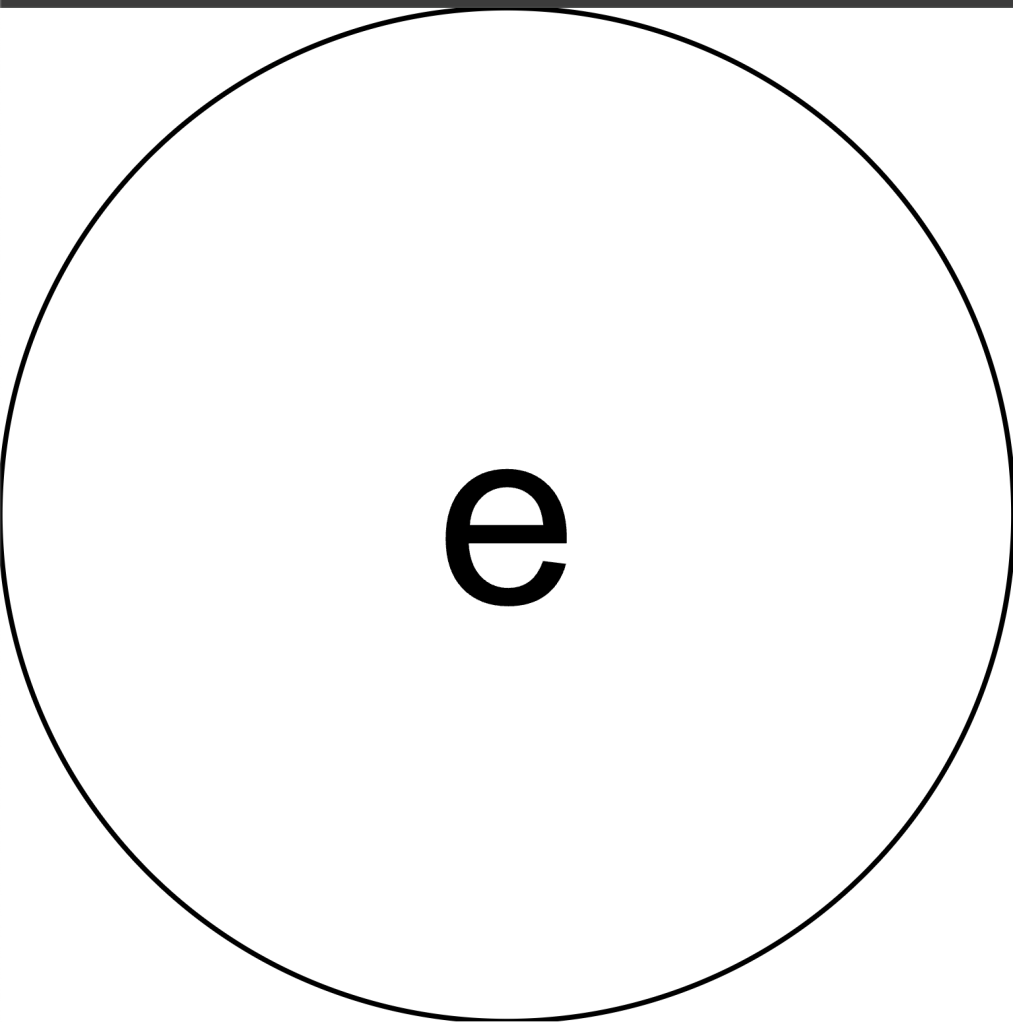
Picture the inner you — the one that knows you’re skimming the surface, the one that whispers “I’m faking it” or “I don’t quite measure up”. That’s little e. That’s your self-barometer, your anchor, your sense-of-self storehouse.
When your little e is solid and established, life runs smoother. You hear a story, you filter it through yourself, you respond (or not) from that place. But when little e is shaky, missing, or more “void” than “voice”? Enter chaos as the ultimate distraction.
What it looks like when little e is missing:
Imagine standing at the edge of a volcano. Or overlooking a cliff. Terrifying.

Now imagine that emptiness — the “center” of your existence — is like that: a gaping, empty void. Scary enough, people would rather live outside themselves than face that emptiness. If you don’t have a strong internal “you” (little e, your ego in the healthy sense), you’ll end up living in relation to the outside world instead of from the inside.
And what happens? Drama. Pure, nonsensical chaos. Because your little e can’t ground you, so you bounce around in the drama. And the “drama” here has no purpose other than to exist for it’s own sake.
That’s where the classic drama show starts: Karpman Drama Triangle
Yep — the Victim-Rescuer-Persecutor triangle.

photo credit:
commons.wikimedia Karpman Triangle.png – Wikimedia Commons
Here’s the quick version:
- Victim says: “Poor me, woe is my life.”
- Rescuer says: “Let me fix you, you poor thing.”
- Persecutor says: “It’s your fault. I told you so.”
The sick twist: people flip between these roles. Victim becomes Persecutor. Rescuer becomes Victim. It’s all a game of unconscious pay-offs. Meanwhile, nothing meaningful changes.
(And here’s an advanced idea for those who get stuck in problem-solving: someone who places you in their drama will report a rational problem, “you didn’t do this.” A problem solver will try to solve or explain, but to no avail. Why? Well, because that would satisfy the drama and force someone back to their empty, unsettled self aka little e.)
Why we keep doing this
Because when your little e is weak or missing, you can’t face the inside. So you stay in the outside world: the social drama, the stories, the “who’s out to get me,” the hero-rescuer missions. Because those are easier than the void.
And yes: if you’re always saving someone, or always being saved, or always blaming/being blamed — guess what? You’re probably knee-deep in the drama triangle, either as participant or audience.
So what to do? (Besides rolling your eyes at people in drama)
- Notice your pattern. Are you always the Victim? The Rescuer? The Persecutor?
- Begin to build/strengthen little e: your internal sense of self. Hobbies, interests, commitments that are yours. Not just roles you play for others.
- When someone else is in the drama loop: don’t become the hero-rescuer by default. Ask: What do you want? What can you do?
- If you’re exhausted, unhappy, distant — and drama keeps showing up like an unwanted guest: maybe do the work. With someone (see: “good therapist”).
From where I stand, that was a fascinating thing for the week.
-
How to “Make Sense” of things.
When I hear someone feels angry because their friend didn’t invite them to a party. It makes sense to feel angry.
When I am told someone at work is trying to get them fired and they are scared. It makes sense to be fearful.
When I am told that someone lost a child and is grieving-thinking about all the sad situations in the future that will never happen. It MAKES SENSE to grieve.

Photo by Nathan Cowley on Pexels.com As a believer (so atheists and secularists and whatever “-ists” exist otherwise can turn back now), the unfortunate reality behind violence and corruption in this world is that it, unfortunately makes sense.
In the Lord’s prayer that all good Christians have memorized by the age of seven (for me it was more like 25), there is a critical line in there to remember.
“Thy Kingdom come. Thy will be done, on earth as it is in heaven” – Mathew 6:10
Thy Will, the Father’s Will, the Creator and knower of all things, His Will. Yes, THAT WIll.
What is Jesus saying here? He’s reminding us that just like Adam and Eve sinned (without any social media or gun restrictions mind you) God’s allowance for freewill led us all to a choice.
It doesn’t take a rocket scientist (or a historian) to see that one action from me today could have a significant impact on the future of someone else. For example, Adam and Eve sinned, then their kids sinned (with murder nonetheless), and so on and so forth. Many of us live in situations today where the decisions we make, the reason we make them due to the options available are bad or worse.
Yesterday on a Utah college campus a man, Charlie Kirk was shot from a good distance away while witnesses watched the blood pour from his neck. A horrendous scene, one of many lately, which leaves people with one question. Why would a good God let bad things happen?
How could God allow this? How could I just dismiss horrific events with a shrug of my shoulders and say “it’s not a surprise.” Public school shootings, racism, violence, child pornography, sex trafficking- all absolutely horrible. It’s answer to the great questions is simple really, it makes sense. But, it all only “makes sense” because we are a fallen creature, living less than (far far less than) we were intended.
This world is the way it is not because it’s “God’s Will” but because of ours. All of us smart and knowledgeable humans have wills imposing on each other.
I know that may sound negative during an already dark time, but it’s intended step out of the facade and into reality. If your best hope is yourself, or government change alone, then you are going to be continuously disappointed.
When you see a violent act on whatever media you consume, remember, the initial impact may be violent, may be unexpected, may be a surprise even, but it unfortunately all makes sense. Mothers abandoning their children. Neighbors stealing from one another. Someone who just wants to make money because they believe that is the only way to happiness. Someone who was pushed too far, was too emotional, was too in their own head, never asked how their day was because nobody actually cared. These people came to the conclusion that the best thing to do was pull out a gun and shoot someone.
Clearly, when you’ve gotten to a point where suicide, killing others, self-harm, etc “makes sense” you can tell you are not being influenced by the right things. This world has contributed to these ideas because, after all, it isn’t just God allowing bad things to happen, but he’s keeping his promise to let man choose.
We’ve chosen wrong and our only hope is to repent (revisit life with new information) and come back to what we were made for, to live in Union with God the Father through the hope we have In Christ. It is only with the wisdom found in what God can provide where we can truly make right decisions with truly good intentions.
If you’ve read this far, I assume yourself to be a believer in the God of the cosmos and His Son Jesus Christ. If you sit and meditate, grieve, and mourn loss and feel the pain of darkness around you, that makes sense, there is a need for that. I strongly recommend you staying in touch with those feelings. What I don’t think is appropriate is to start questioning “God’s plan” because of a need to blame someone.
We are living in a world that Christ refers to as being run by the “Prince of the power of the air” (Ephesians 2:2), it’s no wonder a new shooting isn’t happening every day when you think about it like that.
On a positive note, enjoy the trees today, the grass, your living children and people around you because they could be all gone tomorrow due to another imposition on God’s perfect design by man’s will.
It might not “make sense” to think gratitude in times of struggle, and that’s OK. But it makes sense that we can all come back to the foundation of what it means to be a man, to be in Union with God, through the Son who died on the cross. Now that is the only way to finally start and “makes sense” of things.
-
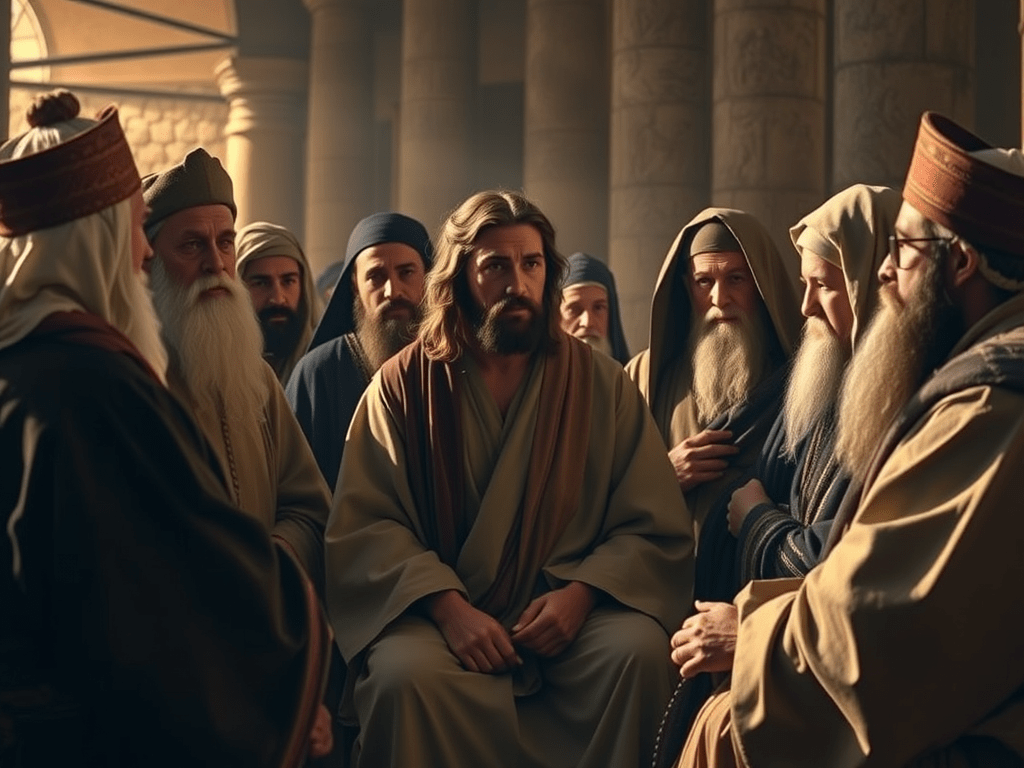
The Cleverness of Christ.
Remember those classic 90s family sitcoms? Or maybe those gritty action movies with hyper-masculine heroes who never flinched no matter how large the explosion was behind them? There was always that one move—the classic power shift. The underdog, usually quiet and unassuming, suddenly reveals they were holding all the cards the whole time.
Personal opinion here: The increased use of CGI and overall special effects has turned what made some of our heros significant- wit, cunning, cleverness, and problem solving, into whoever can sustain the most explosions.

The real genius move goes like this:
You ask questions. Not aggressively—just calm, curious, almost Socratic. You act like you’re trying to understand. And in doing so, you get the other person to reveal the truth themselves.Picture this: a well-dressed (why someone would wear khakis on a Saturday is beyond me) parent on a quiet Saturday afternoon walks into their daughter’s room- Full House vibes here, total Danny Tanner.
“Hey Becky, you wouldn’t happen to have an treat I could have, would you?”
Becky lights up. “Yeah, I did, Dad! I have a few in my drawer!”Boom. The power shift.
In that moment, both parties know what just happened. The parent wasn’t asking out of curiosity—they knew. And Becky just confessed without even realizing it. No yelling, no accusations—just pure revelation. The moment becomes a gentle but firm teaching experience.This is a classic human dynamic, one we see in everything from Mr. Rogers to Die Hard.
But guess who did it first?
Jesus.In Luke 20:20–26, some legal experts and religious leaders try to trap Jesus in a political snare. They send undercover agents to ask him whether or not Jews should pay taxes to Caesar. It’s a setup:
- If Jesus says “pay the tax,” he’s a traitor to his people, bowing to Rome and its idolatrous coins.
- If he says “don’t pay,” he’s inciting rebellion—grounds for arrest.
It’s a no-win situation.
Or it would be, for anyone but Jesus.Instead of taking the bait, Jesus asks a simple question:
“Show me a denarius.”
And just like that—power shift.The moment they pull out the coin, everything unravels. The denarius had Caesar’s image on it, along with words honoring him like a god. By holding that coin, these supposed defenders of Jewish purity exposed their own allegiance to Rome. They revealed more than they intended, and Jesus didn’t have to lift a finger.
He follows up with the famous line:
“Give to Caesar what is Caesar’s, and to God what is God’s.”In modern terms, you could have heard the mic drop. If posted on reels, the crowd would have hissed and booed at the undercover men. The caption would have read something like: “Simple Carpenter Unravels the Whole Religious Hierarchy With One Phrase.”
This wasn’t just a clever answer. It was a moment of divine judo—using the momentum of their trap to reveal them. No shouting. No violence. Just wisdom, presence, and peace.
Jesus shows us what it looks like to be powerful without posturing.
To hold truth without needing to worry. To walk the path of righteousness, not for show, but because it is the only path that doesn’t end in destruction.Remember the line, “If you have faith the size of a mustard seed you tell this mountain to go into the ocean and it will.” (If you don’t it’s here: Mat. 17:20, Luke 17:6) Well, this is the Faith Christ has, the sort of faith that He was teaching about-an uninhibited connection with the creator overseer and holder of all things. So of course, if you are Jesus here, you know what to do and know despite all other human attempts, the perfect way to execute in any situation.
Whether or not you believe Jesus was God (I do), you have to admit: that kind of clarity is God-like. It reflects something deeper—Genesis 1:27 tells us we’re made in the image of God. That means we carry the potential to walk through life with the same quiet strength, the same clear eyes, the same wise confidence.
So take that with you.
You never know when a coin, a calm question, or a little Christlike composure might just save the day. -
A bit Screwy: What Screwtape Letters reveals about ourselves and what we want to deny most of all.
I’ve been on a bit of a C.S. Lewis kick lately, and I’d say “bear with me,” but there’s no need to merely bear with Lewis.
Yes, I am indebted to his works—as they opened the door to forming a theology that is anything but stale or useless. I’m not a “Christian” alone, nor would I consider an introduction to me as “religious.” Those terms don’t capture the depth of a relationship with the Creator. Instead, I like to say that I’m a believer—but even that feels like saying I saw the sun today. I believe in many things, including the energy that flows through the world and that animals and plants have more purpose than we typically assign them. But I wouldn’t say I “believe” in trees or nature—it’s so obvious they exist that the term feels almost beneath the truth.
No, I consider myself a child of God, reborn from a previous fallen state by the grace of God and the Spirit’s work in my life—allowing me to see truth apart from the everyday mentality of the world.
This brings me to a fun little read by Mr. Lewis: The Screwtape Letters. I’m writing about this work because it reveals how easy it can be to lose your soul—and how the smallest, everyday choices quietly contribute to that loss.
Sure, no one wants to lose their very essence—the thing that makes them them—but as fallen creatures of God, I think we ought to know just how insidious and crafty Satan’s minions are in their attempt to feast on souls.
Now, a scholar could give you far more than I can, but I’ll do my best.

My dearest audience,
You know that little comment in the back of your mind—the one that lingers when you talk to that loved one? It judges what they do while preserving your behavior in context. That little comment of resentment may not be so little after all. It may be the seed of hatred, growing over years into full-grown disdain for all humans—including the One who made such detestable creatures.
But surely you are not one of them. You’re just telling people the truth. Setting boundaries. Clearing your chest. Yes, the demons love it when you hold on to what makes you better than everyone else. When it’s always someone else’s fault, or someone else’s lack of judgment wounding you. Especially when you justify your snarky response as being “within context,” while the other person is judged at face value.
Yes, they are hurting you, aren’t they? Making your life miserable. They need to be rebuked. After all, we are in total charge of our environments, aren’t we? Some of us already act like gods.
Of course, no one says this stuff out loud. That would be ridiculous. We’re not bad people—we’re just misunderstood. We don’t need to change, just correct everyone to be more like us. On our noblest days, we may admit to certain faults—but never the ones we hold others accountable for.
The other day, I saw a man walking, wearing a T-shirt that read: “Today’s good time is brought to you by WEED.” Well, certainly he was wrong. I stared at him from afar because of it. I even constructed a narrative in my head, depicting him as someone more worthy of disdain.
I might as well have joined the demons at a local bar and dined with them on my own flesh, for what I chose to do with my mind—investing in thoughts that lead to bitterness and judgment. I could’ve driven my vehicle off a bridge and been better for it than to sit afar, condoning myself while casting a can-you-believe-this look at anyone who’d make eye contact.
I’ve read the attempts of demons to capture souls, and I must agree with Mr. Lewis—Satan doesn’t want us to think too hard about the state of our soul, or to speak the thoughts in our head out loud. He wants them locked up, hidden, so we can keep convincing ourselves that we’re good people. Maybe even good enough. But never the bad ones. Surely not.
Nobody wants to be a bad person, do they?
Stay on guard. Stay bitter. Get yours at all costs.
There’s your one-way ticket to losing your soul—giving it up to the world, living for dying things, and being only as good as your last success.
Yes, people will leave you. And you’ll justify it, saying they didn’t “get” you.
Stay in hiding. Satan loves hiding. He also loves shame. And ego. And just about any activity that keeps you from facing this simple reality: God loves you and wants you back.
The Law—the commandments—can be summarized with two phrases: Love the Lord your God, and then love your neighbor as yourself. These two things lead to a fruitful life.
So, shall we heed these words during our brief time here? Shall we trust they are the remedy for the chronic ailment called sin and all its effects?
Or, like the flesh described in Screwtape Makes a Toast, will we become rather dull and flavorless meat—too passive one way or the other to be of value to the God who made us… or even to the demons who’d feast on us?
Yours in sincerity,
Uncle Meier
-

Allegory…Imagination….and Merlin?
C. S. Lewis seems like he came from another planet—his insights never grow stale; they mature like a good Calvin and Hobbes sketch- becoming more apparent the older you get.
Speaking as a lay reader(because a scholar could really do these writings justice)—I am merely qualified to say Lewis shows profound cultural and spiritual insight, and inadvertently issues warnings to the culture in his fiction writings.
The Cosmic Trilogy: A Transcendent View of Humanity
In Out of the Silent Planet, Perelandra, and That Hideous Strength, Lewis maps the cosmic drama of humanity’s true nature:
- Through the Narnia chronicles and The Screwtape Letters, he proves he can “see” with a divine perspective—individuals matter, but they also serve a greater cosmic order.
- He anticipates modern ethical dilemmas—humanity building Babel, killing morality, creating AI—all before they became our daily headlines.
Out of the Silent Planet: What do you mean, “more?”
One of the most chilling exchanges comes in Out of the Silent Planet. Ransom asks the peaceful hrossa, “What if another group takes more than they need?”
They respond simply: “Why would they take more?”
This contrast highlights how foreign greed seems to beings who live in harmony.The comparison with the pfifltriggi is equally poignant:
Pfifltrigg: “All the pfifltriggi share the work of mining and stone craft equally.”
Ransom: “On Earth, some people mine their whole lives so others can make art.”
Pfifltrigg: “The art is more meaningful because of the hard work it takes to get the stone.”On Malacandra (Mars, the actual Silent Planet is Earth because we fell out of alignment with God and therefore is considered silent), labor and reward are intrinsically linked—nothing is divorced from its purpose. Conversely, our world often separates toil from its fruits. That disconnect? Lewis refers it as “bent,” or morally twisted.
Perelandra: What We Might Have Been
In Perelandra, Ransom and Weston confront an Eve-like figure, exploring a world untainted by rebellion. Lewis provokes the thought, “What if humanity could have avoided The Fall?” Lewis dares us to imagine our full potential—and contrasts it with the “superior” knowledge and technology we have today.
That Hideous Strength: A Warning for Today
The trilogy concludes with That Hideous Strength, where a once-legendary Merlin returns amid a technocratic, demonic think tank (the N.I.C.E.). It’s terrifyingly relevant—our age of AI and corporate control would fit right in Lewis’s world. The scene where Merlin frees animals is equally unforgettable.
In this, the third book of the interplanetary drama, the way in which Lewis refers to the advancements of human race through the use of NICE mimics the pleasantries of AI and people today in service of potentially harmful intentions.
Beyond being a Christian apologist (see Mere Christianity, Letters to Malcolm), Lewis crafted stories so readers continue to wrestle with his truths long after he was gone. He didn’t claim perfection—only that his purpose was to write meaningful fiction that points us toward our true calling.
What Are We Here For?
What are we meant to do? Are we fulfilling our unique purpose, or chasing everything but that? Lewis was someone grounded enough to tell stories that pointed to difficulties within a culture, giving so much meaning about living in the world, but not of it (John 17:14-16), and brave enough to show us what could happen if things don’t change.
You: The Universe’s Missing Piece
Each of us holds a spark that only we contain. Our story is our own—but it also weaves into something far larger. When we live according to what we think we should want, or think we should do, we aren’t living according to what we were actually meant to do, or meant to act.
This isn’t recommending rebellion for rebellion’s sake, but rather to be you, and live according to what matters the most to you, will inevitably lead to the greatest things, as intended. Much like when sin entered the world and distorted the way of things, we too are like the original Adam, taking the coverup and running from the greatness we were intended for. Stop covering up. Stop living in denial. Be honest with yourself. Tell the truth. Let yourself suck at a sport, but keep playing.
If nothing else, Lewis points us to Scripture—“there is nothing new under the sun”, Ecclesiastes 1:9—and that the only deeply new thing is rediscovering whose story we are living out, ours, or a parody of someone else’s.
-
To Serve is To Live
What’s the Point? (No, Seriously. What Is the Point?)
At some point, we’ve all stood in the shower, stared off into the void (or the shampoo bottle), and asked the big question:
“What’s the point of all this?”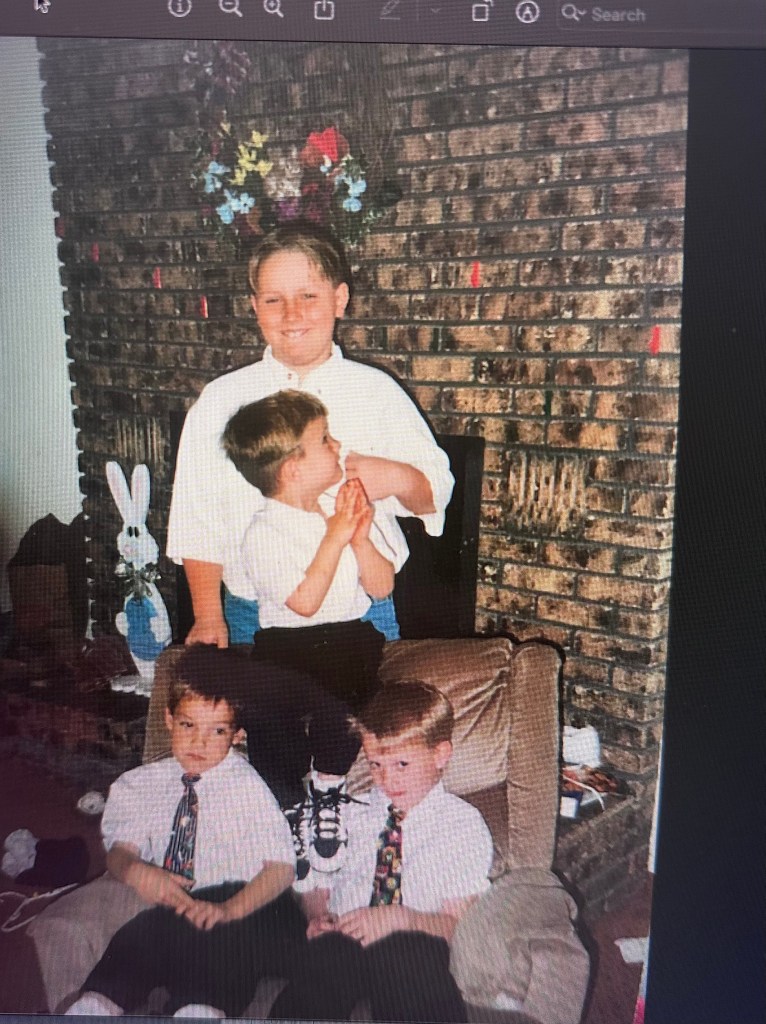
Like, really. What’s the point of working? Of meal prepping chicken and rice like we’re training for the Olympics when the only race we’re running is to beat traffic? What’s the point of going to the gym, squeezing into shirts that are a little too tight (okay, maybe that’s just me), and checking credit scores like its the weather?
Asking “what’s the point?” is not a crisis—it’s actually a solid philosophical question, right up there with “Is cereal a form of soup?” and “Do dogs like me as much as I think they do?”
But seriously—what happens after you reach the goals?
You made the money. Lost the weight. Landed the promotion that requires 60 hours a week… which now requires 70 to maintain (and a personal assistant, a neck brace, and maybe a therapist-I know a good one). You bought the car. Paid off the student loans. Traveled to Italy and ate pasta that made those tight shirts even tighter in a different way. You’ve done The Things.And then what?
At 25, I had this little existential meltdown (I think it’s called a quarter-life crisis). I realized I might not become a millionaire—despite my mother assuring me I could be anything I wanted to be, including the world-renowned biochemist I aspired to become after watching Outbreak at age nine. Thanks Dustin Hoffman.
I mean, sure, buying those new shoes felt good. And yes, the compliments on the designer outfit were nice—until I realized I still felt kind of… empty. Not sad, not broken. Just unsettled.
Now, some people find meaning in marathons, psychedelics, or finishing every episode of The Office (again). Others chase after this mysterious thing called “existential achievement” like it’s a Pokémon. And for many, the couch and a rerun of Seinfeld is more than enough—and hey, no shame if you’re still riding that DVD life.
But if you’re one of the curious ones—the ones who can’t shake the “What’s the point?” question no matter how many productivity podcasts or oat milk lattes you consume—then maybe it’s time to stop asking what the point is, and start asking why you’re even here.
Not to be dramatic, but… why do you exist? What was the reason for you being created in the first place?
If you ask an atheist, they might say we’re just floating on a rock, existing until we don’t—nothing more, nothing less. Which is philosophically interesting but doesn’t help you get out of bed on a Monday. (No offense, atheists—but seriously, how do you guys do it?)
Personally, I believe there’s a Creator—a higher Being who loves us into existence—and that gives me meaning. That awful Monday meeting? Purpose. That toddler tantrum in Target? Spiritual growth. That parking ticket? A lesson in patience.
Because if love is real, and God is love, then you are loved—on purpose. Not randomly, not accidentally. And that changes everything.
Achievements are fine. Financial freedom is lovely (at least I’ve heard that). But none of it will satisfy the soul. Not fully. Not for long.
So maybe the real question isn’t “What’s the point?”
It’s: “What am I here for?”
And “How can I live the most valuable life with the time I’ve got?”If you start there, even the tight shirts start to make a little more sense.

