Category: Uncategorized

  • The Subtle Art of Caring

    The Subtle Art of Caring

    I am fortunate to get to hear stories everyday. Sometimes I wonder how many people wonder if I still care or not?

    I would hope that my presentation is one that demonstrates care, but what if there’s something I am unaware of that comes across as uninterested in the other person?

    But yet, to try to seem like we care isn’t really caring. To actually care requires us to no longer try to depict caring, but to feel what the other person feels.

    But then, how do we find the space for care and compassion for other people around us when we may be struggling ourselves?

    I find that it’s not about our initial thoughts that determine if we care or not, but to care is more about noticing our habitual first thoughts and choosing to act based on what matters the most.

    As humans we are designed to be together in community. I would gamble on the idea that if you dig deep enough, you do care about community. Even if you focus on yourself to be praised by that community. A reason why self-established god status is because you believe it is good for people to praise you, just like you might think it’s good to praise yourself. No god is going to think it’s not good for the people to praise them.

    As a general rule, we desire good for one another. So, although short-sided and misguided, self-promotion can be an attempt to do good.

    But how can we care about people in the right way,?

    1. We were given two ears to hear and one mouth to speak. Yes, all you philosophers out there, people loooooove to get advice, but often listening can show you care so much more.
    2. You can improve your ability to acknowledge the thoughts and then checking the thoughts against what matters to you and then choosing what action aligns with who you want to be.
    3. You want to be good, then do good.

    Good then comes down to thinking if you were that person, what would you want/need in this situation. If you like to talk like I do, then I love it when I get someone to listen to me. I love it when even though the person might not fully get what I am talking about, they can see my passion and because they want me to feel cared for, they care about hearing me talk about my passion.

    These people I like to talk with, nod, acknowledge my ideas, ask questions, even propose an alternative perspective. The best people first try to see what I am saying before they impose their ideas.

    So, thinking about the people I have enjoyed talking to, I work to mimic these people. Because of my own selfish nature, I need models to show me what a listener does to show they care. And no, it’s not being fake to do this, but it’s to live as the person I want to be.

    Now, smiling and nodding along is great, but there is so much more to caring. And this is important:

    Within a healthy relationship, I also like when I am challenged. When questioned with intent to help me see something differently I am grateful for it. I mean, I am initially defensive in my head, but with time and practice I can see how feedback is exactly what I need. So, I also use the relationship and understanding I believe I have with people to share the same challenges or alternative perspective to them. All of this is under the umbrella of caring for people’s good and wellbeing.

    Although the long-term goals of other people may be different than what we want for them, in the short time together we can demonstrate care and compassion by listening. We can improve at removing the expectation that we have to fix or answer everyone.

    Remember, when caring for others, it’s not about you.

    From where I stand, if someone comes to you with a problem, it’s good to listen. After the conversation you might find that the initial “problem” they had wasn’t really the problem. People have a desire to be heard. So, if we do to others as we would like to have done to us, we don’t give advice, correct, or even reprimand (although there is a time and place for all of these things), listen first. Then, through caring and empathetic ears we can ask ourselves what sort of conversations do we like to have and who do we think of when we imagine absolute kindness and caring at it’s best within a conversation.
  • Be Better

    Be Better

    I should be reading my book, but I’m not.

    I shouldn’t have eaten so much peanut butter earlier, but I did.

    I should get more rest, but I don’t.

    I should….

    I’m not doing what I aught to be doing. Not what I want to be doing, I do plenty of that. In fact, some days, that’s all I do. But continuing to do what I want instead of the good things I don’t leads to misery, yet I end up choosing this repeatedly.

    But why? What mechanism in my brain doesn’t allow me to naturally do what I should be doing? Or in positive terms, why don’t I do more good things?

    I want good (or seemingly good) things, but instead I do everything I can to not do those things. I do the things which end up reinforcing the person I don’t want to be. So, why not just do the opposite of what I WANT and finally be the version of me I expect myself to be.

    But my will, my being, it is weak and my dreams lie at the crossroads of hard work and I don’t want to blvd.

    I believe that what is familiar is what the mind will always revert to without mindful intervention. But the question is, just how early in the process does one need to step in consciously to be able to stop the resulting familiar/“bad” behavior?

    Do I need to monitor my bagel in the morning because it could lead to crumbs, which triggers thoughts around mess and therefore stimulate stress which wears me down and causes my resolve to be better to deteriorate and I end up doing what I don’t want to do?

    Or is it earlier than the bagel, it’s at the grocery store when I bought the bagels? Or why do I buy bagels and not something else?

    What about my general thoughts on food anyway? Why don’t I eat more veggies instead of a bagel? Is the bagel an unsavory, familiar behavior from previous failures to do what I should be doing?

    And further back and further back…one quickly realizes that what we think we can control, or will, we can’t.

    So, how do I get to be the person I want to be if I continue to neglect what I should be doing? At this point, beating myself up for not doing something isn’t helping, so there has to be another way, right?

    In his book, Renovation of the Heart, the Philosopher and theologian Dallas Willard wrote about this concept of heart within Scripture.

    Jesus came to humans as God incarnate to first teach. He crossed into the human realm, where we live, in our space and time to present the best information humanity has ever heard. Here’s why our wills are not good enough to do what we need to do:

    Our brains are built to work a certain way that science still cannot fully figure out. However, throughout the Bible and throughout all of human history, man is shown to be fallible, leading to selfishness, corruptness, wars, greed, (spelling and grammatical errors as well) and constant toiling for more than what we need or have. Our hearts, or the main driving force behind why we really do what we do is faulty from the start based on the information and genetics from those who came before us, and those before them. Sin, yes sin altered humanity further from the creator and indulging in the self.

    How did Sin or rather placing our wills in place of God’s affect us so negatively, well, man is finite, God is infinate. You tell me who should be in charge. One who created, loves, and knows us better than we ever will and know the best, ultimate plan for the soul, or us, who at our best is saturated to the core in beliefs and actions that are very short-sighted.

    Descartes was right, “I think therefore I am.” Not just in the sense that because we can think we know we exist, but because how we think about ourself, or what we believe about ourself will then determine every decision thereafter putting us in tough spots or the wrong places regarding where we actually should be.

    If you think you are a loser, then you will make loser decisions. If you think you are the best at everything, nobody will like being around you.

    If man lives alternatively from God’s perfect design resulting in selfishness and self-centered and therefore self-righteousness, then shouldn’t we stop trying to do or be something and instead center ourselves as a creation and then an adopted child in the house of God?

    You see, psychology does a great job of explaining many great thinking concepts, and research reaffirms some things. But psychology without including our relationship to God falls incredibly short and then places too much weight on the person to actively try and change to become this “better person.”

    We believe many things to be good and right, but what if the foundation of our beliefs is faulty? Just what if what you think to be good because it feels good or feels acceptable is really just the same faulty thing over and over again?

    In summary, because this is a blog post and not a thesis, you can’t will your way to being a better person, you can only attempt to do more outward things, which has value, but it doesn’t change the insides, it doesn’t touch the heart of the matter.

    Faith, in the fact that humans, animals, the planet, galaxy, every molecule, atom, and quark are all based on God’s word holding it all together, then places Faith in the words of Christ from whom we can actually learn how to be these “better” people. Not from our will or effort, by the opposite actually, buy willingly giving up our wills to God’s will and practicing the act of submission that the almighty God, the most intelligent, creative, loving, compassionate, understanding being who holds all of life and material together, knows what He is doing.

    Look, if life is this continued cycle of trying and failing, and trying again, then why not just meditate on the possibility that nothing will get better, really, internally, without a willingness to place the compassionate creator as the driving of your heart and what you want.

    “Your will be done, on earth as it is in heaven.” – Matthew 6:10

    God has given us a choice to either keep our heart closed and keep trying to drive our own program or to open that heart from the inside to let Him in to drive it towards where we aught to be.

    “For whoever would save his life will lose it, but whoever loses his life for my sake will find it.”- Matthew 16:25

    From where I stand, even if it’s a minor possibility that what I said here, what Scripture says, and theologians much smarter than me have said is true, then it’s worth the effort to think about.

    This could actually be the change you’re looking for to finally, “be better.”

  • Personality Hires

    Personality Hires

    To some extent, people are who they are and to expect them to be someone else, or naturally change into this other “ideal” person isn’t just a waste of hope, but it may lead to crushing feelings of failure for the one whom you want to change.

    There we have it, accept people for who they are and stop trying to change them, right?

    You tell me. When was the last time you had a friend, relative, spouse, roomate, church member, klansman even that you gave feedback to and they took it and ran with it?

    You may expect the feedback to be taken like this:

    “Oh thank you…I never knew I was a jerk. In my forty years of life, I assumed it was everyone else’s problem. Now I know better and will be more approachable.”

    Sure, some of the good ones will notice of small asks such as “take out the garbage,” or “Get those reports done on time.” But more advanced techniques such as “being more empathetic” or “I want my spouse to WANT to do these things” may require a bit more understanding of the person you are talking to. And I know we all love the idea that all people are capable of the same possabilites, but we aren’t all meant to do all things.

    One of the worst things that can happen when meeting with people for a problem they are having is trying to convince them to change who they are.

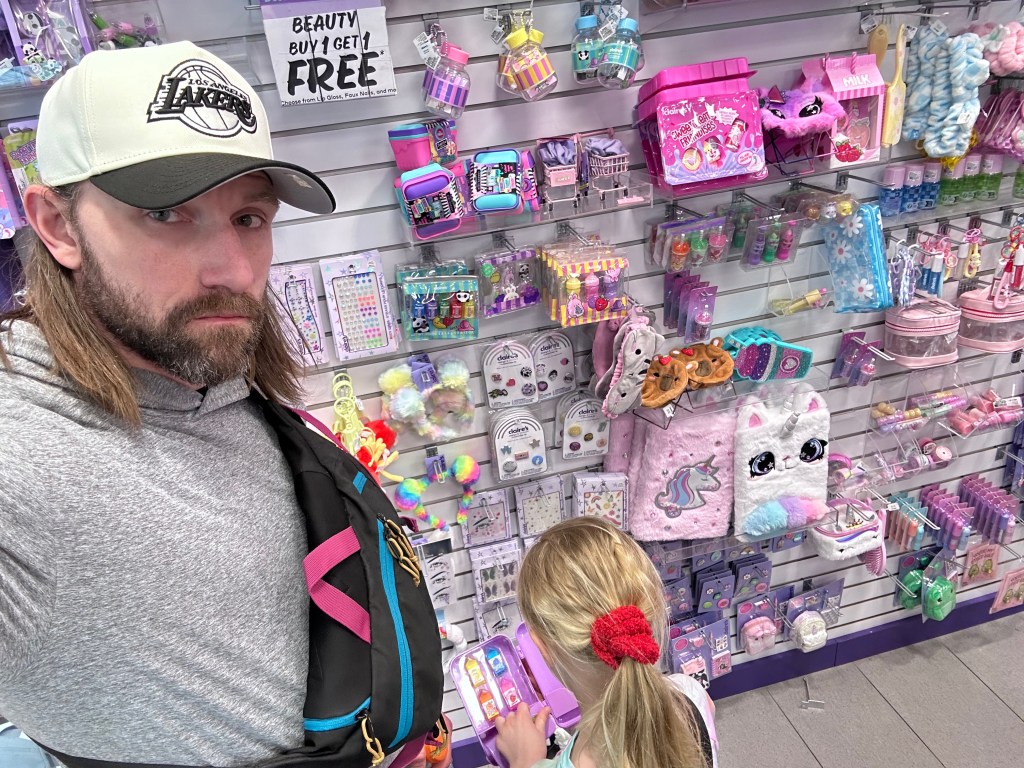
    For example, I was recently on a daddy-daughter trip through the Mall of America, one of the biggest malls in the world. Stacked sky high full of shopping, amusement park rides, foods, toys, all the items a child dreams of. However, I noticed a few things.

    1. My daughter doesn’t like to be told what to do or even offered options more than the ones she has already considered- she told me this.
    2. I shouldn’t expect anything. From moment to moment, she likes one thing, but then likes another.- She even asked to eat sushi which I never thought would happen.
    3. When she asks for something and I tell her “no” (rare, but it does happen), she doesn’t respond to it. But more than that, she keeps asking. Not in an annoying way or just to manipulate, but because she gets fixated on it, like can’t stop thinking about it. Much like the stuffy we saw on day one was talked about for the next two days! “When are we going to get that stuffy?” The thought would hit her in the middle of swimming, or while at dinner. Just a loop, playing around and around.
    4. If you are not concrete with her, she will find the loophole. Even if you lay out the plan, she is a wordsmith with her ability to redefine the terms of what was said.- “you said “no” earlier, but does that still apply now? And were you meaning no forever or just today?”
    5. She loves talking to adults that respond back to her with useful information. She finds the typical questions of “hows school” odd and doesn’t care to think of an answer. “Good” she says to keep people off her back. But if interested you get her to tell you anything.
    6. She is….well, much like her mom and dad in so many ways that I am hit with reality over and over again how much I need to listen and not get ahead of myself or assume the worst.

    You see, we all have brains that are wired from genetics, through birth and raised in environments that later attend to certain things and not others. We all pick up different details and hold things in our minds in different ways. We were all made uniquely by God for a reason and therefore “limits” as people like to argue, against, aren’t condemning, but freeing to find what we have no business in and then can let go of.

    One theory on human development is that humans learn by association or better, relationships to something else. To understand a concept, or thing, you have to have something earlier experienced to help conceive the idea.

    For example, numbers. Numbers are nothing to a baby. But as the child learns the material world and its significance, she may realize that two of something is more than one. Eventually numbers represent meaning but then the meaning is later exchangeable. Thus, two chores are not greater than one chore…unless you like chores of course.

    My daughter, much like your employee, or aunt, uncle, mother, garbage man, pilot, coroner, they hold things, see things, interpret things in their own way. I am not a better parent to anyones kid because I am formed into being my child’s parent. But it has taken me a long time to better understand her as her own person to live this role as an earthly father for her to influence who she is going to be.

    How many times do we stop seeing people for who they really are, only to see them for how we hold them in our heads, no matter how faulty that is. We stop listening to our friends and family because we “know what they are going to say.” Or we stop looking at our wives, employees, coworkers because we fail to see them as people.

    Side note: Do you ever watch those movies with evil henchmen who just die in masses by the hero? I mean, those people were humans, with moms and dads, lives, hobbies, all of their details were just as important to them as yours are to you. And here we are, watching John Wick go through and lay them down by the dozens. Just saying, I wonder how those families are doing after our “hero” obliterates their loved ones.

    Think of the employee who doesn’t do quality work because they realize they can skip the hard parts and probably won’t get caught. For this person, experience has taught them that there is little value in the work itself and the end product is what is most important. If you place this employee on a performance improvement plan, it can temporarily reinforce the fact they are being watched, but that’s about it. We hope it will instill the work as a priority, but wouldn’t we also hope they knew that already, that as adults they have worked before and that whoever is paying you, we can safely assume, wants quality work?

    Old habits, or core personality traits, and core beliefs about what it means to work and value one has in work, not to mention inner feelings towards community or principle, integrity, deeper elements of quality work, their spiritual relationships, all determine what a person will do in work, long-term.

    Not to sound too much like a tyrant on a Disney movie who says this person can’t do this, or can’t do that, the truth is, some people can’t do what is required to stay the partner or employee needed in the relationship. Not that one isn’t good for anyone or any job, but that this current situation, with their personality, won’t work out.

    Admitting limits isn’t a bad thing, but a peaceful acceptance that you are made for some things and not for others. You aren’t made for everything and sometimes a job will serve mercy and let you go so you don’t have to keep trying to be someone you aren’t. The key from any situation is to accept it for what it is and use the opportunity to figure out what your strengths are and where you can best leverage these strengths.

    Maturity, new information, new situations, encouragement or discouragement, all things can change a person’s perspective, but the change will still be from the person doing it, and will only change if the person sees some value in the change. You can’t make someone care about something, you can only show them and let them decide to care or not.

    So, what’s wrong with a personality hire? As someone who is personable, I find it helpful to work with people who fit more so than someone who might have a better resume, but isn’t willing to change or learn to the human beings around them.

    What’s worse than a jerk who is intentionally mean? Someone who is a jerk, doesn’t know it, doesn’t accept feedback about it, and justifies their mood and approach based on the wrong that has been done to them.

    If you are looking for an employee or partner, from where I stand, I think it is the most critical to find someone who is willing to take feedback and respect boundaries of others and work demands. Otherwise, you’ll be fighting an uphill battle to someone who is the way they are and will be whether or not they get on a performance plan, an ultimatum, or simply just get ignored by people that don’t want to be around them.

    In summary, sometimes your problems in life are you, not them. Take the feedback, meditate on it, ask yourself what matters to you and stop trying to cover inadequacies, but own them as equal parts of yourself.

  • Negative feels

    What strategies do you use to cope with negative feelings?

    Well, negative often means something counter to positive or otherwise less than, which therefore entails a state one should not feel.

    In truth, negative is still a feeling and is necessary, just as much as a positive feeling. Experience cannot be defined as it’s occurring, it just is. Once you evaluate, you miss the experience. Therefore, a negative is the same as positive in that it’s all just an experience.

    Embracing the experience, bathing in it, often leads to a life full of enrichment. When judging the emotion such as sadness as “negative” you can learn to instead experience it as it comes, much like babies do. We are humans, made in God’s image intended to feel as God feels, and to judge or do anything more or less than find gratitude to feel something so pure, destroys the moment. Not to mention is a really bad habit to get into.

    My strategy is to embrace and breathe inside the moment.

  • Crushing the spirits of little kids (one bumper car at a time).

    Crushing the spirits of little kids (one bumper car at a time).

    There I was…

    Sitting in a bumper car amid youthful eyes, pigtails, and hopeful expressions. The ride was for all sizes 42” and above. My 77” self barely fit in the cart. Around me were those barely crossing the line from restricted red to admission blue.

    As innocence was radiating from the children behind the wheel, maybe for the first time ever in that position, I looked at them and then their observing parents. One father’s eyes met mine. His protection sensors went up.

    Fathers can feel this sort of thing.

    He looked at me. Looked at the other small children. I looked at his wrist. No wristband. He couldn’t get in. Decided to save some money and not spring for the $50 ticket to ride with his kids. I get that.

    I sprung for it. Now in a moment I had a choice to make. Do I smash full force with my 265 pounds of momentum gaining energy behind every inch of rubber track, jolting the kids into puberty? Or do I settle, drive around and seek out only my own seed to smash from the side?

    The little buzzer went off.

    I glimpsed at the sign “no headfirst bumping.” I thought about this rule for a second.

    I saw a kid, he was headed my way. I evaded him.

    With the 360 degree turn radius I spun around and headed in the opposite direction.

    I was rear ended. I went ahead, saw two girls, sisters I assume. Rolling around laughing at the fact they keep getting stuck. I decide to head in their direction, to lightly bump them loose.

    They turn into me.

    SMASH!

    Headfirst and it looked like I was seeking them out. I quickly spin the wheel, to back out, leave them be in the wake of their trauma.

    I await the screams from an irritated parent.

    I turn around.

    SMASH

    The child looks at me after the recoil of the abrupt stop of his cart. His head pulls up. The brief life he’s lived shows like a movie projected across his eyes.

    I back up again and break free from the multi-cart pileup. Free now to steer clear of anymore lives I don’t want to destroy.

    The gravitas of the situation enhanced by adult eyes, my peers with children younger than mine, make me want to park my cart and throw my hands up.

    SMASH

    This same boy as before, a kid with a mullet peering at me like I’m his elementary school bully. I smile a bit at him and he grits his teeth and drives forward at me again.

    Bump this time, but pushes me into the wall.

    “Ha. Alright, got me.” I say lightly.

    He bumps me again. Then he follows me, chasing me like a sugar-crazed kid who didn’t take his morning medications.

    I glance at the parents…no one seems to be watching him. I pull forward a bit, spinning the wheel to come at him with the little distance I have.

    “You little brat” I think to myself, feeling the surge of energy through my hands and electrifying my left leg to slam down the little red button to charge the car forward.

    “You think it’s funny you little….”

    BUZZ! “Alright riders, please wait till your cart comes to a complete stop before exiting the vehicle.”

    The overhead voice finishes and pan out to see my cart and the boys a few inches from the fronts of the carts meeting.

    I come back to reality. The fog lifts. I am me again, a father, a loving…um at least understanding follower of Christ.

    I….I sort of blanked on my identities and went to this realm of emotions.

    I relied on my body to tell me what to do, rather than what I know to do. I felt annoyed and competitively wanted to smash this annoying bug of a boy into bumper cart oblivion.

    Who was that guy? Where did he come from?

    “I’ve been here the whole time.” My mind says to me.

    Welp, guess I have some work left to do, and that doesn’t mean honing in on my bumper cart skills. But to humble my self that I might not be as good as I think I am.

    To choose the light, you’ve got to know the darkness inside of you.

  • Parasite x Brain.

    Parasite x Brain.

    The parasitic flatworm Dicrocoelium dendriticum aka Liver fluke, aka “zombie ant fungus,” infects the brain of ants resulting in the ant crawling to the tallest point of a plant preparing to get eaten for the highest possibility of fertilization.

    Imagine it.

    The parasite drives the ant up the stem to be crushed in the grinding maxilla and mandible of livestock, ingesting the parasite to flourish in a new home. Then, if it gets too cold, if the ant isn’t consumed, it retreats to try again tomorrow.

    Mindless-drones doing as the parasitic infection demands, with no other objective than to spread. Now, that is scary, good thing we don’t have such a thing in humans.

    Facebook

    Instagram

    Twitter

    TikTok

    CNN

    MSNBC

    FoxNews

    NPR

    CNBC

    Us humans, we like to think we make good choices. We want to be good, we want to do what is best. No one goes forward with full intention of making the wrong choice. Unlike the ignorant ant, humans have intentionality and we loooove to use our smarts to justify our choices.

    Maybe the ants think we are the crazy ones for being influenced by entertainment sources to tell us how to live. The fact that we allow the fictional narrative of social media to alter how we view ourselves might be reason enough for the ants to prefer their colony over a cell phone.

    What if…just what if…the narrative you hold about yourself, the inner assessment of how well you’re doing in life and what you believe is important, was built on false teachings?

    Though we aren’t being manipulated to crawl up any trees, sacrificing ourselves to the further pollination of disease, we are choosing to go to the top of whatever proverbial grass blade, (social outlet) there is and sacrifice our true selves to the influence of misinformation for capital gain or continued social acclimation.

    Ask yourself, why do I do what I do and what really matters to me the most? Take a reflective look at your life and see the truth of where you have invested your time.

    Our entire life is a receipt of where we spent our most precious gift. If you did what you thought you should do, or did something because you wanted to fit in, or did something because you felt some sort of emotional response that you needed to satisfy, then it’s not too late to make a change and start living as yourself and what matters.

    Some brains are too far gone. The infection has spread and lingered for too long and delusion has sunk in. The once-malleable brain now plagued with a barrage of persuasion has the ability to rewrite history to support the slow crawl completely motivated by the influence of the parasitic ideas hellbent on the host’s destruction.

    If life is spent on anything less than the most meaningful thing, it’s a waste.

  • Are you superstitious?

    I am a whole being of many parts. A part of me likes the idea of magic and other-than worldly forces and that some action I do could result in an alteration of material in this world. However, as a Christian (worldview of God-created everything and through His word holds every fiber of being together), I do not rely wholly on science or mystical forces, including karma. Therefore, I am not superstitious nor am I totally rational (as this worldly existence means). My soul and therefore core being cannot believe in anything to alter outcomes that fall out of line with Gods plan coming to fruition.

    Though God made man with free will He knows what the outcome is and our life both can be altered by our choices, but more so, all is in a state of already, but not yet.

    Again, creatively, super fun to think that the world and humans in it can be completely independent and left to chance happenings or luck, but that removes God and therefore all that is good which, well, would be hell.

  • Opening Line

    Daily writing prompt
    You’re writing your autobiography. What’s your opening sentence?

    Trying to find the words to represent my life is like trying to explain all Christmas cookies with one word.

  • We all have a little Trump inside of us.

    We all have a little Trump inside of us.

    If I were you and you were me, what would you see?

    What would you experience if you were me writing this?

    You can’t possibly know what I am going through. You can’t because I am me. I have lived as me my entire life. Being me entails having my personality, my perspective, my experiences and how people experience me and me them.

    So, how can you possibly walk in my shoes if my entire life experience led me to seeing things the way I do and producing the reactions I have.

    You can’t “get” someone. You can relate to them from your own life experience, but “getting it,” shouldn’t be the goal.

    Here’s my sales pitch for peace:

    Empathy is the bridge to forgiveness.

    To be empathetic is the willingness to see the other person’s perspective. When you are hurt, scared, angry, sad, escalated in some way, the choice to empathize and relate to people seems impossible.

    Why would we choose to distance or judge someone? Judgment, justice, disgust, fear, anger, all of the above.

    I guess the real question is, why should we empathize with people who we deem to be “bad” or “wrong?”

    For your own peace.

    Empathy and forgiveness leads to a peace for the one who practices it. If you want peace, in your relationships, at work, watching the news, dealing with difficult customers, then you need to allow yourself to relate to the person you are dealing with.

    Typical argument against empathy:

    “But what if the person is a sociopath and doesn’t care about people, why should I relate to them?”

    Answer: One of the criteria for anti-social personality disorder aka sociopath is lack of empathy. So, if you choose to categorize people into a box that is “unrelatable,” then you just did what they do.

    If you want to be right, enact justice, judge and distance from someone, remember they are people too.

    The way humans are designed-they have parents, and those parents had parents, and so on. All the ancestry that came before us led to the “us” here today and leading to the “them” that is standing before you now. Both nature and nurture play into who we are today and why we chose what we chose. Not to mention, the choices available to as at the location and time in history we were born.

    Judge if you dare

    So, if you want to judge and enact judgment on people because of your god-like view of what should be, remember: people only know what they know and don’t know what they don’t. People learn by way of association and do what they do based on what was experienced, internalized, and believed to be true.

    People do the best they can with what they’ve got. People don’t do your best or a general best, but their own best. Even one who murders, chose to do so based on what they thought was the best choice. There isn’t a person who has walked this earth who hasn’t done the best they could with what they’ve got. Also, with the exception of Jesus, there isn’t a person who hasn’t done something they later revisit and think things could have been done differently today.

    If you can allow yourself to see that you’ve once misjudged, acted out of anger, chose based on limited information, then you can understand that someone else may be doing the same thing. Sure, they may have chosen differently than you would have, but their available choices, their normalized decisions, observed behaviors from family and friends, and many many other factors in their experience have led to them choosing to act as they did.

    You get angry and you yell.

    Someone else gets angry and they drink.

    Another person gets angry and fights.

    All are angry and neither can judge the other from their limited perspective.

    Finding yourself relating to others, and allowing yourself to be in their shoes, is much more than, “getting it.” Empathy will provide the ideal life of peace you want. If you want the peace that is.

    If you want to judge, then so be it, but you’re doing exactly what they are doing. The exact same thing you are judging is the same thing you can’t forgive or accept about yourself.

  • Scared to let it go?

    Scared to let it go?

    Familiar pain is still familiar.

    When you get to a point of pain, let’s say being overwhelmed, how’d you get here?

    Often it’s a series of decisions influenced by perspectives, life events, beliefs about oneself, and a number of other contexts leading to the same result repeatedly.

    When stress is experienced, or rather you feel what you identify as stress as a result of some external stimuli, what do you do with it?

    Nobody wants to admit this but you might be choosing to hold on to stress.

    Truthfully, do you find yourself coming up with excuses as to why the stress needs to be there, why you just CAN’T let it go?

    Story Time:

    Alright, so there I was, another overbooked day of people to see. I get a message about a referral for a new person. My immediate thought says that I should take the referral. I pause a bit, thinking about my schedule and realizing I have no slots left.

    I say, “yes” to the referral under the justification that I will figure it out later.

    I get stressed about scheduling this person immediately. I put off the decision, “I will reach out later to schedule.” I waited. The next day, I needed to call this person. I am thinking to myself about what to say, fearing that what they want I can’t offer.

    “Luke, why did you do this to yourself?”I say to myself.

    I start to spiral and think of every decision I make and how I am such a loser for not being able to be better.

    I regurgetate this feeling throughout the day and feed on it. I lose sleep over it. I go to the gym and feel guilt for being so selfish, for not being better.

    I don’t want to tell my wife because I know she’s going to say that she told me so, to not take on so many people.

    I fester on this for days.

    I call the person, finally, and they admit that they weren’t looking for anyone as a therapist, but someone had suggested it; however, they didn’t have it in their schedule just yet.

    The call ended. Crisis averted, right?

    No, I then say “why didn’t she want to see me, am I not good enough?”

    I start to think about how poor of a therapist I am and how I should never see another human being again. I fester on this for a few more hours. It turns into a slight lull. I tell myself that I have to carry on with life functions because I have guilt over that too.

    Stress was my fuel here. I felt stress and held on to it, unable to give it up. I justified why this stress existed and I justified why I couldn’t let it go. I took on something that caused the stress in the first place, which I have done repeatedly.

    Why can’t I just accept that I overthink and try to overplease people, that I struggle with insecurity and therefore revert into self-defeated thinking and just let it be? Why do I have to pressure myself into trying to be better, as though I am capable of doing so? Why don’t I just let the thoughts go, let the stress pass, while I hold on to my values and be the person I want to be? Not the ideal me, or alternative me, but actual me, me with anxiety. What stops me from accepting this person, love this person, be kind to this person?

    When I make a mistake and revert to over busying myself, again, instead of getting high on my own stressful spiral of thoughts and then the thoughts of judgement towards myself, I can say, “yeah, I do that sometimes.” It is here, acceptance, that I can then work to live according towards what I care about, the wellbeing of someone else.

    From this place of acceptance, I can set boundaries and end up being honest and assertive and saying “no.” As we all should sometimes. Being honest is simply living in reality. I could have said “no” the first offering, or called and said that I have no availability, a number of things. But to do that, I need to sit with my first thoughts (people pleasing and stress addiction)and let the emotion pass (let it go) to then make a rational decision.

    So, I needed to check my addiction to stress and ask myself if I really am willing to let go of the stress.

    From where I stand, “letting go” is really not as simple as we all thought. In reality, many of us want to hold on and feel that stress. We might be habituated to stress, addicted to it. Stress becomes baseline, a reason to complain, a distraction, justifies victimhood, a number of reasons stress exists and is scary to let go of.

    Be honest with yourself and work at identifying if you truly want to let go of the pain and be free from it. Maybe you are choosing to hold on to stress to justify being a miserable person.

    Yes, people do that.