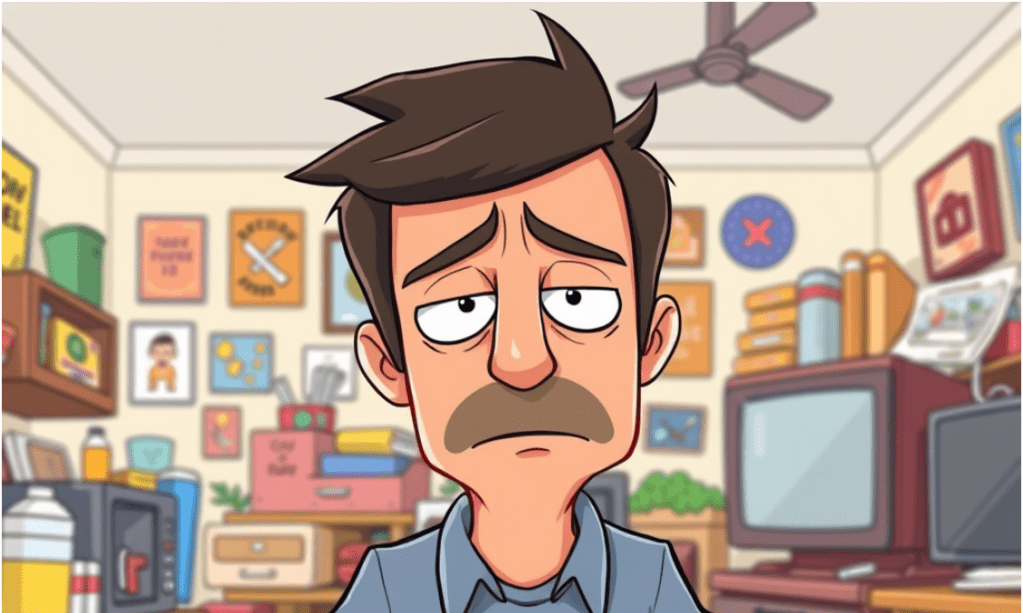
I should be reading my book, but I’m not.
I shouldn’t have eaten so much peanut butter earlier, but I did.
I should get more rest, but I don’t.
I should….
I’m not doing what I aught to be doing. Not what I want to be doing, I do plenty of that. In fact, some days, that’s all I do. But continuing to do what I want instead of the good things I don’t leads to misery, yet I end up choosing this repeatedly.
But why? What mechanism in my brain doesn’t allow me to naturally do what I should be doing? Or in positive terms, why don’t I do more good things?
I want good (or seemingly good) things, but instead I do everything I can to not do those things. I do the things which end up reinforcing the person I don’t want to be. So, why not just do the opposite of what I WANT and finally be the version of me I expect myself to be.
But my will, my being, it is weak and my dreams lie at the crossroads of hard work and I don’t want to blvd.

I believe that what is familiar is what the mind will always revert to without mindful intervention. But the question is, just how early in the process does one need to step in consciously to be able to stop the resulting familiar/“bad” behavior?
Do I need to monitor my bagel in the morning because it could lead to crumbs, which triggers thoughts around mess and therefore stimulate stress which wears me down and causes my resolve to be better to deteriorate and I end up doing what I don’t want to do?
Or is it earlier than the bagel, it’s at the grocery store when I bought the bagels? Or why do I buy bagels and not something else?
What about my general thoughts on food anyway? Why don’t I eat more veggies instead of a bagel? Is the bagel an unsavory, familiar behavior from previous failures to do what I should be doing?
And further back and further back…one quickly realizes that what we think we can control, or will, we can’t.
So, how do I get to be the person I want to be if I continue to neglect what I should be doing? At this point, beating myself up for not doing something isn’t helping, so there has to be another way, right?
In his book, Renovation of the Heart, the Philosopher and theologian Dallas Willard wrote about this concept of heart within Scripture.
Jesus came to humans as God incarnate to first teach. He crossed into the human realm, where we live, in our space and time to present the best information humanity has ever heard. Here’s why our wills are not good enough to do what we need to do:
Our brains are built to work a certain way that science still cannot fully figure out. However, throughout the Bible and throughout all of human history, man is shown to be fallible, leading to selfishness, corruptness, wars, greed, (spelling and grammatical errors as well) and constant toiling for more than what we need or have. Our hearts, or the main driving force behind why we really do what we do is faulty from the start based on the information and genetics from those who came before us, and those before them. Sin, yes sin altered humanity further from the creator and indulging in the self.
How did Sin or rather placing our wills in place of God’s affect us so negatively, well, man is finite, God is infinate. You tell me who should be in charge. One who created, loves, and knows us better than we ever will and know the best, ultimate plan for the soul, or us, who at our best is saturated to the core in beliefs and actions that are very short-sighted.
Descartes was right, “I think therefore I am.” Not just in the sense that because we can think we know we exist, but because how we think about ourself, or what we believe about ourself will then determine every decision thereafter putting us in tough spots or the wrong places regarding where we actually should be.
If you think you are a loser, then you will make loser decisions. If you think you are the best at everything, nobody will like being around you.
If man lives alternatively from God’s perfect design resulting in selfishness and self-centered and therefore self-righteousness, then shouldn’t we stop trying to do or be something and instead center ourselves as a creation and then an adopted child in the house of God?
You see, psychology does a great job of explaining many great thinking concepts, and research reaffirms some things. But psychology without including our relationship to God falls incredibly short and then places too much weight on the person to actively try and change to become this “better person.”
We believe many things to be good and right, but what if the foundation of our beliefs is faulty? Just what if what you think to be good because it feels good or feels acceptable is really just the same faulty thing over and over again?
In summary, because this is a blog post and not a thesis, you can’t will your way to being a better person, you can only attempt to do more outward things, which has value, but it doesn’t change the insides, it doesn’t touch the heart of the matter.
Faith, in the fact that humans, animals, the planet, galaxy, every molecule, atom, and quark are all based on God’s word holding it all together, then places Faith in the words of Christ from whom we can actually learn how to be these “better” people. Not from our will or effort, by the opposite actually, buy willingly giving up our wills to God’s will and practicing the act of submission that the almighty God, the most intelligent, creative, loving, compassionate, understanding being who holds all of life and material together, knows what He is doing.
Look, if life is this continued cycle of trying and failing, and trying again, then why not just meditate on the possibility that nothing will get better, really, internally, without a willingness to place the compassionate creator as the driving of your heart and what you want.
“Your will be done, on earth as it is in heaven.” – Matthew 6:10
God has given us a choice to either keep our heart closed and keep trying to drive our own program or to open that heart from the inside to let Him in to drive it towards where we aught to be.
“For whoever would save his life will lose it, but whoever loses his life for my sake will find it.”- Matthew 16:25
From where I stand, even if it’s a minor possibility that what I said here, what Scripture says, and theologians much smarter than me have said is true, then it’s worth the effort to think about.
This could actually be the change you’re looking for to finally, “be better.”










 From Where I Stand