Remember those classic 90s family sitcoms? Or maybe those gritty action movies with hyper-masculine heroes who never flinched no matter how large the explosion was behind them? There was always that one move—the classic power shift. The underdog, usually quiet and unassuming, suddenly reveals they were holding all the cards the whole time.
Personal opinion here: The increased use of CGI and overall special effects has turned what made some of our heros significant- wit, cunning, cleverness, and problem solving, into whoever can sustain the most explosions.

The real genius move goes like this:
You ask questions. Not aggressively—just calm, curious, almost Socratic. You act like you’re trying to understand. And in doing so, you get the other person to reveal the truth themselves.
Picture this: a well-dressed (why someone would wear khakis on a Saturday is beyond me) parent on a quiet Saturday afternoon walks into their daughter’s room- Full House vibes here, total Danny Tanner.
“Hey Becky, you wouldn’t happen to have an treat I could have, would you?”
Becky lights up. “Yeah, I did, Dad! I have a few in my drawer!”
Boom. The power shift.
In that moment, both parties know what just happened. The parent wasn’t asking out of curiosity—they knew. And Becky just confessed without even realizing it. No yelling, no accusations—just pure revelation. The moment becomes a gentle but firm teaching experience.
This is a classic human dynamic, one we see in everything from Mr. Rogers to Die Hard.
But guess who did it first?
Jesus.
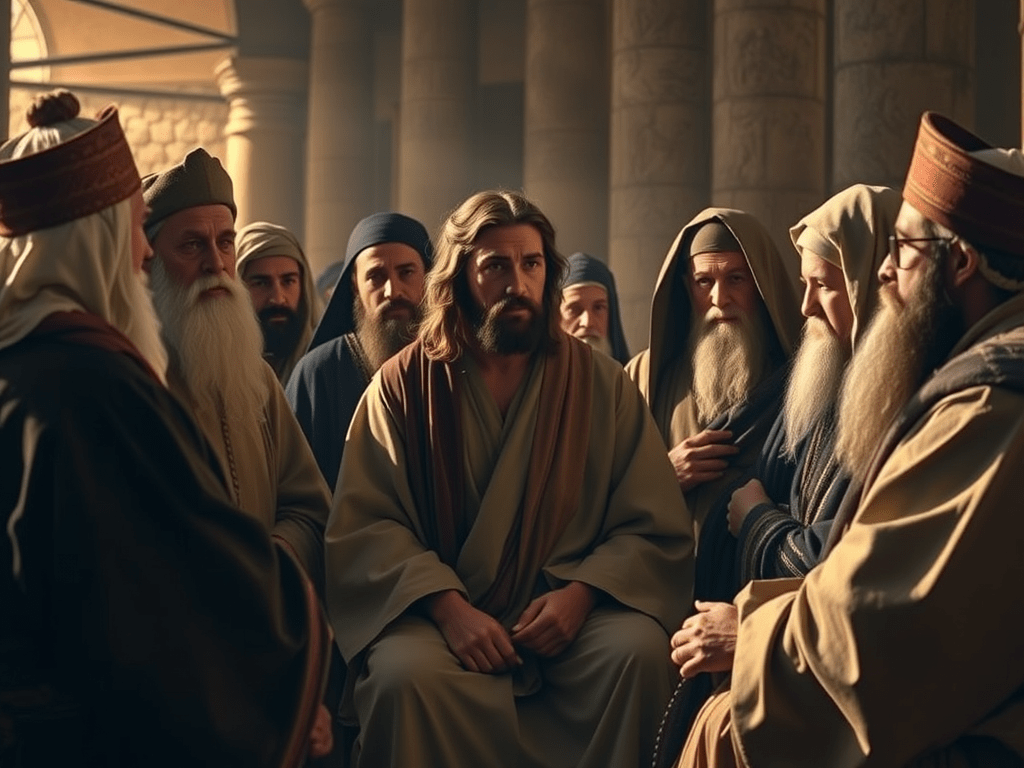
In Luke 20:20–26, some legal experts and religious leaders try to trap Jesus in a political snare. They send undercover agents to ask him whether or not Jews should pay taxes to Caesar. It’s a setup:
- If Jesus says “pay the tax,” he’s a traitor to his people, bowing to Rome and its idolatrous coins.
- If he says “don’t pay,” he’s inciting rebellion—grounds for arrest.
It’s a no-win situation.
Or it would be, for anyone but Jesus.
Instead of taking the bait, Jesus asks a simple question:
“Show me a denarius.”
And just like that—power shift.
The moment they pull out the coin, everything unravels. The denarius had Caesar’s image on it, along with words honoring him like a god. By holding that coin, these supposed defenders of Jewish purity exposed their own allegiance to Rome. They revealed more than they intended, and Jesus didn’t have to lift a finger.
He follows up with the famous line:
“Give to Caesar what is Caesar’s, and to God what is God’s.”
In modern terms, you could have heard the mic drop. If posted on reels, the crowd would have hissed and booed at the undercover men. The caption would have read something like: “Simple Carpenter Unravels the Whole Religious Hierarchy With One Phrase.”
This wasn’t just a clever answer. It was a moment of divine judo—using the momentum of their trap to reveal them. No shouting. No violence. Just wisdom, presence, and peace.
Jesus shows us what it looks like to be powerful without posturing.
To hold truth without needing to worry. To walk the path of righteousness, not for show, but because it is the only path that doesn’t end in destruction.
Remember the line, “If you have faith the size of a mustard seed you tell this mountain to go into the ocean and it will.” (If you don’t it’s here: Mat. 17:20, Luke 17:6) Well, this is the Faith Christ has, the sort of faith that He was teaching about-an uninhibited connection with the creator overseer and holder of all things. So of course, if you are Jesus here, you know what to do and know despite all other human attempts, the perfect way to execute in any situation.
Whether or not you believe Jesus was God (I do), you have to admit: that kind of clarity is God-like. It reflects something deeper—Genesis 1:27 tells us we’re made in the image of God. That means we carry the potential to walk through life with the same quiet strength, the same clear eyes, the same wise confidence.
So take that with you.
You never know when a coin, a calm question, or a little Christlike composure might just save the day.
 From Where I Stand
Leave a comment