C. S. Lewis seems like he came from another planet—his insights never grow stale; they mature like a good Calvin and Hobbes sketch- becoming more apparent the older you get.
Speaking as a lay reader(because a scholar could really do these writings justice)—I am merely qualified to say Lewis shows profound cultural and spiritual insight, and inadvertently issues warnings to the culture in his fiction writings.
The Cosmic Trilogy: A Transcendent View of Humanity
In Out of the Silent Planet, Perelandra, and That Hideous Strength, Lewis maps the cosmic drama of humanity’s true nature:
- Through the Narnia chronicles and The Screwtape Letters, he proves he can “see” with a divine perspective—individuals matter, but they also serve a greater cosmic order.
- He anticipates modern ethical dilemmas—humanity building Babel, killing morality, creating AI—all before they became our daily headlines.
Out of the Silent Planet: What do you mean, “more?”
One of the most chilling exchanges comes in Out of the Silent Planet. Ransom asks the peaceful hrossa, “What if another group takes more than they need?”
They respond simply: “Why would they take more?”
This contrast highlights how foreign greed seems to beings who live in harmony.
The comparison with the pfifltriggi is equally poignant:
Pfifltrigg: “All the pfifltriggi share the work of mining and stone craft equally.”
Ransom: “On Earth, some people mine their whole lives so others can make art.”
Pfifltrigg: “The art is more meaningful because of the hard work it takes to get the stone.”
On Malacandra (Mars, the actual Silent Planet is Earth because we fell out of alignment with God and therefore is considered silent), labor and reward are intrinsically linked—nothing is divorced from its purpose. Conversely, our world often separates toil from its fruits. That disconnect? Lewis refers it as “bent,” or morally twisted.
Perelandra: What We Might Have Been
In Perelandra, Ransom and Weston confront an Eve-like figure, exploring a world untainted by rebellion. Lewis provokes the thought, “What if humanity could have avoided The Fall?” Lewis dares us to imagine our full potential—and contrasts it with the “superior” knowledge and technology we have today.
That Hideous Strength: A Warning for Today
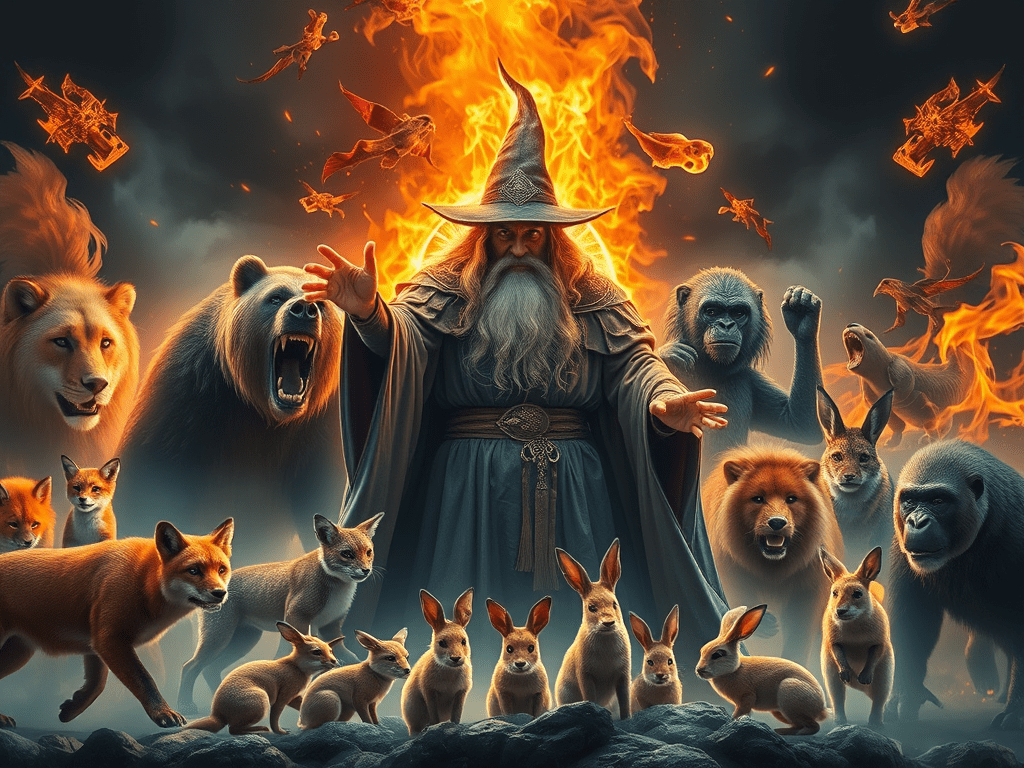
The trilogy concludes with That Hideous Strength, where a once-legendary Merlin returns amid a technocratic, demonic think tank (the N.I.C.E.). It’s terrifyingly relevant—our age of AI and corporate control would fit right in Lewis’s world. The scene where Merlin frees animals is equally unforgettable.
In this, the third book of the interplanetary drama, the way in which Lewis refers to the advancements of human race through the use of NICE mimics the pleasantries of AI and people today in service of potentially harmful intentions.
Beyond being a Christian apologist (see Mere Christianity, Letters to Malcolm), Lewis crafted stories so readers continue to wrestle with his truths long after he was gone. He didn’t claim perfection—only that his purpose was to write meaningful fiction that points us toward our true calling.
What Are We Here For?
What are we meant to do? Are we fulfilling our unique purpose, or chasing everything but that? Lewis was someone grounded enough to tell stories that pointed to difficulties within a culture, giving so much meaning about living in the world, but not of it (John 17:14-16), and brave enough to show us what could happen if things don’t change.
You: The Universe’s Missing Piece
Each of us holds a spark that only we contain. Our story is our own—but it also weaves into something far larger. When we live according to what we think we should want, or think we should do, we aren’t living according to what we were actually meant to do, or meant to act.
This isn’t recommending rebellion for rebellion’s sake, but rather to be you, and live according to what matters the most to you, will inevitably lead to the greatest things, as intended. Much like when sin entered the world and distorted the way of things, we too are like the original Adam, taking the coverup and running from the greatness we were intended for. Stop covering up. Stop living in denial. Be honest with yourself. Tell the truth. Let yourself suck at a sport, but keep playing.
If nothing else, Lewis points us to Scripture—“there is nothing new under the sun”, Ecclesiastes 1:9—and that the only deeply new thing is rediscovering whose story we are living out, ours, or a parody of someone else’s.
 From Where I Stand
Leave a comment