Tag: therapy

  • A bit Screwy: What Screwtape Letters reveals about ourselves and what we want to deny most of all.

    I’ve been on a bit of a C.S. Lewis kick lately, and I’d say “bear with me,” but there’s no need to merely bear with Lewis.

    Yes, I am indebted to his works—as they opened the door to forming a theology that is anything but stale or useless. I’m not a “Christian” alone, nor would I consider an introduction to me as “religious.” Those terms don’t capture the depth of a relationship with the Creator. Instead, I like to say that I’m a believer—but even that feels like saying I saw the sun today. I believe in many things, including the energy that flows through the world and that animals and plants have more purpose than we typically assign them. But I wouldn’t say I “believe” in trees or nature—it’s so obvious they exist that the term feels almost beneath the truth.

    No, I consider myself a child of God, reborn from a previous fallen state by the grace of God and the Spirit’s work in my life—allowing me to see truth apart from the everyday mentality of the world.

    This brings me to a fun little read by Mr. Lewis: The Screwtape Letters. I’m writing about this work because it reveals how easy it can be to lose your soul—and how the smallest, everyday choices quietly contribute to that loss.

    Sure, no one wants to lose their very essence—the thing that makes them them—but as fallen creatures of God, I think we ought to know just how insidious and crafty Satan’s minions are in their attempt to feast on souls.

    Now, a scholar could give you far more than I can, but I’ll do my best.

    My dearest audience,

    You know that little comment in the back of your mind—the one that lingers when you talk to that loved one? It judges what they do while preserving your behavior in context. That little comment of resentment may not be so little after all. It may be the seed of hatred, growing over years into full-grown disdain for all humans—including the One who made such detestable creatures.

    But surely you are not one of them. You’re just telling people the truth. Setting boundaries. Clearing your chest. Yes, the demons love it when you hold on to what makes you better than everyone else. When it’s always someone else’s fault, or someone else’s lack of judgment wounding you. Especially when you justify your snarky response as being “within context,” while the other person is judged at face value.

    Yes, they are hurting you, aren’t they? Making your life miserable. They need to be rebuked. After all, we are in total charge of our environments, aren’t we? Some of us already act like gods.

    Of course, no one says this stuff out loud. That would be ridiculous. We’re not bad people—we’re just misunderstood. We don’t need to change, just correct everyone to be more like us. On our noblest days, we may admit to certain faults—but never the ones we hold others accountable for.

    The other day, I saw a man walking, wearing a T-shirt that read: “Today’s good time is brought to you by WEED.” Well, certainly he was wrong. I stared at him from afar because of it. I even constructed a narrative in my head, depicting him as someone more worthy of disdain.

    I might as well have joined the demons at a local bar and dined with them on my own flesh, for what I chose to do with my mind—investing in thoughts that lead to bitterness and judgment. I could’ve driven my vehicle off a bridge and been better for it than to sit afar, condoning myself while casting a can-you-believe-this look at anyone who’d make eye contact.

    I’ve read the attempts of demons to capture souls, and I must agree with Mr. Lewis—Satan doesn’t want us to think too hard about the state of our soul, or to speak the thoughts in our head out loud. He wants them locked up, hidden, so we can keep convincing ourselves that we’re good people. Maybe even good enough. But never the bad ones. Surely not.

    Nobody wants to be a bad person, do they?

    Stay on guard. Stay bitter. Get yours at all costs.

    There’s your one-way ticket to losing your soul—giving it up to the world, living for dying things, and being only as good as your last success.

    Yes, people will leave you. And you’ll justify it, saying they didn’t “get” you.

    Stay in hiding. Satan loves hiding. He also loves shame. And ego. And just about any activity that keeps you from facing this simple reality: God loves you and wants you back.

    The Law—the commandments—can be summarized with two phrases: Love the Lord your God, and then love your neighbor as yourself. These two things lead to a fruitful life.

    So, shall we heed these words during our brief time here? Shall we trust they are the remedy for the chronic ailment called sin and all its effects?

    Or, like the flesh described in Screwtape Makes a Toast, will we become rather dull and flavorless meat—too passive one way or the other to be of value to the God who made us… or even to the demons who’d feast on us?

    Yours in sincerity,

    Uncle Meier
  • To Serve is To Live

    What’s the Point? (No, Seriously. What Is the Point?)

    At some point, we’ve all stood in the shower, stared off into the void (or the shampoo bottle), and asked the big question:
    “What’s the point of all this?”

    Like, really. What’s the point of working? Of meal prepping chicken and rice like we’re training for the Olympics when the only race we’re running is to beat traffic? What’s the point of going to the gym, squeezing into shirts that are a little too tight (okay, maybe that’s just me), and checking credit scores like its the weather?

    Asking “what’s the point?” is not a crisis—it’s actually a solid philosophical question, right up there with “Is cereal a form of soup?” and “Do dogs like me as much as I think they do?”

    But seriously—what happens after you reach the goals?
    You made the money. Lost the weight. Landed the promotion that requires 60 hours a week… which now requires 70 to maintain (and a personal assistant, a neck brace, and maybe a therapist-I know a good one). You bought the car. Paid off the student loans. Traveled to Italy and ate pasta that made those tight shirts even tighter in a different way. You’ve done The Things.

    And then what?

    At 25, I had this little existential meltdown (I think it’s called a quarter-life crisis). I realized I might not become a millionaire—despite my mother assuring me I could be anything I wanted to be, including the world-renowned biochemist I aspired to become after watching Outbreak at age nine. Thanks Dustin Hoffman.

    I mean, sure, buying those new shoes felt good. And yes, the compliments on the designer outfit were nice—until I realized I still felt kind of… empty. Not sad, not broken. Just unsettled.

    Now, some people find meaning in marathons, psychedelics, or finishing every episode of The Office (again). Others chase after this mysterious thing called “existential achievement” like it’s a Pokémon. And for many, the couch and a rerun of Seinfeld is more than enough—and hey, no shame if you’re still riding that DVD life.

    But if you’re one of the curious ones—the ones who can’t shake the “What’s the point?” question no matter how many productivity podcasts or oat milk lattes you consume—then maybe it’s time to stop asking what the point is, and start asking why you’re even here.

    Not to be dramatic, but… why do you exist? What was the reason for you being created in the first place?

    If you ask an atheist, they might say we’re just floating on a rock, existing until we don’t—nothing more, nothing less. Which is philosophically interesting but doesn’t help you get out of bed on a Monday. (No offense, atheists—but seriously, how do you guys do it?)

    Personally, I believe there’s a Creator—a higher Being who loves us into existence—and that gives me meaning. That awful Monday meeting? Purpose. That toddler tantrum in Target? Spiritual growth. That parking ticket? A lesson in patience.

    Because if love is real, and God is love, then you are loved—on purpose. Not randomly, not accidentally. And that changes everything.

    Achievements are fine. Financial freedom is lovely (at least I’ve heard that). But none of it will satisfy the soul. Not fully. Not for long.

    So maybe the real question isn’t “What’s the point?”
    It’s: “What am I here for?”
    And “How can I live the most valuable life with the time I’ve got?”

    If you start there, even the tight shirts start to make a little more sense.

  • To be honest…

    Honestly? I sat down to write this with zero agenda. Nothing. My genius said, “Just start writing and see what happens.” Always a solid strategy.

    So here I am—two lines deep—and already staring at the blinking cursor like it’s judging me.

    Idea one: What happens when the worst thing in life happens?

    Nope. Too heavy. Not today.

    Okay okay, here’s one: What happens…

    Gross. That’s so vague it could be a free online article…oh.

    Wait—I’ve got it:

    I have absolutely no idea. That’s the idea.

    Yep. No one knows the answer. Not me, not you, not that podcast host with the perfect bookshelf background (which I have-less perfect however). Not your favorite fitness influencer, your mom Facebook group, your stylist, or that one guy at the gym who somehow always has advice for everything except leg day (and diet).

    Forgive my little neurodivergent detour here, but when we’re trying to solve problems we usually end up drowning in opinions, frameworks, TED Talks, and cold plunges. Everyone has a hack, and yet… nothing changes.

    So how the heck are we supposed to move forward and live a meaningful life if we don’t even know what “solved” looks like?

    Here’s a thought: maybe we need to zoom out. Like… way out. Maybe we stop looking just at our brains, or our culture, or even our bodies—and take a peek at that deep, mysterious, spiritual part of ourselves.

    Yep. One of those posts.

    Don’t roll your eyes just yet.

    Because every day, you’re solving problems—some big, some small, some that just involve whether or not you can justify buying another pair of kicks/drip. Behind all those decisions is something deeper—something that drives you, that gives your life meaning.

    Dallas Willard—brilliant theologian and philosopher—once said (and I’m paraphrasing here): “What your soul is connected to determines how well your soul is.”

    Translation: If your soul is tied to your job, your team winning the playoffs, your group chat, or your Sunday routine, then your soul is gonna ride the rollercoaster of those highs and lows. But if it’s rooted in something deeper—like, say, the Creator of the whole show—then there’s a steadiness, a sense of “home,” even when things get shaky.

    Yes, even you overzealous people forgetting to turn off the news every once in a while.

    So yeah. No clear answers. No five-step plan. Just a thought worth sitting with.

    And honestly? I think it’s worth it.

  • Size 15: A Journey

    Again…enjoy your sweet, sweet shoes you small-footed people. 😑

    Let us embark on a peculiar journey—quest, if you will—into the bizarre world of men’s shoes. For this story to be authentic, tis I who is the holder of the size 15.

    Yes, fifteen. A size that sounds less like footwear and more like those small “smart” cars in mid 2000s.

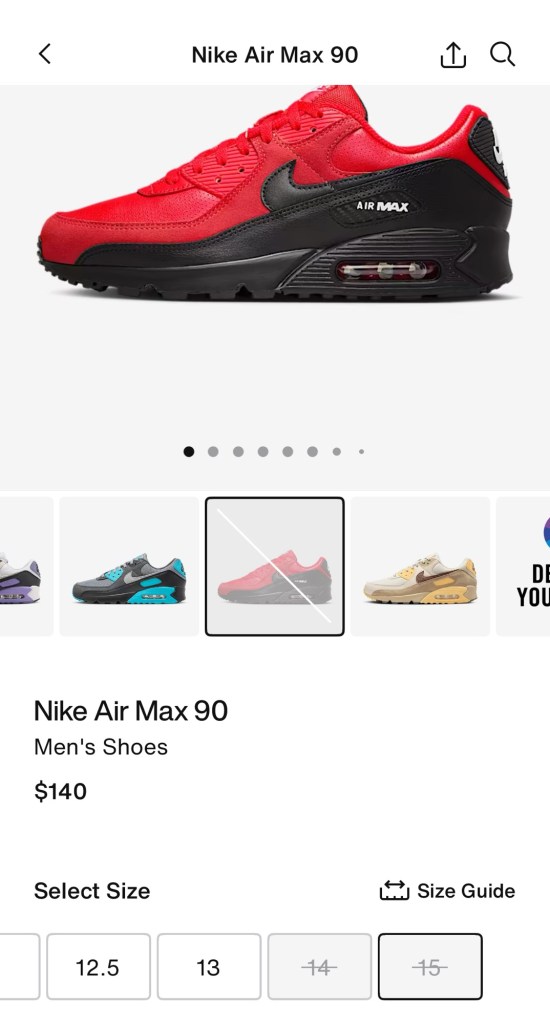
    I invite you, dear reader, to wander—into the labyrinth of online sneaker retailers: Nike, Adidas, New Balance, or whatever new age brand that was forged in the fires of Mount Hype last week. Choose your favorite Jordan, perhaps an Air Max 90 with a color scheme with just the right color palate it screams “you can’t get these!” and here in the sea of exclusivity: size 15? Sold out. Gone. Vanished like your motivation after eating a pack of ultimate stuffed Oreos.

    You might think, “Surely, this foot size would guarantee an overstock!” But no. It turns out that size 15 is a cruel paradox—rare enough to be inconvenient, yet common enough to be competitive. It’s like trying to find a left-handed coffee mug at a right-handed convention. They exist, but there are many people looking for the few that are around.

    Now, you may wonder, “Why on Earth should I care about this man’s odyssey?” Because (enter Forrest Gump accent): life is like a pair of shoes, my friend.

    Let me explain.

    Scarcity breeds value. Exclusivity inflates desirability. That same Jordan in a size 6? Might be on clearance next Tuesday. But a size 15? Full price and sold out in a minute. Maybe even resold for double. People camp out, not for warmth or camaraderie, but to clutch that elusive grail of rubber and laces. And suddenly—bam!—it’s not just a shoe, it’s a statement. A status symbol. A “flex.”

    This, friend, (we are friends now btw) … “Hello friend….Brother (Hulk Hogan voice) anyway…this “exclusivity” is what the sneaker world calls hype. And what we, in the world of hyper-fixation and compulsion might call… a trap.

    Because sometimes, what we want most isn’t actually what we want—it’s just what everyone else seems to want. Context is everything. That prized possession in one mindset? Utter trash in another. Like a prom tux at a Midwest wedding (jeans or cargo shorts only please) or a fork at a hotdog-serving venu—out of place, unnecessary, even ridiculous.

    So what if, just consider here, the thing you’re so obsessed with—the job, the relationship, the approval, the Yeezys—is only precious because of the mental lens you’re wearing right now? And what if, instead of focusing on doing less of the “bad” things, you simply added more of the good stuff—friends, purpose, vulnerability, laughter, a damn shrug the shoulders every once in awhile in the midst of stress 🤷🏻‍♀️🤷‍♀️?

    Maybe then, the cycle breaks on its own. Not through deprivation. But through distraction… by something better.

    Maybe your success isn’t about what “not to do,” but what to do.

    So next time size 15 is sold out, maybe take it as a reminder to think of me, or better the message (yes, the message): you don’t need that shoe. You need a new lens. And maybe take some time off and let little interferences go by saying “wow, look at those trees…just a blowing in the wind. How powerful those branches are to hold up to that.” Though we concluded on trees, we started with feet, my feet, and how through obscurity…we can find something useful, if we look for it.

  • Ye: Loss. Brilliance.Faith.Trauma. and Yes-mental health

    Ye: Loss. Brilliance.Faith.Trauma. and Yes-mental health

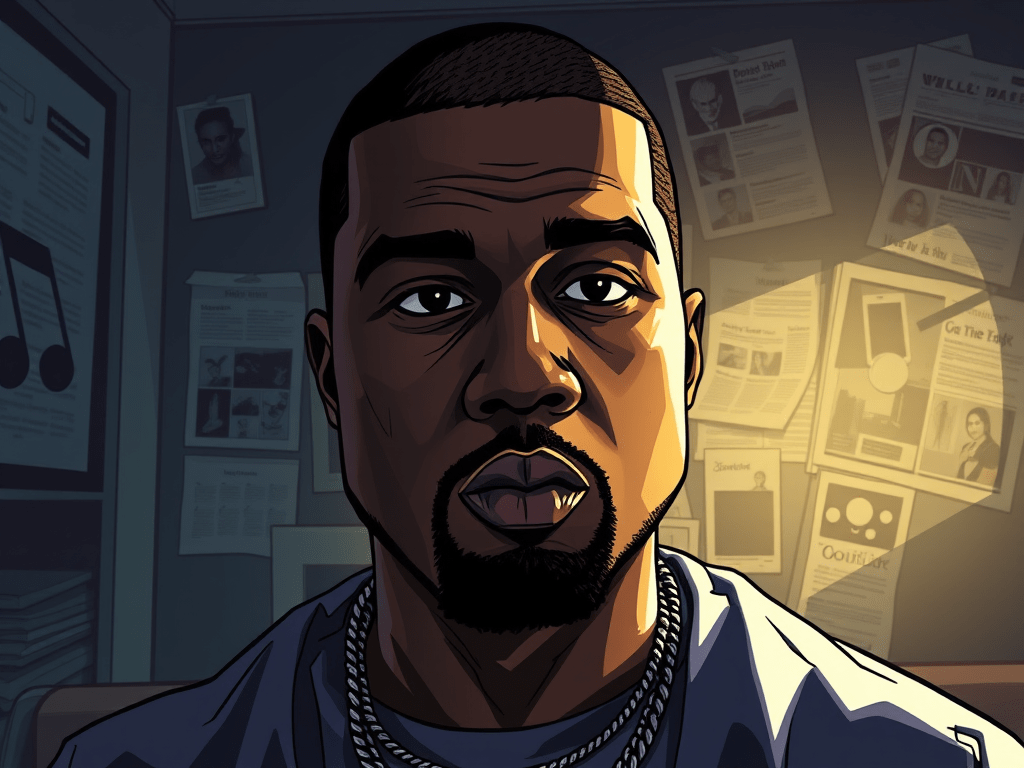
    Genius, crazy, rich, antisemitic, controversial, chaos, egocentric, attention-seeking-These are all words that swirl around the name Kanye West. They’re also words that, if we’re being honest, have swirled around many of our names too, just without the a Kardashian and seven-part documentaries made about us.

    There’s something strangely egotistic in me to even have the urge I felt to even write this. Whether it’s a futile attempt to educate, or just an exercise in reflection, here I am, offering a few words on a person who seems to provoke something in nearly everyone. Ye makes it’s hard to look away.

    It was earlier this week—Monday and on to Tuesday—when news surfaced again about Ye. Or Kanye. Or Yeezy. You can read the article if you want to know the details. Personally I am still digesting the interview where he’s wearing a black White Supremest hood in a hotel room talking for 58 minutes about why he’s wearing the black hood in the first place. But that’s not really the point of this.

    What is the point?

    Maybe it’s this: despite all the controversy, all the confusion, this man keeps creating. Music. Fashion. Art. Controversy.

    And we keep buying it. After all, he didn’t get to be No.4 on the all time Hip Hop sales list by sucking at his craft. We keep listening. Some of us still remember the first time we heard Jesus Walks. For me, it was right after basic training in the summer of 2004. That song wasn’t just music—it was a a light in an otherwise dark era of music. Literally a light too, making one of his first singles be about Jesus, very light-bearing.

    But being good at a craft and rich doesn’t erase trauma. Creativity doesn’t cancel out pain. Nor does fame justify erratic behavior. But what happens when you start connecting the dots?

    What happens when we hear that childhood trauma shaped much of this man’s life—long before he had a platform to express it?

    What does that do to a boy, growing up and figuring out what it means to be a man?

    Kanye shared that he found magazines in his mom’s closet—magazines that shaped his understanding of sex, identity, and self-worth in ways that were far beyond his years. And long before the headlines, there was that little boy trying to make sense of what he saw, of all that he experienced.

    We all have experiences that shaped us, for better or worse. And here’s the kicker, we didn’t get to chose those experiences or decide how they affect us.

    So when we rush to label, to cancel, to condemn—what are we really doing? Are we holding someone accountable? Or are we just distancing ourselves from the parts of him that remind us of the parts we try to hide in ourselves?

    After all, isn’t pornography the bane of a young man’s existence these days? Are the adults now, failing to admit to themselves their own shaping of sex, relationships, what it means to be a man?

    Empathy is the bridge to forgiveness.
    Not because forgiveness means agreement. But because empathy allows us to see someone as someone—not as a headline, not as a cautionary tale, but as a human being formed by the sum total of his experiences.

    If you zoom in on Kanye West, you can isolate any number of choices, some of which are difficult to defend. But if someone zoomed in on your worst moment—your ugliest thought—what would they find?

    This isn’t a defense of bad behavior. It’s a reflection on how quick we are to misjudge when we don’t know the whole story.

    In C.S. Lewis’s The Great Divorce there is a man Len, a spirit who was a murderer in life, but now reconciled with God and is in Heaven. Another man, the Big Ghost believes he is a “good man” despite evidence that he was not. the Big Ghost character would be that of a man today, maybe you who demand’s recognition for being good, for doing right. Meanwhile that man, the character Big Ghost fails to repent and rejects heaven in the process. Yes, the murder remained in Heaven.

    Christ flipped the typical human narrative of what appears to be good may not be, and what appears to be distant or far from God may be the closest. Like Mr. West who has many faults, we too can choose to be the Big Ghost and cling to our own “goodness” and fail to relate to someone who is easy to categorize as a “bad” one.

    No person is defined by a single act—good or bad. If we believe otherwise, then we’re condemning ourselves every time we fail. We’re erasing nuance, context, and the messy truth that people are often doing the best they can with what they’ve got.

    To live with grace is to recognize that. It’s to understand that every decision is filtered through a complex web of history, beliefs, trauma, and identity. It’s not about excusing—but about seeing.

    And maybe that’s what Kanye, in all his chaotic truth, mirrors back to us. Maybe that’s why his story unnerves us. Because in his rawness, we’re forced to look at our own contradictions. Our own judgments. Our own worst parts. And if we’re honest, maybe they’re not as far from his as we’d like to believe.

    So the next time you’re tempted to judge—pause. Ask yourself this-is this about what they did, or what it stirred in me? Is this really about them—or is it about my own discomfort?

    Because the truth is, we all carry things that others wouldn’t understand. And we all hope—deep down—for grace when we least deserve it.

  • Care? Or think you SHOULD care?

    So, I was watching the news the other day—like a responsible adult who pretends they’ve got a handle on the world—and in true chaotic fashion, a political clip flashed across the screen. You know the kind: stern faces, firm declarations.

    My brain lights up: “this matters a lot!”

    Is this good?

    Is this bad?

    Is it secretly both?

    Is the media spinning it? Am I being spun? Who really is informed?

    And just like that, I was off—launched into a 25-minute internal monologue that involved four hypothetical scenarios, five imaginary conversations, and me mentally arguing with some “representative” I’m not even sure what they do.

    But let’s skip the 600-word descent into that madness and cut to the punchline:

    I didn’t really care.

    I thought I cared.

    I believed I should care.

    But deep down, beneath the mental gymnastics and obligatory sighs of concern… I didn’t.

    Not really.

    And you know how I knew that? It became extremely boring to try to care. I cared more about caring than the topic I was SUPPOSED to care about.

    Now before you report me to your local “Citizen Who Should Care” hotline, let me clarify.

    I do care. I care about people.

    I just didn’t care about whatever thing was being discussed by angry man in a suit.

    There’s a difference. A big one, actually.

    When you truly care about something, it moves you—it compels you to act, to reflect, to engage.

    When you think you should care, it’s usually because someone else told you it’s important. Or because X did. Or because the anchor on the news got Very Serious™ with his voice.

    So there I sat, mildly stressed, semi-guilty, sipping coffee and wondering why I was so mentally invested in something I had no intention of doing anything about.

    And then it hit me: I was borrowing someone else’s care. Like a care-on-loan program and I have a horrible emotional credit score. The cost of the interest would floor me if I took that on.

    But here’s the strange and glorious twist: admitting I didn’t care, it gave me peace to be that honest.

    Because what I do care about is how people respond to news like that. My heart isn’t in the headlines—it’s with the person who’s afraid because of them, who’s confused, or angry, or overwhelmed.

    Even when I don’t agree with people’s perspective it’s nice to hear their conviction and walk alongside them.

    So instead of funneling all my energy into a political opinion I didn’t even want, I redirected it to empathy.

    And now, the real punchline—maybe the only part you need to hear:

    You only have so much energy every day.

    Which means it’s a precious resource. Like toilet paper during a panic (or eggs these days).

    So ask yourself:

    Do I actually care?

    Or do I just think I should?

    Practicing that tiny bit of honesty can save you hours of mental spiraling (refer back to my loan and interest metaphors, I was proud of that one).

    Because maybe you don’t care about that thing.

    But there is something else you care about a lot. And living in alignment with that thing makes you rational, grounded, and a lot less likely to throw your remote at the news.

    So go ahead—care less, on purpose.

    And care where it matters.

    Thank you for attending my TED Talk slash coffee-fueled ramble.

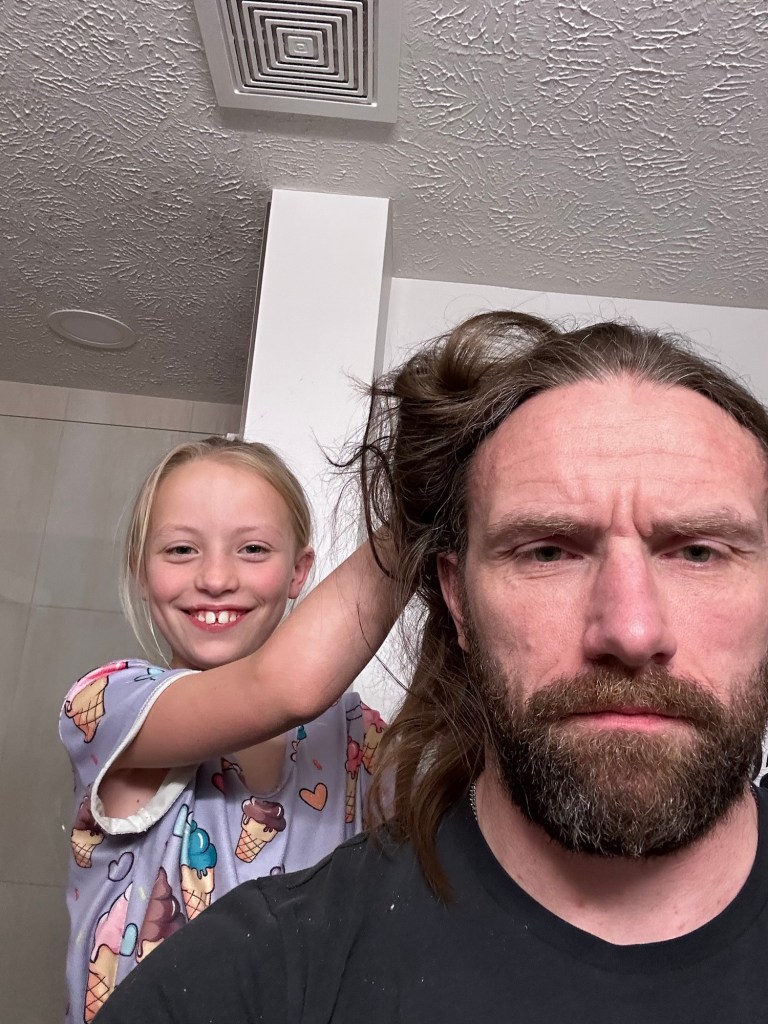
    A pic of me doing anything other than watching the news…..maybe she’ll braid it.
  • Attention Deficit Hyper-something Di…..did you see that one movie?

    Attention Deficit Hyper-something Di…..did you see that one movie?

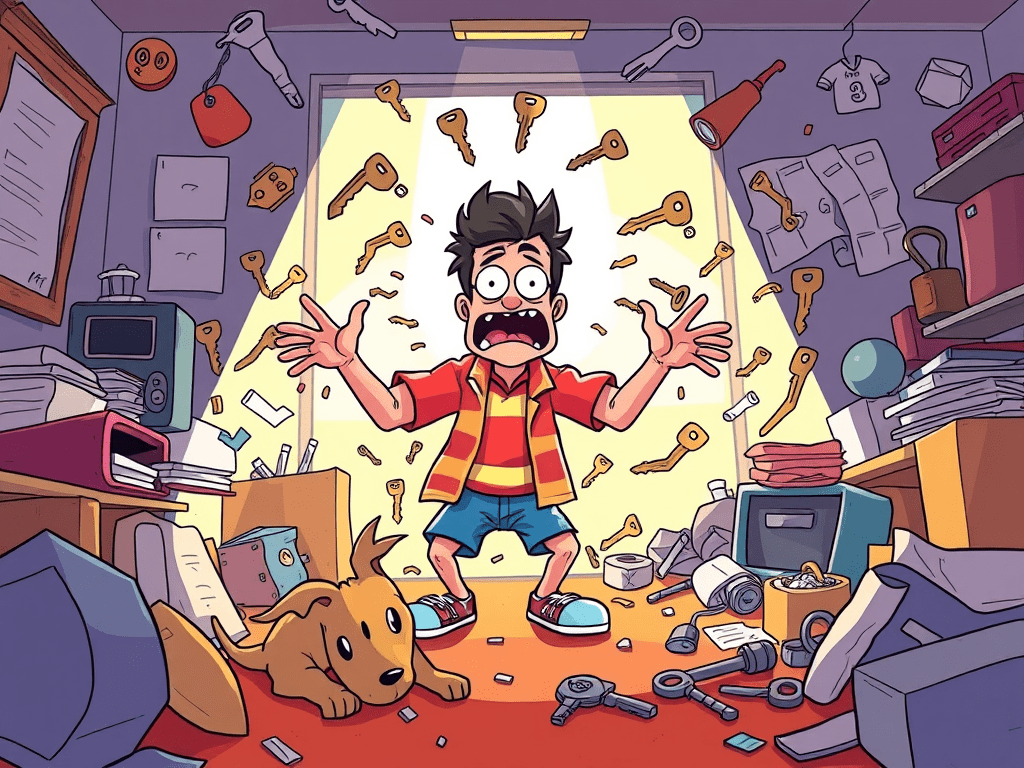
    The Case of the Disappearing Keys

    It was a bright and somewhat sunny Tuesday morning, and I was on a mission: get to work on time and maybe get my kid to school on time too. Sounds simple enough.

    But in the realm of ADHD, that’s a high-stakes game.

    I patted down my pockets, feeling the familiar smoothness of my phone and a strangely pack of gum from the last time I wore the pants. But where are my keys? I could swear I left them right on the kitchen counter. Poof! Like an unintentional magic trick, they had vanished.

    With the precision of a dog looking for his lost bone, I began my investigation. The first suspect: The little backpack I take to the gym. I check, but non he’s innocent. Second culprit: Oh, I must have left them in my gym shorts. Strike Two. OK, for my last and final witness, they must be in my sweater pocket, again from the gym. But wait, I didn’t wear my gym sweatshirt back from the gym.

    Also, should I wash that sweatshirt because I did workout a little in it. I am going to set it on the counter and get to that decision later.

    Time is ticking by…but I am unaware.

    I check my watch.

    Ahhh, 5 minutes have passed and is all I did was look in two places?

    The Odyssey Continues

    After an embarrassing struggle, I found my keys nestled in the middle console of my car. Praise Jesus! Fueled by triumph and adrenaline, I tell my daughter abruptly, “we are going to be late.”

    This one is my fault, but this does not negate the “we” here. After all, WE will be late…the fault? Well, that goes to my mind’s love of chaos.

    I decided to grab my coffee before we leave. So that I can have enough caffeine in my system before the first therapy session, which starts in, well, it already started technically. The ADHD fairy sprinkled her magical ‘let’s-distract-you-with-everything-in-sight’ dust on me.

    I decide the coffee needs some half and half.

    But should I add the fats to the coffee so close to my post-workout routine? Should I just be a man and drink the black coffee?

    Decision making with ADHD is like going into a labyrinth filled with shiny objects. First, I think about my daily caloric intake, specifically from fats. Next, I think about how I don’t drink enough “unaltered” coffee and always need to do something else to it, you know, be “extra,” aka “doing the most.” Also, should I add some sweetener to it? Or is that just another thing I can’t tolerate, the actual taste of coffee?

    I decide that I work hard and deserve the altered coffee drink.

    8:07 AM. The shock hits my body, we are really late.

    “Sweetheart, let’s go! The bell already rang.”

    “OK, I have to go to the bathroom.”

    “What!”

    I can see my future, homeless self holding a sign, “Free Corner Therapy, anything helps.” As I imagine my forgiving client’s patience running thin.

    “How could you take advantage of me, my time is valuable” I imagine them saying.

    “I am going to tell everyone you suck.” They will follow-up with the death blow of therapists everywhere, a bad review.

    The Great Forgetting

    I finally arrived to my first session of an overbooked schedule. Mentally, I am working at being present, not over apologizing and getting right into the material to show that the client’s wait was worth their time.

    “Again, I apologize….” Just like a slow motion Tik Tok video emphasises the behavior that I wanted to avoid. “Fooooooorrrrrrr beeeeeeinnnnnggggg Laaaatttteeeee.”

    Ahhhhhh….noooooooo…….

    Now they have to say, “it’s OK,” that they “get it” that they know the mornings can be, “rough.”

    But it shouldn’t have been rough, if I kept my keys in the same place, didn’t need constant caffeine to stay engaged, as well as some earlier things such as doing one more rep at the gym, doing one more page of writing, pushing for one more preparation of food item and one more conversation with my wife. I can do it….I can fit it in…….

    Conclusion

    Life with ADHD is often a rollercoaster ride where mundane tasks morph into epic adventures. While I may be the proud owner of the world’s most disorganized brain, I wouldn’t change it for anything. Overall, I like the way I think. On the positive end, I can get too focused, and feel emotions deeply. I think this benefits many people. It took me a while to accept the way I think, and clearly there are underlying parts that I want to improve on (cough) fixating on if people like me or not. But, overall, it’s me I have to accept, not try to get people to accept me by enhancing my stress with an ideal “mask.”

    So here’s to the beautifully bizarre world of ADHD! Even if my thoughts sometimes lead me down a rabbit hole or two.

    Now, excuse me while I try to fit in making a smoothie, packing my backpack for the day, and getting across town to the office I work at on Wednesdays.

    Wait, what is today again?

  • The Chalk Line

    The Chalk Line

    Elliot, a tall, slender man wearing a large untucked shirt splattered with various mediums of materials sat hunched over his canvas. In his shirt pocket, the box of cigarettes rests on the chest going in and out, deep breaths. His fingers smudged with oil paints digs into the pack, fumbling in the box spreading a dark oil over the bright white filters ends.

    His art never seemed to land quite right.

    The air in his studio was thick with turpentine and frustration.

    Dozens of unfinished paintings leaned against the walls, each abandoned just shy of completion, their potential strangled by his relentless pursuit of perfection. He had spent weeks, months—sometimes even years—on a single piece, only to despise it in the end. Like his cigarettes, the weight of expectation pressed against his chest, also like the smokes, a suffocating reminder that his art no longer felt like creation but a battleground between ambition and failure.

    One afternoon, weary from the endless cycle of doubt and revision, Elliot stepped outside for air. The city bustled around him, indifferent to his turmoil. His feet moved without direction until he found himself at the park, where laughter and life carried through the crisp autumn air. There, just off the pathway, a child crouched, a piece of chalk clenched in his tiny fist, his face scrunched in concentration.

    Elliot watched as the boy’s hand glided across the pavement, sweeping blues and yellows into the gray stone with an ease that seemed almost careless. A streak of orange, a swirl of pink—no hesitation, no erasures, just movement. The boy paused, squinting at his creation. For a moment, Elliot thought he recognized that familiar doubt, that paralysis of knowing something could be better. But then, just as quickly, the boy dropped the chalk and sprang to his feet.

    Without a second glance at his work, he bolted across the park, following the unmistakable chime of an ice cream truck. Elliot stood there, stunned. He waited, half-expecting the boy to return, to kneel back down and tweak a line or blend a color more carefully. Minutes passed. The chalk rested where it had fallen, abandoned like the artwork itself.

    Curiosity got the best of him. He turned his gaze from the unfinished drawing and scanned the park, spotting the child sitting cross-legged on a bench, an ice cream cone clutched in his sticky fingers, laughing with a group of friends. Elliot hesitated for only a moment before approaching.

    Kneeling, he extended the chalk towards the boy. “Do you want to finish your drawing?”

    The child barely glanced up, licking a drip of melting vanilla from his hand. “It’s done.”

    Elliot blinked. He turned his head slightly, looking back at the pavement where the colors sprawled in wild, unapologetic shapes. He had expected an explanation—some reason, some justification. Instead, there was only certainty.

    It’s done.

    Those two words landed heavier than all the years of critiques, rejections, and self-imposed expectations. He had spent his whole life trying to make something perfect, something worth admiring, yet here was a child who created simply for the joy of it. And then, when the joy was over, he let it go.

    For the first time in years, Elliot felt something shift inside him. A loosening. A breath of relief.

    A week later, he started working part-time at a coffee shop. Not because he wanted to quit art, but because he wanted to make art without forcing it to pay his rent. He wanted to create without the suffocating fear of failure. And so he did. Some paintings he finished in a day. Others he never finished at all. And for the first time in his life, he was okay with that.

    Because sometimes, you don’t need to perfect something to make it worth creating. Sometimes, it’s done when you decide it is.

  • Oppression

    Oppression

    Words matter. When we qualify something as a word, you encompass the topic, concept, idea, into that word. Word’s have a meaning, but history shows us that this meaning or intention can change. A word like “oppression” is one of those words, much like “discrimination” or dare I say it, “slavery.” They are all concepts that even just reading can invoke some emotion.

    I chose oppression to write about because it’s a word I am hearing used more these days. People in America are being “oppressed” by a tyrant. People are being held back or somehow blocked from what they want. Which, at a relatable level, sucks to experience.

    What does oppression mean? “Prolonged, cruel or unjust treatment or control.”

    To experience any level of cruelty what does that do to a person? Break them? Make them angry and resistant to any sort of change? Does it make you scared, hopeless, depressed? Does the entire environment or anyone who seemingly doesn’t agree with you wholeheartedly become an adversary?

    Now, nobody can deny any other person’s experience. So, I don’t deny people feeling oppressed in their daily life either under this current presidency or any other time in life. I don’t deny that it can be debilitating to feel threatened, to feel that around the corner there are choices being made that will have an effect on you, your family, possible future generations.

    My question is, how do those who feel oppressed, but wanted change before, know if what is being done isn’t for a larger good later? Therefore, the “greater good” later may require a sacrifice now. How do we know that all of this won’t lead to something good, later? Is it because we feel the person or persons making the decisions aren’t trustworthy?

    According to historical accounts of the German SS troops in WWII in the book, Ordinary Men: Reserve Police Battalion 101 and the Final Solution in Poland, the choice to be a part of something or not, is still up to each individual. These men’s journal accounts depicted the failure to act according to what they believed to be good, in support of the Jews. Instead they slowly fell into heinous mass murder.

    If you want some peace, try an exercise: When you experience a narrative of something, write two or three alternative perspectives. Force yourself to see what potential good could come from the current narrative you are experiencing. Work at being someone who is willing to challenge their notions, if only to better understand, there is an alternative perspective to everything.

    Triggered responses occur when we experience something that is painful or threatening in some way, setting the body into a fight or flight. When a threat to you or your wellbeing occurs, of course you are going to get amped up, of course you are going to have thoughts influenced by the biological response of fight, or flight.

    For the fighters out there, is what you are choosing to fight for, real and worth the potential sacrifice you might accrue as a result of an emotional choice in response to a “threat?” For the keyboard warriors out there typing some pretty damaging rants about how angry they are, how wronged or oppressed they are, what is it specifically you are responding to?

    These are real questions by the way. Not challenges. Curiosity kills, I am familiar with burning my own hand to see if the pan is hot. I want to touch on this topic of oppression because people are hurting, but some of the reason for hurt isn’t because of things going on, but the overconsumption of media and fear being promoted as a result. Threat of harm to anything you care about, leads to a justified fear response.

    Our minds work too quick for us, and questions can help us slow down a bit and investigate things more thoroughly. What happens when people slow down to realize what exactly they are feeling and ask “what can I do about this, what can I control?” What happens when we live as people trying to do good instead of identifying as oppressed or wronged leading to our inability to care for others?

    If you are drowning in the water you aren’t going to look out at the side of the pool and care for some kid who dropped his ice cream cone. When fearful you can waste all of your productive energy to yell out into the abyss to be heard. Online is like that, a large abyss, a seemingly large stage, but very little impact, if not just white noise.

    Dave Chappelle did this skit about 9/11. In the skit he references the old MTV music video show TRL. In the skit he talked about the twin towers and how when they fell, TRL host Carson Daly gets on a call with the rapper Ja Rule (who was incredibly popular at the time). Chappell references the idiocracy of getting Ja Rules opinion on the twin towers falling.

    “What would Ja do?” Chappell screams from the stage indicating that when he finds himself in trouble and unsure of what to do, he is now going to reference Ja Rule and what his thoughts are on matters.

    When in a heightened state, nobody should probably hear what you have to say. If you feel oppressed because of the information you are taking in and you feel justified in your angry response and you choose to share that, what is that going to do for other people? In your own way, you too could be the oppressor or at least reveal that you have the potential to oppose others as well.

    If you think the president is mad and hatred fills his bones, then do you hate back? If you want opposition to hate or it’s actually going to require you to love and be open to others. Yes, political parties, that even means to each other. You want to overturn the shift in the country, then love on each other more

    If you say that is how people are submissive and fail to make change? I disagree. I think doing good for others in our daily life does change things radically.

    Imagine you walk down the street and see 12 smiling faces, do you not think there would be some subtle shift in perspective of the world? If you are looking at yelling faces all day or yelling yourself, then yeah, you probably do feel the world is out to get you.

    Also, do we not think that every other government that fell before America did not have the people rebel or disagree along the way? Even with all of that anger as a result of oppression all the other nations fell. But I want to read about a nation that worked at loving each other and see how they did. Did nobody watch the Grinch and see the Who’s come together even after all of their stuff was taken?

    Sadly its human nature to rise to power, turn corrupt, and then the people fall into a faithless, fear state and then the whole thing collapses. How about in the face of oppression we choose to love and share words of uplifting comments and give more, rather than telling random people how angry or threatened you are.

    I don’t know, maybe there’s something I am missing. After all, I am supposed to be the Christian, white, heterosexual, cis-male with tall stature and medium-level income that is told doesn’t get it. So, fair enough, but the question of what you CAN do in the face of oppression and how is it going to serve the good of others still stands.