
Tag: positivity

  • The Chalk Line

    The Chalk Line

    Elliot, a tall, slender man wearing a large untucked shirt splattered with various mediums of materials sat hunched over his canvas. In his shirt pocket, the box of cigarettes rests on the chest going in and out, deep breaths. His fingers smudged with oil paints digs into the pack, fumbling in the box spreading a dark oil over the bright white filters ends.

    His art never seemed to land quite right.

    The air in his studio was thick with turpentine and frustration.

    Dozens of unfinished paintings leaned against the walls, each abandoned just shy of completion, their potential strangled by his relentless pursuit of perfection. He had spent weeks, months—sometimes even years—on a single piece, only to despise it in the end. Like his cigarettes, the weight of expectation pressed against his chest, also like the smokes, a suffocating reminder that his art no longer felt like creation but a battleground between ambition and failure.

    One afternoon, weary from the endless cycle of doubt and revision, Elliot stepped outside for air. The city bustled around him, indifferent to his turmoil. His feet moved without direction until he found himself at the park, where laughter and life carried through the crisp autumn air. There, just off the pathway, a child crouched, a piece of chalk clenched in his tiny fist, his face scrunched in concentration.

    Elliot watched as the boy’s hand glided across the pavement, sweeping blues and yellows into the gray stone with an ease that seemed almost careless. A streak of orange, a swirl of pink—no hesitation, no erasures, just movement. The boy paused, squinting at his creation. For a moment, Elliot thought he recognized that familiar doubt, that paralysis of knowing something could be better. But then, just as quickly, the boy dropped the chalk and sprang to his feet.

    Without a second glance at his work, he bolted across the park, following the unmistakable chime of an ice cream truck. Elliot stood there, stunned. He waited, half-expecting the boy to return, to kneel back down and tweak a line or blend a color more carefully. Minutes passed. The chalk rested where it had fallen, abandoned like the artwork itself.

    Curiosity got the best of him. He turned his gaze from the unfinished drawing and scanned the park, spotting the child sitting cross-legged on a bench, an ice cream cone clutched in his sticky fingers, laughing with a group of friends. Elliot hesitated for only a moment before approaching.

    Kneeling, he extended the chalk towards the boy. “Do you want to finish your drawing?”

    The child barely glanced up, licking a drip of melting vanilla from his hand. “It’s done.”

    Elliot blinked. He turned his head slightly, looking back at the pavement where the colors sprawled in wild, unapologetic shapes. He had expected an explanation—some reason, some justification. Instead, there was only certainty.

    It’s done.

    Those two words landed heavier than all the years of critiques, rejections, and self-imposed expectations. He had spent his whole life trying to make something perfect, something worth admiring, yet here was a child who created simply for the joy of it. And then, when the joy was over, he let it go.

    For the first time in years, Elliot felt something shift inside him. A loosening. A breath of relief.

    A week later, he started working part-time at a coffee shop. Not because he wanted to quit art, but because he wanted to make art without forcing it to pay his rent. He wanted to create without the suffocating fear of failure. And so he did. Some paintings he finished in a day. Others he never finished at all. And for the first time in his life, he was okay with that.

    Because sometimes, you don’t need to perfect something to make it worth creating. Sometimes, it’s done when you decide it is.
  • Oppression

    Oppression

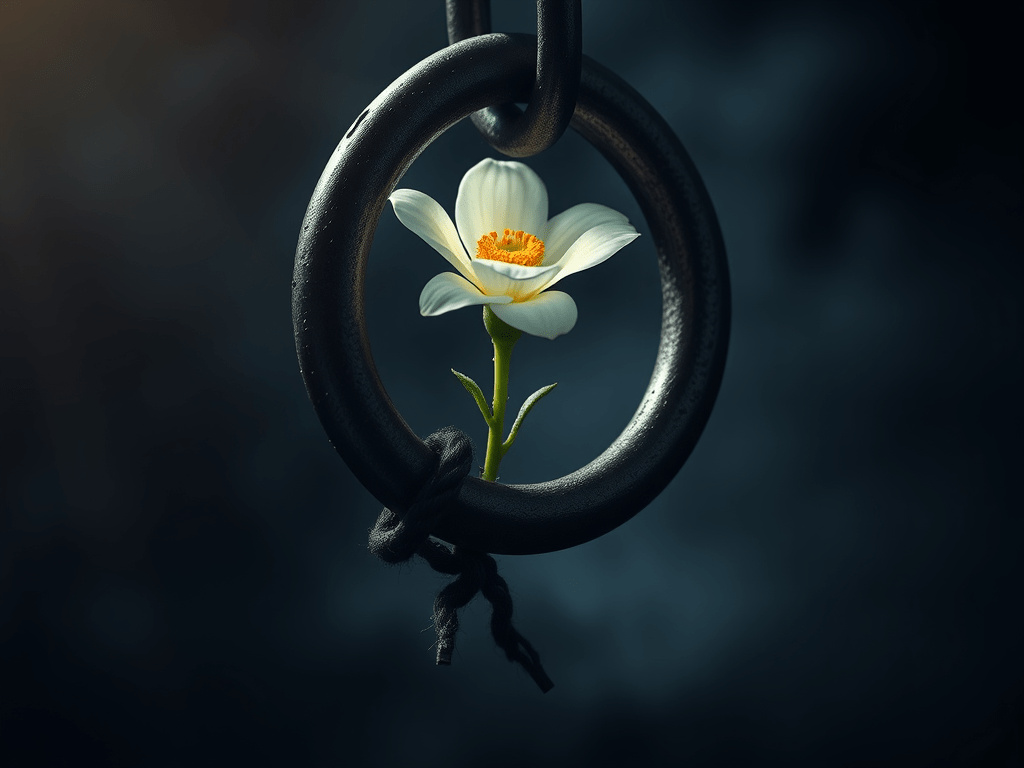
    Words matter. When we qualify something as a word, you encompass the topic, concept, idea, into that word. Word’s have a meaning, but history shows us that this meaning or intention can change. A word like “oppression” is one of those words, much like “discrimination” or dare I say it, “slavery.” They are all concepts that even just reading can invoke some emotion.

    I chose oppression to write about because it’s a word I am hearing used more these days. People in America are being “oppressed” by a tyrant. People are being held back or somehow blocked from what they want. Which, at a relatable level, sucks to experience.

    What does oppression mean? “Prolonged, cruel or unjust treatment or control.”

    To experience any level of cruelty what does that do to a person? Break them? Make them angry and resistant to any sort of change? Does it make you scared, hopeless, depressed? Does the entire environment or anyone who seemingly doesn’t agree with you wholeheartedly become an adversary?

    Now, nobody can deny any other person’s experience. So, I don’t deny people feeling oppressed in their daily life either under this current presidency or any other time in life. I don’t deny that it can be debilitating to feel threatened, to feel that around the corner there are choices being made that will have an effect on you, your family, possible future generations.

    My question is, how do those who feel oppressed, but wanted change before, know if what is being done isn’t for a larger good later? Therefore, the “greater good” later may require a sacrifice now. How do we know that all of this won’t lead to something good, later? Is it because we feel the person or persons making the decisions aren’t trustworthy?

    According to historical accounts of the German SS troops in WWII in the book, Ordinary Men: Reserve Police Battalion 101 and the Final Solution in Poland, the choice to be a part of something or not, is still up to each individual. These men’s journal accounts depicted the failure to act according to what they believed to be good, in support of the Jews. Instead they slowly fell into heinous mass murder.

    If you want some peace, try an exercise: When you experience a narrative of something, write two or three alternative perspectives. Force yourself to see what potential good could come from the current narrative you are experiencing. Work at being someone who is willing to challenge their notions, if only to better understand, there is an alternative perspective to everything.

    Triggered responses occur when we experience something that is painful or threatening in some way, setting the body into a fight or flight. When a threat to you or your wellbeing occurs, of course you are going to get amped up, of course you are going to have thoughts influenced by the biological response of fight, or flight.

    For the fighters out there, is what you are choosing to fight for, real and worth the potential sacrifice you might accrue as a result of an emotional choice in response to a “threat?” For the keyboard warriors out there typing some pretty damaging rants about how angry they are, how wronged or oppressed they are, what is it specifically you are responding to?

    These are real questions by the way. Not challenges. Curiosity kills, I am familiar with burning my own hand to see if the pan is hot. I want to touch on this topic of oppression because people are hurting, but some of the reason for hurt isn’t because of things going on, but the overconsumption of media and fear being promoted as a result. Threat of harm to anything you care about, leads to a justified fear response.

    Our minds work too quick for us, and questions can help us slow down a bit and investigate things more thoroughly. What happens when people slow down to realize what exactly they are feeling and ask “what can I do about this, what can I control?” What happens when we live as people trying to do good instead of identifying as oppressed or wronged leading to our inability to care for others?

    If you are drowning in the water you aren’t going to look out at the side of the pool and care for some kid who dropped his ice cream cone. When fearful you can waste all of your productive energy to yell out into the abyss to be heard. Online is like that, a large abyss, a seemingly large stage, but very little impact, if not just white noise.

    Dave Chappelle did this skit about 9/11. In the skit he references the old MTV music video show TRL. In the skit he talked about the twin towers and how when they fell, TRL host Carson Daly gets on a call with the rapper Ja Rule (who was incredibly popular at the time). Chappell references the idiocracy of getting Ja Rules opinion on the twin towers falling.

    “What would Ja do?” Chappell screams from the stage indicating that when he finds himself in trouble and unsure of what to do, he is now going to reference Ja Rule and what his thoughts are on matters.

    When in a heightened state, nobody should probably hear what you have to say. If you feel oppressed because of the information you are taking in and you feel justified in your angry response and you choose to share that, what is that going to do for other people? In your own way, you too could be the oppressor or at least reveal that you have the potential to oppose others as well.

    If you think the president is mad and hatred fills his bones, then do you hate back? If you want opposition to hate or it’s actually going to require you to love and be open to others. Yes, political parties, that even means to each other. You want to overturn the shift in the country, then love on each other more

    If you say that is how people are submissive and fail to make change? I disagree. I think doing good for others in our daily life does change things radically.

    Imagine you walk down the street and see 12 smiling faces, do you not think there would be some subtle shift in perspective of the world? If you are looking at yelling faces all day or yelling yourself, then yeah, you probably do feel the world is out to get you.

    Also, do we not think that every other government that fell before America did not have the people rebel or disagree along the way? Even with all of that anger as a result of oppression all the other nations fell. But I want to read about a nation that worked at loving each other and see how they did. Did nobody watch the Grinch and see the Who’s come together even after all of their stuff was taken?

    Sadly its human nature to rise to power, turn corrupt, and then the people fall into a faithless, fear state and then the whole thing collapses. How about in the face of oppression we choose to love and share words of uplifting comments and give more, rather than telling random people how angry or threatened you are.

    I don’t know, maybe there’s something I am missing. After all, I am supposed to be the Christian, white, heterosexual, cis-male with tall stature and medium-level income that is told doesn’t get it. So, fair enough, but the question of what you CAN do in the face of oppression and how is it going to serve the good of others still stands.