Tag: love

  • A bit Screwy: What Screwtape Letters reveals about ourselves and what we want to deny most of all.

    I’ve been on a bit of a C.S. Lewis kick lately, and I’d say “bear with me,” but there’s no need to merely bear with Lewis.

    Yes, I am indebted to his works—as they opened the door to forming a theology that is anything but stale or useless. I’m not a “Christian” alone, nor would I consider an introduction to me as “religious.” Those terms don’t capture the depth of a relationship with the Creator. Instead, I like to say that I’m a believer—but even that feels like saying I saw the sun today. I believe in many things, including the energy that flows through the world and that animals and plants have more purpose than we typically assign them. But I wouldn’t say I “believe” in trees or nature—it’s so obvious they exist that the term feels almost beneath the truth.

    No, I consider myself a child of God, reborn from a previous fallen state by the grace of God and the Spirit’s work in my life—allowing me to see truth apart from the everyday mentality of the world.

    This brings me to a fun little read by Mr. Lewis: The Screwtape Letters. I’m writing about this work because it reveals how easy it can be to lose your soul—and how the smallest, everyday choices quietly contribute to that loss.

    Sure, no one wants to lose their very essence—the thing that makes them them—but as fallen creatures of God, I think we ought to know just how insidious and crafty Satan’s minions are in their attempt to feast on souls.

    Now, a scholar could give you far more than I can, but I’ll do my best.

    My dearest audience,

    You know that little comment in the back of your mind—the one that lingers when you talk to that loved one? It judges what they do while preserving your behavior in context. That little comment of resentment may not be so little after all. It may be the seed of hatred, growing over years into full-grown disdain for all humans—including the One who made such detestable creatures.

    But surely you are not one of them. You’re just telling people the truth. Setting boundaries. Clearing your chest. Yes, the demons love it when you hold on to what makes you better than everyone else. When it’s always someone else’s fault, or someone else’s lack of judgment wounding you. Especially when you justify your snarky response as being “within context,” while the other person is judged at face value.

    Yes, they are hurting you, aren’t they? Making your life miserable. They need to be rebuked. After all, we are in total charge of our environments, aren’t we? Some of us already act like gods.

    Of course, no one says this stuff out loud. That would be ridiculous. We’re not bad people—we’re just misunderstood. We don’t need to change, just correct everyone to be more like us. On our noblest days, we may admit to certain faults—but never the ones we hold others accountable for.

    The other day, I saw a man walking, wearing a T-shirt that read: “Today’s good time is brought to you by WEED.” Well, certainly he was wrong. I stared at him from afar because of it. I even constructed a narrative in my head, depicting him as someone more worthy of disdain.

    I might as well have joined the demons at a local bar and dined with them on my own flesh, for what I chose to do with my mind—investing in thoughts that lead to bitterness and judgment. I could’ve driven my vehicle off a bridge and been better for it than to sit afar, condoning myself while casting a can-you-believe-this look at anyone who’d make eye contact.

    I’ve read the attempts of demons to capture souls, and I must agree with Mr. Lewis—Satan doesn’t want us to think too hard about the state of our soul, or to speak the thoughts in our head out loud. He wants them locked up, hidden, so we can keep convincing ourselves that we’re good people. Maybe even good enough. But never the bad ones. Surely not.

    Nobody wants to be a bad person, do they?

    Stay on guard. Stay bitter. Get yours at all costs.

    There’s your one-way ticket to losing your soul—giving it up to the world, living for dying things, and being only as good as your last success.

    Yes, people will leave you. And you’ll justify it, saying they didn’t “get” you.

    Stay in hiding. Satan loves hiding. He also loves shame. And ego. And just about any activity that keeps you from facing this simple reality: God loves you and wants you back.

    The Law—the commandments—can be summarized with two phrases: Love the Lord your God, and then love your neighbor as yourself. These two things lead to a fruitful life.

    So, shall we heed these words during our brief time here? Shall we trust they are the remedy for the chronic ailment called sin and all its effects?

    Or, like the flesh described in Screwtape Makes a Toast, will we become rather dull and flavorless meat—too passive one way or the other to be of value to the God who made us… or even to the demons who’d feast on us?

    Yours in sincerity,

    Uncle Meier
  • Camping Theology and the Great Disconnect.

    Camping Theology and the Great Disconnect.

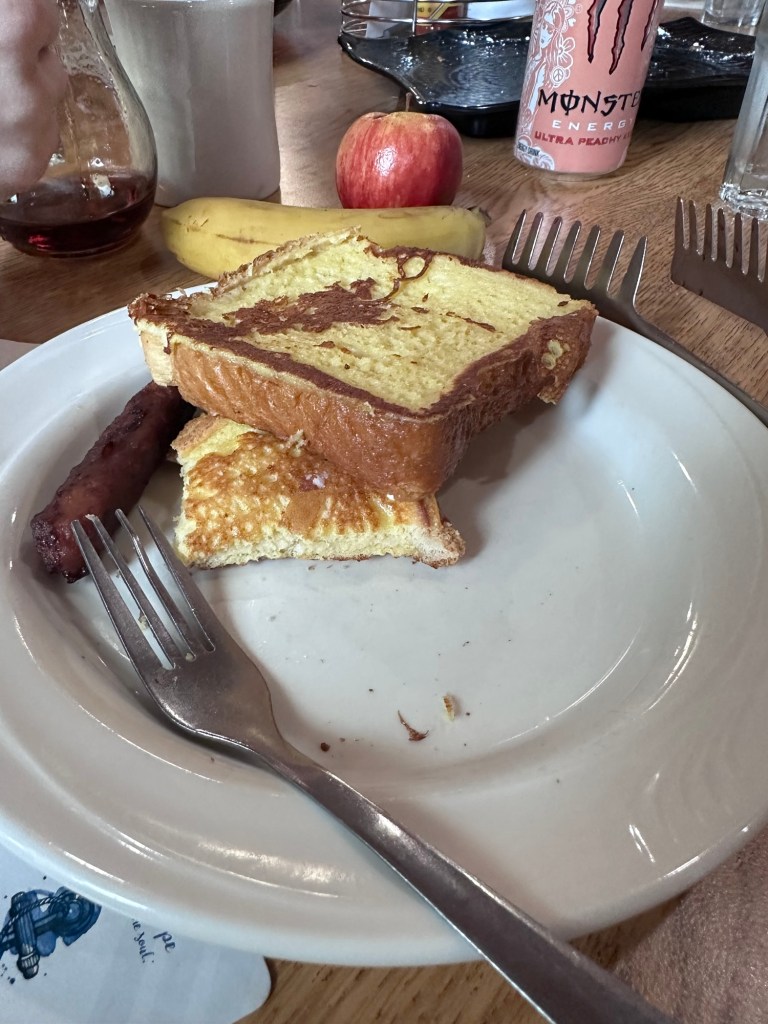
    A hearty breakfast before worship (God bless it).

    What is it about trees, open land, a pile of pancakes, a dining hall with a modern, cabin-esc vibe, basketball courts and highly weathered balls, not to forget, the ever-humbling Pickleball court that turns even the proud into the breathless… that makes it all feel so magical?

    No, this isn’t just any campsite. This is church camp.

    And yes—I’m 39 years old. I know. Church camp isn’t just for teens with underdeveloped frontal lobes. It’s for grown adults with student loans, aging knees, and deep questions about meaning, suffering, and why camp mattresses are still apparently made from recycled plastic cups.

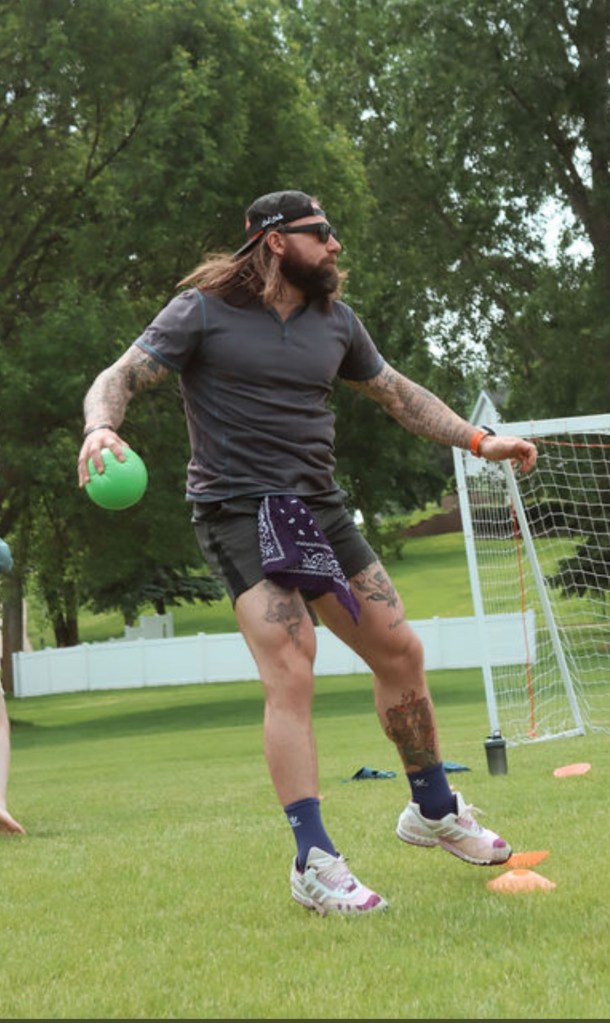
    No. My foot was not over the line. (Photo Credit: Bre Gray- bregrayphotography.pixieset.com)

    At first glance, it’s a recipe you wouldn’t expect to nourish the soul: communal sleeping with nine other guys, unreasonably early mornings, and food so rich and hearty it feels like we’re dining with medieval royalty (minus the beheadings, plus a lot more cheese). And yet, somewhere between the 16-hour days, the constant change of sweaty clothes, and the silverware I didn’t have to wash, I remembered something.

    Every day had rhythm at camp: morning and evening worship services, time carved out for silence and scripture, group discussions about faith—where it’s lived, where it’s lost, and where we’re still fumbling in the dark. But it’s not just the programming. It’s what happens when we step outside the script of “real life” and into something slow, and never ending.

    At 39…my back starts to feel it.

    Be honest: our daily lives are designed to distract us from ourselves. We march through schedules, crush goals, pay off student loans (until the end of time), scroll endlessly, and quietly wonder, “Is this it?”

    But camp—the right kind of camp—brings you face to face with your own soul. You can’t outrun it out there. There’s nowhere to hide when you’re sitting around a well-crafted cabin table, under a star-pierced sky, holding a thermos of Minnesota’s finest tap, and realizing how long it’s been since you actually felt still.

    One of the biggest things I see as a therapist?

    People are disconnected from themselves.

    Not the version they present to the world. Not the curated personality or the productive employee or the “good” parent. I mean the real them. The one that’s still under there somewhere, buried beneath bills and burdens and the belief that if we just push hard enough, we’ll eventually feel okay.

    But here’s the catch:

    We don’t know why we do what we do.

    We think we know. We tell ourselves stories.

    But often, those stories aren’t true.

    That’s why reflection—real, sometimes uncomfortable reflection—is so important. Because if we don’t pause and reassess, we wake up one day bitter, cynical, and convinced that the best parts of life are behind us.

    Being with middle school through high school students this past week reminded me what it was like to be joyous and live in the moment. They had within them a camaraderie that we often don’t find in the routines of everyday life. These students had each other and they had, well, connection.

    Connection, especially the kind that touches the deepest part of our being, is what we were made for. Not just connection with people (though that’s crucial). But connection with God—the Creator who sees through all our layers and still longs to be close.

    And when we don’t connect with Him?

    We find substitute relationships:

    – With our careers

    – With approval

    – With achievement

    – With control

    But those things will fail us, sooner or later.

    They make terrible gods and even worse friends.

    Yet life isn’t shallow. Not at all. It’s deep and eternally significant. Every moment. Every choice. Every quiet ache.

    The tragedy is not that life lacks meaning, but that we rarely stop long enough to see how meaningful it actually is.

    And no, you don’t have to be at a camp with creaky bunks and bug spray in your hair to realign. You can pause for five minutes between Zoom calls, or in the carpool line, or right before you open another Microsoft Word doc, and simply ask:

    “What’s really going on in me right now?”

    “What do I want to be about today?”

    “God, are You near—and am I listening?”

    If you do that daily—even just for a week—you might be surprised. You might start to see your life with fresh eyes. You might remember that you are more than your resume, your obligations, or your debt-to-income ratio.

    Because here’s the truth:

    You can’t have a great marriage without effort.

    You can’t be a great athlete without training.

    And you can’t cultivate a soul without intentional time with the One who gave it to you.

    From where I stand, the greatest lack in most people’s lives is not time, not opportunity, not intelligence, or even love.

    It’s spiritual disconnection.

    From God. From truth. From themselves.

    But the good news?

    You can reconnect.

    Right now.

    No reservation needed.

    And maybe—just maybe—that’s where the real magic begins.

  • To be honest…

    Honestly? I sat down to write this with zero agenda. Nothing. My genius said, “Just start writing and see what happens.” Always a solid strategy.

    So here I am—two lines deep—and already staring at the blinking cursor like it’s judging me.

    Idea one: What happens when the worst thing in life happens?

    Nope. Too heavy. Not today.

    Okay okay, here’s one: What happens…

    Gross. That’s so vague it could be a free online article…oh.

    Wait—I’ve got it:

    I have absolutely no idea. That’s the idea.

    Yep. No one knows the answer. Not me, not you, not that podcast host with the perfect bookshelf background (which I have-less perfect however). Not your favorite fitness influencer, your mom Facebook group, your stylist, or that one guy at the gym who somehow always has advice for everything except leg day (and diet).

    Forgive my little neurodivergent detour here, but when we’re trying to solve problems we usually end up drowning in opinions, frameworks, TED Talks, and cold plunges. Everyone has a hack, and yet… nothing changes.

    So how the heck are we supposed to move forward and live a meaningful life if we don’t even know what “solved” looks like?

    Here’s a thought: maybe we need to zoom out. Like… way out. Maybe we stop looking just at our brains, or our culture, or even our bodies—and take a peek at that deep, mysterious, spiritual part of ourselves.

    Yep. One of those posts.

    Don’t roll your eyes just yet.

    Because every day, you’re solving problems—some big, some small, some that just involve whether or not you can justify buying another pair of kicks/drip. Behind all those decisions is something deeper—something that drives you, that gives your life meaning.

    Dallas Willard—brilliant theologian and philosopher—once said (and I’m paraphrasing here): “What your soul is connected to determines how well your soul is.”

    Translation: If your soul is tied to your job, your team winning the playoffs, your group chat, or your Sunday routine, then your soul is gonna ride the rollercoaster of those highs and lows. But if it’s rooted in something deeper—like, say, the Creator of the whole show—then there’s a steadiness, a sense of “home,” even when things get shaky.

    Yes, even you overzealous people forgetting to turn off the news every once in a while.

    So yeah. No clear answers. No five-step plan. Just a thought worth sitting with.

    And honestly? I think it’s worth it.

  • Size 15: A Journey

    Again…enjoy your sweet, sweet shoes you small-footed people. 😑

    Let us embark on a peculiar journey—quest, if you will—into the bizarre world of men’s shoes. For this story to be authentic, tis I who is the holder of the size 15.

    Yes, fifteen. A size that sounds less like footwear and more like those small “smart” cars in mid 2000s.

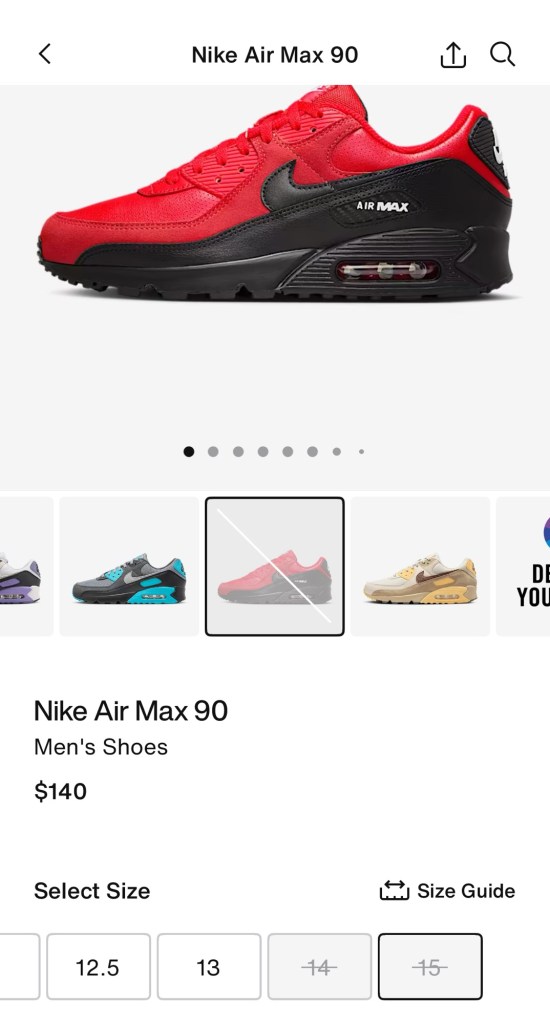
    I invite you, dear reader, to wander—into the labyrinth of online sneaker retailers: Nike, Adidas, New Balance, or whatever new age brand that was forged in the fires of Mount Hype last week. Choose your favorite Jordan, perhaps an Air Max 90 with a color scheme with just the right color palate it screams “you can’t get these!” and here in the sea of exclusivity: size 15? Sold out. Gone. Vanished like your motivation after eating a pack of ultimate stuffed Oreos.

    You might think, “Surely, this foot size would guarantee an overstock!” But no. It turns out that size 15 is a cruel paradox—rare enough to be inconvenient, yet common enough to be competitive. It’s like trying to find a left-handed coffee mug at a right-handed convention. They exist, but there are many people looking for the few that are around.

    Now, you may wonder, “Why on Earth should I care about this man’s odyssey?” Because (enter Forrest Gump accent): life is like a pair of shoes, my friend.

    Let me explain.

    Scarcity breeds value. Exclusivity inflates desirability. That same Jordan in a size 6? Might be on clearance next Tuesday. But a size 15? Full price and sold out in a minute. Maybe even resold for double. People camp out, not for warmth or camaraderie, but to clutch that elusive grail of rubber and laces. And suddenly—bam!—it’s not just a shoe, it’s a statement. A status symbol. A “flex.”

    This, friend, (we are friends now btw) … “Hello friend….Brother (Hulk Hogan voice) anyway…this “exclusivity” is what the sneaker world calls hype. And what we, in the world of hyper-fixation and compulsion might call… a trap.

    Because sometimes, what we want most isn’t actually what we want—it’s just what everyone else seems to want. Context is everything. That prized possession in one mindset? Utter trash in another. Like a prom tux at a Midwest wedding (jeans or cargo shorts only please) or a fork at a hotdog-serving venu—out of place, unnecessary, even ridiculous.

    So what if, just consider here, the thing you’re so obsessed with—the job, the relationship, the approval, the Yeezys—is only precious because of the mental lens you’re wearing right now? And what if, instead of focusing on doing less of the “bad” things, you simply added more of the good stuff—friends, purpose, vulnerability, laughter, a damn shrug the shoulders every once in awhile in the midst of stress 🤷🏻‍♀️🤷‍♀️?

    Maybe then, the cycle breaks on its own. Not through deprivation. But through distraction… by something better.

    Maybe your success isn’t about what “not to do,” but what to do.

    So next time size 15 is sold out, maybe take it as a reminder to think of me, or better the message (yes, the message): you don’t need that shoe. You need a new lens. And maybe take some time off and let little interferences go by saying “wow, look at those trees…just a blowing in the wind. How powerful those branches are to hold up to that.” Though we concluded on trees, we started with feet, my feet, and how through obscurity…we can find something useful, if we look for it.

  • This Book Changed My Life

    This Book Changed My Life

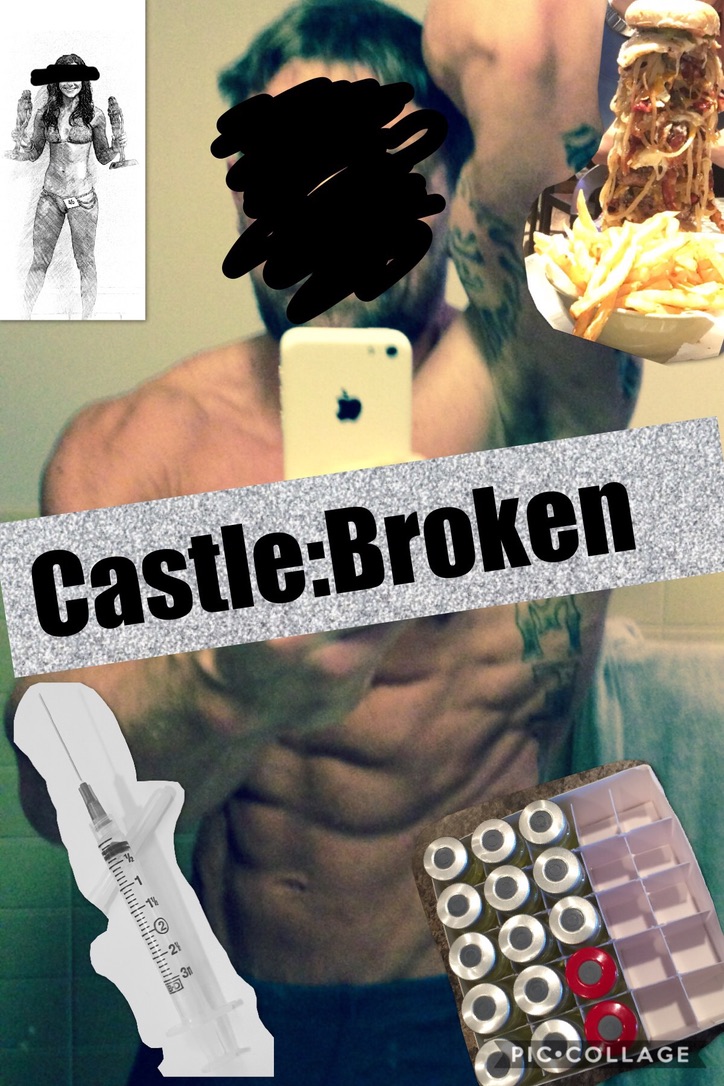
    I asked AI to summarize my book, Castle- Broken: When appearance are everything, here’s what I got:

    The document “Castle: Broken” by L.A. Meier is a deeply personal and emotionally raw exploration of muscle dysmorphia (also known as bigorexia)—a lesser-discussed body image disorder primarily affecting men. The author weaves clinical insight with autobiographical storytelling to shed light on how societal ideals, masculinity, and personal trauma fuel obsessive body concerns and destructive behaviors.

    🔍 Core Themes:

    • Body Image and Masculinity: The narrative highlights how cultural ideals pressure men to embody physical strength and dominance, often at the cost of emotional health and balance.
    • Muscle Dysmorphia Defined: Drawing on DSM-V criteria, it explains muscle dysmorphia as a subtype of body dysmorphic disorder marked by obsessive focus on muscularity, leading to impaired functioning and distress.
    • Steroid and Supplement Use: The author describes his personal descent into anabolic steroid and supplement use, not as vanity, but as an effort to gain control and self-worth through physique.
    • Mental Health and Masculine Identity: The story reflects on how unspoken emotional struggles, societal expectations, and the refusal to show vulnerability amplify the severity of disorders like bigorexia.
    • Childhood and Early Influences: The author recounts formative years shaped by isolation, a desire for approval, and early experiences with emotional sensitivity, body shame, and perfectionism.

    📚 Purpose of the Book:

    This is not just a memoir—it’s an advocacy piece calling for recognition of muscle dysmorphia as a real, dangerous mental health issue. It critiques the lack of tailored treatment for men and emphasizes the need for gender-specific approaches in mental health care.

    💬 Key Messages:

    • “We are the castles”—a metaphor for traditional male roles of strength—yet these castles can be hollow, crumbling under unrealistic expectations.
    • Emotional suppression in men is culturally reinforced, yet it’s this very suppression that leads to internal collapse.
    • Obsession with physique often masks deeper emotional wounds and a lack of self-worth.

    ✨ Overall:

    Castle: Broken is part confession, part analysis, and part call-to-action. It speaks to those suffering silently under the weight of appearance ideals and invites them—and society at large—to reconsider how we define strength, health, and masculinity.

    Available on Amazon and 10th Street Press

  • What if Darth Vader Was the Hero?

    What if Darth Vader Was the Hero?

    From where I stand, watch the Star War series and image an alternative perspective; what if Darth Vader was actually the good guy and the Jedi were the ones in the wrong?

    Here is my proposal:

    What if, Darth Vader, was actually the good guy in the Star Wars franchise? Let’s take a look at some reasons why I think this is so, and maybe a lesson can be gained out of it. Something about perspective and empathy no doubt.

    Origin Story:

    Before Darth Vader, Anakin Skywalker was a kind-hearted and passionate Jedi Knight who wanted to protect people he loved. His fall to the dark side was due to fear—fear of losing wife and mom. It was his misguided fear, most-likely due to childhood, single mom, responsibilities given to him prior to the emotional maturity. Childhood trauma is not so easily avoided, even in a Galaxy Far Far away. Anakin’s descent into darkness was driven by love and desperation.

    The Jedi Order thought that Anakin was the Chosen One who would bring balance to the Force. This is something he succeeded at he did exactly what the prophecy foretold—just not in the way people expected. The Jedi became rigid in their rules and detached from emotions separated the Jedi from the people they were meant to protect. When Anakin took out the Jedi (though violently) he dismantled a flawed system.

    And lets not forget when Anakin, now Vader destroyed the Emperor.

    Darth Vader took out the Jedi Pharisees and eliminated the power-hungry Sith.

    Was the Empire really that bad?

    Think about the Republic, aka “good guys.” Under their rule, corruption, crime syndicates, and slavery existed unchecked on many planets. The Empire offered order, stability, and unity across the galaxy. In fact, under Emperor Palpatine, technology thrived, interplanetary travel improved, and large-scale conflict was minimal.

    Maybe Vader saw himself as the necessary enforcer of peace. The Rebel Alliance, were freaking rebels who ended up causing widespread destruction. Couldn’t the “rebellion” have learned to negotiate within the confines of the structure. But no, the “good guys” took it upon themselves to overthrow the government and at some point aware of the lives it would cost to do so. Vader was focused on maintaining peace, and did so as Anakin aka Vader always did, through attempts to control with the best information he had at the time.

    Redemption

    True villains don’t seek redemption—but heroes do. In the end, Darth Vader chooses love over power, saving his son at the cost of his own life. This selfless act proves that the good in him was never truly gone. His final moment, where he asks Luke to tell his sister that he was right about him, confirms that Anakin Skywalker was always there, waiting for the chance to do the right thing.

    Ladies and Gentlemen of the Jury:

    Was Vader perfect? No.

    Did he make terrible choices? Absolutely.

    But his journey was one of pain, sacrifice, doing what he believed to be best, and ultimately redemption.

    In the end, he was the one who destroyed the Sith, saved his son, and fulfilled the prophecy. Without Darth Vader, the galaxy would have remained trapped in an endless cycle of corruption and war.

    So was he really a villain?

    After all, how far would you go to fight for what you believe to be right?

    Like Vader, maybe we all have a dark side we need to address.

  • The Subtle Art of Caring

    The Subtle Art of Caring

    I am fortunate to get to hear stories everyday. Sometimes I wonder how many people wonder if I still care or not?

    I would hope that my presentation is one that demonstrates care, but what if there’s something I am unaware of that comes across as uninterested in the other person?

    But yet, to try to seem like we care isn’t really caring. To actually care requires us to no longer try to depict caring, but to feel what the other person feels.

    But then, how do we find the space for care and compassion for other people around us when we may be struggling ourselves?

    I find that it’s not about our initial thoughts that determine if we care or not, but to care is more about noticing our habitual first thoughts and choosing to act based on what matters the most.

    As humans we are designed to be together in community. I would gamble on the idea that if you dig deep enough, you do care about community. Even if you focus on yourself to be praised by that community. A reason why self-established god status is because you believe it is good for people to praise you, just like you might think it’s good to praise yourself. No god is going to think it’s not good for the people to praise them.

    As a general rule, we desire good for one another. So, although short-sided and misguided, self-promotion can be an attempt to do good.

    But how can we care about people in the right way,?

    1. We were given two ears to hear and one mouth to speak. Yes, all you philosophers out there, people loooooove to get advice, but often listening can show you care so much more.
    2. You can improve your ability to acknowledge the thoughts and then checking the thoughts against what matters to you and then choosing what action aligns with who you want to be.
    3. You want to be good, then do good.

    Good then comes down to thinking if you were that person, what would you want/need in this situation. If you like to talk like I do, then I love it when I get someone to listen to me. I love it when even though the person might not fully get what I am talking about, they can see my passion and because they want me to feel cared for, they care about hearing me talk about my passion.

    These people I like to talk with, nod, acknowledge my ideas, ask questions, even propose an alternative perspective. The best people first try to see what I am saying before they impose their ideas.

    So, thinking about the people I have enjoyed talking to, I work to mimic these people. Because of my own selfish nature, I need models to show me what a listener does to show they care. And no, it’s not being fake to do this, but it’s to live as the person I want to be.

    Now, smiling and nodding along is great, but there is so much more to caring. And this is important:

    Within a healthy relationship, I also like when I am challenged. When questioned with intent to help me see something differently I am grateful for it. I mean, I am initially defensive in my head, but with time and practice I can see how feedback is exactly what I need. So, I also use the relationship and understanding I believe I have with people to share the same challenges or alternative perspective to them. All of this is under the umbrella of caring for people’s good and wellbeing.

    Although the long-term goals of other people may be different than what we want for them, in the short time together we can demonstrate care and compassion by listening. We can improve at removing the expectation that we have to fix or answer everyone.

    Remember, when caring for others, it’s not about you.

    From where I stand, if someone comes to you with a problem, it’s good to listen. After the conversation you might find that the initial “problem” they had wasn’t really the problem. People have a desire to be heard. So, if we do to others as we would like to have done to us, we don’t give advice, correct, or even reprimand (although there is a time and place for all of these things), listen first. Then, through caring and empathetic ears we can ask ourselves what sort of conversations do we like to have and who do we think of when we imagine absolute kindness and caring at it’s best within a conversation.

  • Be Better

    Be Better

    I should be reading my book, but I’m not.

    I shouldn’t have eaten so much peanut butter earlier, but I did.

    I should get more rest, but I don’t.

    I should….

    I’m not doing what I aught to be doing. Not what I want to be doing, I do plenty of that. In fact, some days, that’s all I do. But continuing to do what I want instead of the good things I don’t leads to misery, yet I end up choosing this repeatedly.

    But why? What mechanism in my brain doesn’t allow me to naturally do what I should be doing? Or in positive terms, why don’t I do more good things?

    I want good (or seemingly good) things, but instead I do everything I can to not do those things. I do the things which end up reinforcing the person I don’t want to be. So, why not just do the opposite of what I WANT and finally be the version of me I expect myself to be.

    But my will, my being, it is weak and my dreams lie at the crossroads of hard work and I don’t want to blvd.

    I believe that what is familiar is what the mind will always revert to without mindful intervention. But the question is, just how early in the process does one need to step in consciously to be able to stop the resulting familiar/“bad” behavior?

    Do I need to monitor my bagel in the morning because it could lead to crumbs, which triggers thoughts around mess and therefore stimulate stress which wears me down and causes my resolve to be better to deteriorate and I end up doing what I don’t want to do?

    Or is it earlier than the bagel, it’s at the grocery store when I bought the bagels? Or why do I buy bagels and not something else?

    What about my general thoughts on food anyway? Why don’t I eat more veggies instead of a bagel? Is the bagel an unsavory, familiar behavior from previous failures to do what I should be doing?

    And further back and further back…one quickly realizes that what we think we can control, or will, we can’t.

    So, how do I get to be the person I want to be if I continue to neglect what I should be doing? At this point, beating myself up for not doing something isn’t helping, so there has to be another way, right?

    In his book, Renovation of the Heart, the Philosopher and theologian Dallas Willard wrote about this concept of heart within Scripture.

    Jesus came to humans as God incarnate to first teach. He crossed into the human realm, where we live, in our space and time to present the best information humanity has ever heard. Here’s why our wills are not good enough to do what we need to do:

    Our brains are built to work a certain way that science still cannot fully figure out. However, throughout the Bible and throughout all of human history, man is shown to be fallible, leading to selfishness, corruptness, wars, greed, (spelling and grammatical errors as well) and constant toiling for more than what we need or have. Our hearts, or the main driving force behind why we really do what we do is faulty from the start based on the information and genetics from those who came before us, and those before them. Sin, yes sin altered humanity further from the creator and indulging in the self.

    How did Sin or rather placing our wills in place of God’s affect us so negatively, well, man is finite, God is infinate. You tell me who should be in charge. One who created, loves, and knows us better than we ever will and know the best, ultimate plan for the soul, or us, who at our best is saturated to the core in beliefs and actions that are very short-sighted.

    Descartes was right, “I think therefore I am.” Not just in the sense that because we can think we know we exist, but because how we think about ourself, or what we believe about ourself will then determine every decision thereafter putting us in tough spots or the wrong places regarding where we actually should be.

    If you think you are a loser, then you will make loser decisions. If you think you are the best at everything, nobody will like being around you.

    If man lives alternatively from God’s perfect design resulting in selfishness and self-centered and therefore self-righteousness, then shouldn’t we stop trying to do or be something and instead center ourselves as a creation and then an adopted child in the house of God?

    You see, psychology does a great job of explaining many great thinking concepts, and research reaffirms some things. But psychology without including our relationship to God falls incredibly short and then places too much weight on the person to actively try and change to become this “better person.”

    We believe many things to be good and right, but what if the foundation of our beliefs is faulty? Just what if what you think to be good because it feels good or feels acceptable is really just the same faulty thing over and over again?

    In summary, because this is a blog post and not a thesis, you can’t will your way to being a better person, you can only attempt to do more outward things, which has value, but it doesn’t change the insides, it doesn’t touch the heart of the matter.

    Faith, in the fact that humans, animals, the planet, galaxy, every molecule, atom, and quark are all based on God’s word holding it all together, then places Faith in the words of Christ from whom we can actually learn how to be these “better” people. Not from our will or effort, by the opposite actually, buy willingly giving up our wills to God’s will and practicing the act of submission that the almighty God, the most intelligent, creative, loving, compassionate, understanding being who holds all of life and material together, knows what He is doing.

    Look, if life is this continued cycle of trying and failing, and trying again, then why not just meditate on the possibility that nothing will get better, really, internally, without a willingness to place the compassionate creator as the driving of your heart and what you want.

    “Your will be done, on earth as it is in heaven.” – Matthew 6:10

    God has given us a choice to either keep our heart closed and keep trying to drive our own program or to open that heart from the inside to let Him in to drive it towards where we aught to be.

    “For whoever would save his life will lose it, but whoever loses his life for my sake will find it.”- Matthew 16:25

    From where I stand, even if it’s a minor possibility that what I said here, what Scripture says, and theologians much smarter than me have said is true, then it’s worth the effort to think about.

    This could actually be the change you’re looking for to finally, “be better.”

  • Personality Hires

    Personality Hires

    To some extent, people are who they are and to expect them to be someone else, or naturally change into this other “ideal” person isn’t just a waste of hope, but it may lead to crushing feelings of failure for the one whom you want to change.

    There we have it, accept people for who they are and stop trying to change them, right?

    You tell me. When was the last time you had a friend, relative, spouse, roomate, church member, klansman even that you gave feedback to and they took it and ran with it?

    You may expect the feedback to be taken like this:

    “Oh thank you…I never knew I was a jerk. In my forty years of life, I assumed it was everyone else’s problem. Now I know better and will be more approachable.”

    Sure, some of the good ones will notice of small asks such as “take out the garbage,” or “Get those reports done on time.” But more advanced techniques such as “being more empathetic” or “I want my spouse to WANT to do these things” may require a bit more understanding of the person you are talking to. And I know we all love the idea that all people are capable of the same possabilites, but we aren’t all meant to do all things.

    One of the worst things that can happen when meeting with people for a problem they are having is trying to convince them to change who they are.

    For example, I was recently on a daddy-daughter trip through the Mall of America, one of the biggest malls in the world. Stacked sky high full of shopping, amusement park rides, foods, toys, all the items a child dreams of. However, I noticed a few things.

    1. My daughter doesn’t like to be told what to do or even offered options more than the ones she has already considered- she told me this.
    2. I shouldn’t expect anything. From moment to moment, she likes one thing, but then likes another.- She even asked to eat sushi which I never thought would happen.
    3. When she asks for something and I tell her “no” (rare, but it does happen), she doesn’t respond to it. But more than that, she keeps asking. Not in an annoying way or just to manipulate, but because she gets fixated on it, like can’t stop thinking about it. Much like the stuffy we saw on day one was talked about for the next two days! “When are we going to get that stuffy?” The thought would hit her in the middle of swimming, or while at dinner. Just a loop, playing around and around.
    4. If you are not concrete with her, she will find the loophole. Even if you lay out the plan, she is a wordsmith with her ability to redefine the terms of what was said.- “you said “no” earlier, but does that still apply now? And were you meaning no forever or just today?”
    5. She loves talking to adults that respond back to her with useful information. She finds the typical questions of “hows school” odd and doesn’t care to think of an answer. “Good” she says to keep people off her back. But if interested you get her to tell you anything.
    6. She is….well, much like her mom and dad in so many ways that I am hit with reality over and over again how much I need to listen and not get ahead of myself or assume the worst.

    You see, we all have brains that are wired from genetics, through birth and raised in environments that later attend to certain things and not others. We all pick up different details and hold things in our minds in different ways. We were all made uniquely by God for a reason and therefore “limits” as people like to argue, against, aren’t condemning, but freeing to find what we have no business in and then can let go of.

    One theory on human development is that humans learn by association or better, relationships to something else. To understand a concept, or thing, you have to have something earlier experienced to help conceive the idea.

    For example, numbers. Numbers are nothing to a baby. But as the child learns the material world and its significance, she may realize that two of something is more than one. Eventually numbers represent meaning but then the meaning is later exchangeable. Thus, two chores are not greater than one chore…unless you like chores of course.

    My daughter, much like your employee, or aunt, uncle, mother, garbage man, pilot, coroner, they hold things, see things, interpret things in their own way. I am not a better parent to anyones kid because I am formed into being my child’s parent. But it has taken me a long time to better understand her as her own person to live this role as an earthly father for her to influence who she is going to be.

    How many times do we stop seeing people for who they really are, only to see them for how we hold them in our heads, no matter how faulty that is. We stop listening to our friends and family because we “know what they are going to say.” Or we stop looking at our wives, employees, coworkers because we fail to see them as people.

    Side note: Do you ever watch those movies with evil henchmen who just die in masses by the hero? I mean, those people were humans, with moms and dads, lives, hobbies, all of their details were just as important to them as yours are to you. And here we are, watching John Wick go through and lay them down by the dozens. Just saying, I wonder how those families are doing after our “hero” obliterates their loved ones.

    Think of the employee who doesn’t do quality work because they realize they can skip the hard parts and probably won’t get caught. For this person, experience has taught them that there is little value in the work itself and the end product is what is most important. If you place this employee on a performance improvement plan, it can temporarily reinforce the fact they are being watched, but that’s about it. We hope it will instill the work as a priority, but wouldn’t we also hope they knew that already, that as adults they have worked before and that whoever is paying you, we can safely assume, wants quality work?

    Old habits, or core personality traits, and core beliefs about what it means to work and value one has in work, not to mention inner feelings towards community or principle, integrity, deeper elements of quality work, their spiritual relationships, all determine what a person will do in work, long-term.

    Not to sound too much like a tyrant on a Disney movie who says this person can’t do this, or can’t do that, the truth is, some people can’t do what is required to stay the partner or employee needed in the relationship. Not that one isn’t good for anyone or any job, but that this current situation, with their personality, won’t work out.

    Admitting limits isn’t a bad thing, but a peaceful acceptance that you are made for some things and not for others. You aren’t made for everything and sometimes a job will serve mercy and let you go so you don’t have to keep trying to be someone you aren’t. The key from any situation is to accept it for what it is and use the opportunity to figure out what your strengths are and where you can best leverage these strengths.

    Maturity, new information, new situations, encouragement or discouragement, all things can change a person’s perspective, but the change will still be from the person doing it, and will only change if the person sees some value in the change. You can’t make someone care about something, you can only show them and let them decide to care or not.

    So, what’s wrong with a personality hire? As someone who is personable, I find it helpful to work with people who fit more so than someone who might have a better resume, but isn’t willing to change or learn to the human beings around them.

    What’s worse than a jerk who is intentionally mean? Someone who is a jerk, doesn’t know it, doesn’t accept feedback about it, and justifies their mood and approach based on the wrong that has been done to them.

    If you are looking for an employee or partner, from where I stand, I think it is the most critical to find someone who is willing to take feedback and respect boundaries of others and work demands. Otherwise, you’ll be fighting an uphill battle to someone who is the way they are and will be whether or not they get on a performance plan, an ultimatum, or simply just get ignored by people that don’t want to be around them.

    In summary, sometimes your problems in life are you, not them. Take the feedback, meditate on it, ask yourself what matters to you and stop trying to cover inadequacies, but own them as equal parts of yourself.

  • Parasite x Brain.

    Parasite x Brain.

    The parasitic flatworm Dicrocoelium dendriticum aka Liver fluke, aka “zombie ant fungus,” infects the brain of ants resulting in the ant crawling to the tallest point of a plant preparing to get eaten for the highest possibility of fertilization.

    Imagine it.

    The parasite drives the ant up the stem to be crushed in the grinding maxilla and mandible of livestock, ingesting the parasite to flourish in a new home. Then, if it gets too cold, if the ant isn’t consumed, it retreats to try again tomorrow.

    Mindless-drones doing as the parasitic infection demands, with no other objective than to spread. Now, that is scary, good thing we don’t have such a thing in humans.

    Facebook

    Instagram

    Twitter

    TikTok

    CNN

    MSNBC

    FoxNews

    NPR

    CNBC

    Us humans, we like to think we make good choices. We want to be good, we want to do what is best. No one goes forward with full intention of making the wrong choice. Unlike the ignorant ant, humans have intentionality and we loooove to use our smarts to justify our choices.

    Maybe the ants think we are the crazy ones for being influenced by entertainment sources to tell us how to live. The fact that we allow the fictional narrative of social media to alter how we view ourselves might be reason enough for the ants to prefer their colony over a cell phone.

    What if…just what if…the narrative you hold about yourself, the inner assessment of how well you’re doing in life and what you believe is important, was built on false teachings?

    Though we aren’t being manipulated to crawl up any trees, sacrificing ourselves to the further pollination of disease, we are choosing to go to the top of whatever proverbial grass blade, (social outlet) there is and sacrifice our true selves to the influence of misinformation for capital gain or continued social acclimation.

    Ask yourself, why do I do what I do and what really matters to me the most? Take a reflective look at your life and see the truth of where you have invested your time.

    Our entire life is a receipt of where we spent our most precious gift. If you did what you thought you should do, or did something because you wanted to fit in, or did something because you felt some sort of emotional response that you needed to satisfy, then it’s not too late to make a change and start living as yourself and what matters.

    Some brains are too far gone. The infection has spread and lingered for too long and delusion has sunk in. The once-malleable brain now plagued with a barrage of persuasion has the ability to rewrite history to support the slow crawl completely motivated by the influence of the parasitic ideas hellbent on the host’s destruction.

    If life is spent on anything less than the most meaningful thing, it’s a waste.