Tag: faith

  • Size 15: A Journey

    Again…enjoy your sweet, sweet shoes you small-footed people. 😑

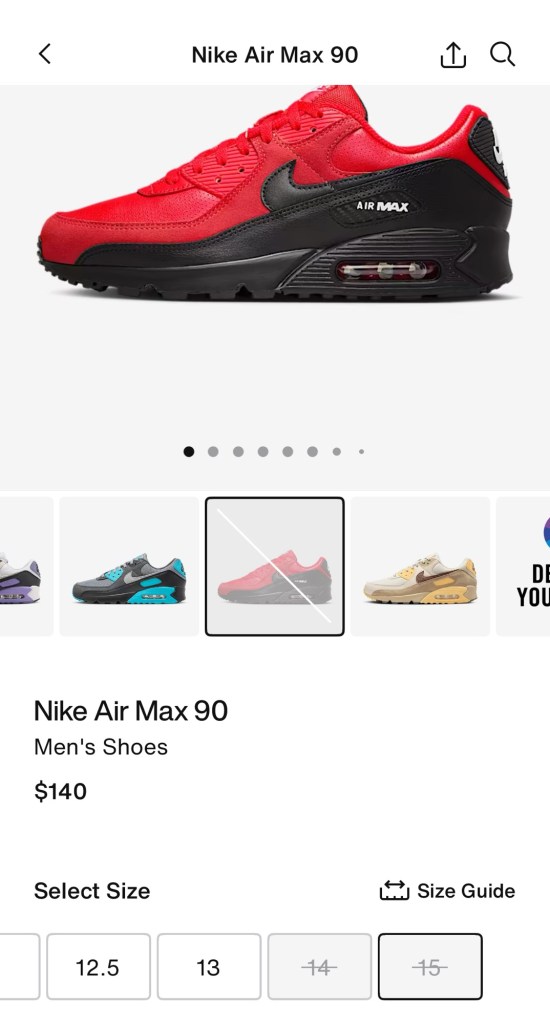
    Let us embark on a peculiar journey—quest, if you will—into the bizarre world of men’s shoes. For this story to be authentic, tis I who is the holder of the size 15.

    Yes, fifteen. A size that sounds less like footwear and more like those small “smart” cars in mid 2000s.

    I invite you, dear reader, to wander—into the labyrinth of online sneaker retailers: Nike, Adidas, New Balance, or whatever new age brand that was forged in the fires of Mount Hype last week. Choose your favorite Jordan, perhaps an Air Max 90 with a color scheme with just the right color palate it screams “you can’t get these!” and here in the sea of exclusivity: size 15? Sold out. Gone. Vanished like your motivation after eating a pack of ultimate stuffed Oreos.

    You might think, “Surely, this foot size would guarantee an overstock!” But no. It turns out that size 15 is a cruel paradox—rare enough to be inconvenient, yet common enough to be competitive. It’s like trying to find a left-handed coffee mug at a right-handed convention. They exist, but there are many people looking for the few that are around.

    Now, you may wonder, “Why on Earth should I care about this man’s odyssey?” Because (enter Forrest Gump accent): life is like a pair of shoes, my friend.

    Let me explain.

    Scarcity breeds value. Exclusivity inflates desirability. That same Jordan in a size 6? Might be on clearance next Tuesday. But a size 15? Full price and sold out in a minute. Maybe even resold for double. People camp out, not for warmth or camaraderie, but to clutch that elusive grail of rubber and laces. And suddenly—bam!—it’s not just a shoe, it’s a statement. A status symbol. A “flex.”

    This, friend, (we are friends now btw) … “Hello friend….Brother (Hulk Hogan voice) anyway…this “exclusivity” is what the sneaker world calls hype. And what we, in the world of hyper-fixation and compulsion might call… a trap.

    Because sometimes, what we want most isn’t actually what we want—it’s just what everyone else seems to want. Context is everything. That prized possession in one mindset? Utter trash in another. Like a prom tux at a Midwest wedding (jeans or cargo shorts only please) or a fork at a hotdog-serving venu—out of place, unnecessary, even ridiculous.

    So what if, just consider here, the thing you’re so obsessed with—the job, the relationship, the approval, the Yeezys—is only precious because of the mental lens you’re wearing right now? And what if, instead of focusing on doing less of the “bad” things, you simply added more of the good stuff—friends, purpose, vulnerability, laughter, a damn shrug the shoulders every once in awhile in the midst of stress 🤷🏻‍♀️🤷‍♀️?

    Maybe then, the cycle breaks on its own. Not through deprivation. But through distraction… by something better.

    Maybe your success isn’t about what “not to do,” but what to do.

    So next time size 15 is sold out, maybe take it as a reminder to think of me, or better the message (yes, the message): you don’t need that shoe. You need a new lens. And maybe take some time off and let little interferences go by saying “wow, look at those trees…just a blowing in the wind. How powerful those branches are to hold up to that.” Though we concluded on trees, we started with feet, my feet, and how through obscurity…we can find something useful, if we look for it.
  • Ye: Loss. Brilliance.Faith.Trauma. and Yes-mental health

    Ye: Loss. Brilliance.Faith.Trauma. and Yes-mental health

    Genius, crazy, rich, antisemitic, controversial, chaos, egocentric, attention-seeking-These are all words that swirl around the name Kanye West. They’re also words that, if we’re being honest, have swirled around many of our names too, just without the a Kardashian and seven-part documentaries made about us.

    There’s something strangely egotistic in me to even have the urge I felt to even write this. Whether it’s a futile attempt to educate, or just an exercise in reflection, here I am, offering a few words on a person who seems to provoke something in nearly everyone. Ye makes it’s hard to look away.

    It was earlier this week—Monday and on to Tuesday—when news surfaced again about Ye. Or Kanye. Or Yeezy. You can read the article if you want to know the details. Personally I am still digesting the interview where he’s wearing a black White Supremest hood in a hotel room talking for 58 minutes about why he’s wearing the black hood in the first place. But that’s not really the point of this.

    What is the point?

    Maybe it’s this: despite all the controversy, all the confusion, this man keeps creating. Music. Fashion. Art. Controversy.

    And we keep buying it. After all, he didn’t get to be No.4 on the all time Hip Hop sales list by sucking at his craft. We keep listening. Some of us still remember the first time we heard Jesus Walks. For me, it was right after basic training in the summer of 2004. That song wasn’t just music—it was a a light in an otherwise dark era of music. Literally a light too, making one of his first singles be about Jesus, very light-bearing.

    But being good at a craft and rich doesn’t erase trauma. Creativity doesn’t cancel out pain. Nor does fame justify erratic behavior. But what happens when you start connecting the dots?

    What happens when we hear that childhood trauma shaped much of this man’s life—long before he had a platform to express it?

    What does that do to a boy, growing up and figuring out what it means to be a man?

    Kanye shared that he found magazines in his mom’s closet—magazines that shaped his understanding of sex, identity, and self-worth in ways that were far beyond his years. And long before the headlines, there was that little boy trying to make sense of what he saw, of all that he experienced.

    We all have experiences that shaped us, for better or worse. And here’s the kicker, we didn’t get to chose those experiences or decide how they affect us.

    So when we rush to label, to cancel, to condemn—what are we really doing? Are we holding someone accountable? Or are we just distancing ourselves from the parts of him that remind us of the parts we try to hide in ourselves?

    After all, isn’t pornography the bane of a young man’s existence these days? Are the adults now, failing to admit to themselves their own shaping of sex, relationships, what it means to be a man?

    Empathy is the bridge to forgiveness.
    Not because forgiveness means agreement. But because empathy allows us to see someone as someone—not as a headline, not as a cautionary tale, but as a human being formed by the sum total of his experiences.

    If you zoom in on Kanye West, you can isolate any number of choices, some of which are difficult to defend. But if someone zoomed in on your worst moment—your ugliest thought—what would they find?

    This isn’t a defense of bad behavior. It’s a reflection on how quick we are to misjudge when we don’t know the whole story.

    In C.S. Lewis’s The Great Divorce there is a man Len, a spirit who was a murderer in life, but now reconciled with God and is in Heaven. Another man, the Big Ghost believes he is a “good man” despite evidence that he was not. the Big Ghost character would be that of a man today, maybe you who demand’s recognition for being good, for doing right. Meanwhile that man, the character Big Ghost fails to repent and rejects heaven in the process. Yes, the murder remained in Heaven.

    Christ flipped the typical human narrative of what appears to be good may not be, and what appears to be distant or far from God may be the closest. Like Mr. West who has many faults, we too can choose to be the Big Ghost and cling to our own “goodness” and fail to relate to someone who is easy to categorize as a “bad” one.

    No person is defined by a single act—good or bad. If we believe otherwise, then we’re condemning ourselves every time we fail. We’re erasing nuance, context, and the messy truth that people are often doing the best they can with what they’ve got.

    To live with grace is to recognize that. It’s to understand that every decision is filtered through a complex web of history, beliefs, trauma, and identity. It’s not about excusing—but about seeing.

    And maybe that’s what Kanye, in all his chaotic truth, mirrors back to us. Maybe that’s why his story unnerves us. Because in his rawness, we’re forced to look at our own contradictions. Our own judgments. Our own worst parts. And if we’re honest, maybe they’re not as far from his as we’d like to believe.

    So the next time you’re tempted to judge—pause. Ask yourself this-is this about what they did, or what it stirred in me? Is this really about them—or is it about my own discomfort?

    Because the truth is, we all carry things that others wouldn’t understand. And we all hope—deep down—for grace when we least deserve it.

  • Care? Or think you SHOULD care?

    So, I was watching the news the other day—like a responsible adult who pretends they’ve got a handle on the world—and in true chaotic fashion, a political clip flashed across the screen. You know the kind: stern faces, firm declarations.

    My brain lights up: “this matters a lot!”

    Is this good?

    Is this bad?

    Is it secretly both?

    Is the media spinning it? Am I being spun? Who really is informed?

    And just like that, I was off—launched into a 25-minute internal monologue that involved four hypothetical scenarios, five imaginary conversations, and me mentally arguing with some “representative” I’m not even sure what they do.

    But let’s skip the 600-word descent into that madness and cut to the punchline:

    I didn’t really care.

    I thought I cared.

    I believed I should care.

    But deep down, beneath the mental gymnastics and obligatory sighs of concern… I didn’t.

    Not really.

    And you know how I knew that? It became extremely boring to try to care. I cared more about caring than the topic I was SUPPOSED to care about.

    Now before you report me to your local “Citizen Who Should Care” hotline, let me clarify.

    I do care. I care about people.

    I just didn’t care about whatever thing was being discussed by angry man in a suit.

    There’s a difference. A big one, actually.

    When you truly care about something, it moves you—it compels you to act, to reflect, to engage.

    When you think you should care, it’s usually because someone else told you it’s important. Or because X did. Or because the anchor on the news got Very Serious™ with his voice.

    So there I sat, mildly stressed, semi-guilty, sipping coffee and wondering why I was so mentally invested in something I had no intention of doing anything about.

    And then it hit me: I was borrowing someone else’s care. Like a care-on-loan program and I have a horrible emotional credit score. The cost of the interest would floor me if I took that on.

    But here’s the strange and glorious twist: admitting I didn’t care, it gave me peace to be that honest.

    Because what I do care about is how people respond to news like that. My heart isn’t in the headlines—it’s with the person who’s afraid because of them, who’s confused, or angry, or overwhelmed.

    Even when I don’t agree with people’s perspective it’s nice to hear their conviction and walk alongside them.

    So instead of funneling all my energy into a political opinion I didn’t even want, I redirected it to empathy.

    And now, the real punchline—maybe the only part you need to hear:

    You only have so much energy every day.

    Which means it’s a precious resource. Like toilet paper during a panic (or eggs these days).

    So ask yourself:

    Do I actually care?

    Or do I just think I should?

    Practicing that tiny bit of honesty can save you hours of mental spiraling (refer back to my loan and interest metaphors, I was proud of that one).

    Because maybe you don’t care about that thing.

    But there is something else you care about a lot. And living in alignment with that thing makes you rational, grounded, and a lot less likely to throw your remote at the news.

    So go ahead—care less, on purpose.

    And care where it matters.

    Thank you for attending my TED Talk slash coffee-fueled ramble.

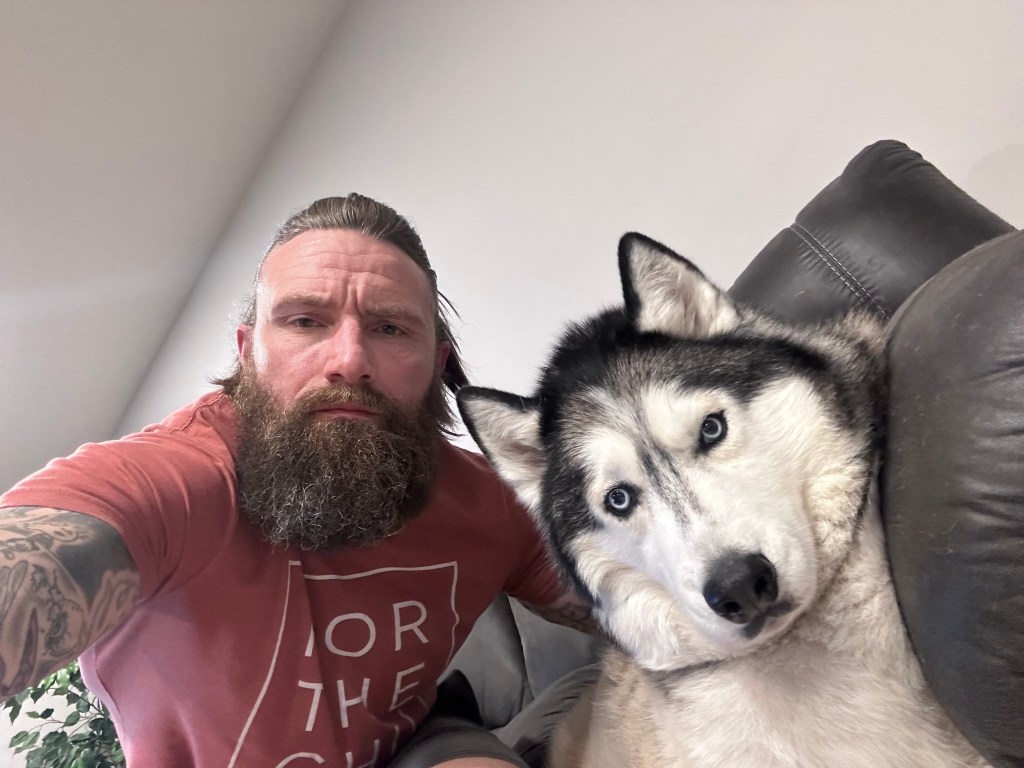
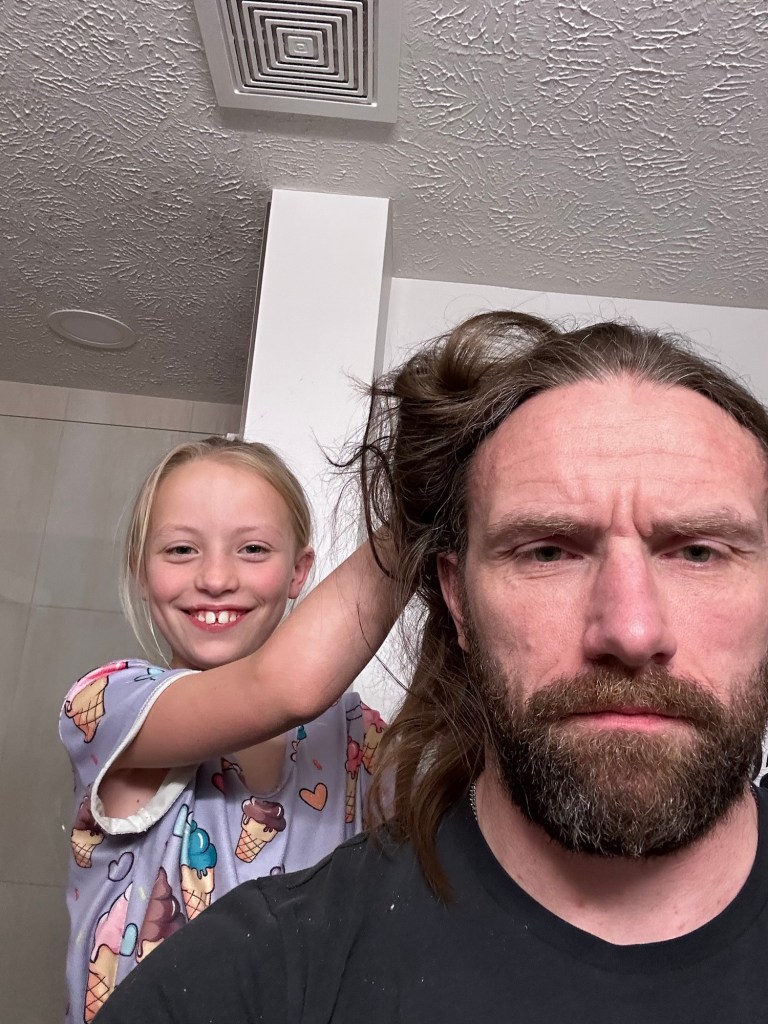
    A pic of me doing anything other than watching the news…..maybe she’ll braid it.
  • 4:58 AM

    4:58 AM

    4:58 AM, Driving, and the Revelation
    Why driving to the gym turned into a full-blown spiritual awakening (with carbs).

    It’s 4:58 AM. Driving to the gym. Enough pre-workout in my stomach and english muffin in my gut to fuel a baby elephant.

    Then—right there between two changing lights, accelerating and then decelerating because someone decided to time the lights that way—I have a thought:
    “Why do I seek attention from people when I’m actually pretty content being alone?”

    Going to the gym always gives me anxiety because I become painfully aware mid-squat there are other people in here, am I doing this workout good enough?

    Ah yes, an all-too familiar beginning of every great mental spiral.

    For a fleeting, smug second, I think I’ve achieved enlightenment. I’ve transcended the need for external validation. Why Am I going to the gym, I am in no need of “bettering” myself. I am a lone wolf, a peaceful monk in small shorts, the Dalai Lama of the road right now.

    But then the second punch of a one-two combo… floors me.

    What if I don’t seek attention because I’m “over it”—what if I avoid it because I’m afraid of rejection?
    What if I’ve just become a professional emotional gymnast, doing quiet backflips to stay liked, relevant, and never, ever left out?

    Wait, is that what I am doing here, right now?

    Cue: Deep thoughts. Mirror glances. Internal debates that sound like two Jr. high kids trying to get an A in speech class.

    “Well you just want people’s attention”

    “Nu-uh”

    “Uh huh”

    It’s all in the Dough.

    There’s cheap bread—$1.78 white fluff. It’s fast. It’s easy. It tastes great for six seconds.
    Then there’s the $6 sprouted grain, sourdough, rustic spiritual metaphor bread. Hard to chew. Takes time. Might change your life.

    The actions might look the same—going to the gym, being nice, dressing up—but why do I do these things? Am I living from a place of wholeness? Or just baking my self-worth in other people’s approval ovens?

    And the, because it was Good Friday, Jesus shows up in the metaphorical bakery:
    “The world will hate you because of me.”

    Brain, please. It is not even 5 AM.

    But also… you got me there. You can’t follow Christ and be everyone’s favorite. Not forever. Eventually, the values split. The applause fades. The unsubscribe buttons get pressed.

    And that’s where rejection becomes not a curse, but a reminder. It reveals where we anchor our worth. Are we in the world instead of eternity?

    So now, foot on the accelerator, I realize:

    • It’s not about if rejection happens.
    • It’s about when it does—who am I really living for?

    Conclusion:
    If I’m going to be misunderstood, misread, or mildly unpopular, let it be because I chose truth over trend. My soul over spotlight. Jesus over clout.

    And if it takes a few extra seconds stopping at every traffic light between my house and the YMCA and a loaf of overpriced bread to remind me of that?

    Worth it.


    Liked this?
    ✨ Share it with someone who needs a holy wake-up on their morning commute.
    💬 Drop a comment: What’s your $1.78 bread these days?
    🍞 Choose the good bread. Spiritually and literally.

  • The Chalk Line

    The Chalk Line

    Elliot, a tall, slender man wearing a large untucked shirt splattered with various mediums of materials sat hunched over his canvas. In his shirt pocket, the box of cigarettes rests on the chest going in and out, deep breaths. His fingers smudged with oil paints digs into the pack, fumbling in the box spreading a dark oil over the bright white filters ends.

    His art never seemed to land quite right.

    The air in his studio was thick with turpentine and frustration.

    Dozens of unfinished paintings leaned against the walls, each abandoned just shy of completion, their potential strangled by his relentless pursuit of perfection. He had spent weeks, months—sometimes even years—on a single piece, only to despise it in the end. Like his cigarettes, the weight of expectation pressed against his chest, also like the smokes, a suffocating reminder that his art no longer felt like creation but a battleground between ambition and failure.

    One afternoon, weary from the endless cycle of doubt and revision, Elliot stepped outside for air. The city bustled around him, indifferent to his turmoil. His feet moved without direction until he found himself at the park, where laughter and life carried through the crisp autumn air. There, just off the pathway, a child crouched, a piece of chalk clenched in his tiny fist, his face scrunched in concentration.

    Elliot watched as the boy’s hand glided across the pavement, sweeping blues and yellows into the gray stone with an ease that seemed almost careless. A streak of orange, a swirl of pink—no hesitation, no erasures, just movement. The boy paused, squinting at his creation. For a moment, Elliot thought he recognized that familiar doubt, that paralysis of knowing something could be better. But then, just as quickly, the boy dropped the chalk and sprang to his feet.

    Without a second glance at his work, he bolted across the park, following the unmistakable chime of an ice cream truck. Elliot stood there, stunned. He waited, half-expecting the boy to return, to kneel back down and tweak a line or blend a color more carefully. Minutes passed. The chalk rested where it had fallen, abandoned like the artwork itself.

    Curiosity got the best of him. He turned his gaze from the unfinished drawing and scanned the park, spotting the child sitting cross-legged on a bench, an ice cream cone clutched in his sticky fingers, laughing with a group of friends. Elliot hesitated for only a moment before approaching.

    Kneeling, he extended the chalk towards the boy. “Do you want to finish your drawing?”

    The child barely glanced up, licking a drip of melting vanilla from his hand. “It’s done.”

    Elliot blinked. He turned his head slightly, looking back at the pavement where the colors sprawled in wild, unapologetic shapes. He had expected an explanation—some reason, some justification. Instead, there was only certainty.

    It’s done.

    Those two words landed heavier than all the years of critiques, rejections, and self-imposed expectations. He had spent his whole life trying to make something perfect, something worth admiring, yet here was a child who created simply for the joy of it. And then, when the joy was over, he let it go.

    For the first time in years, Elliot felt something shift inside him. A loosening. A breath of relief.

    A week later, he started working part-time at a coffee shop. Not because he wanted to quit art, but because he wanted to make art without forcing it to pay his rent. He wanted to create without the suffocating fear of failure. And so he did. Some paintings he finished in a day. Others he never finished at all. And for the first time in his life, he was okay with that.

    Because sometimes, you don’t need to perfect something to make it worth creating. Sometimes, it’s done when you decide it is.

  • Oppression

    Oppression

    Words matter. When we qualify something as a word, you encompass the topic, concept, idea, into that word. Word’s have a meaning, but history shows us that this meaning or intention can change. A word like “oppression” is one of those words, much like “discrimination” or dare I say it, “slavery.” They are all concepts that even just reading can invoke some emotion.

    I chose oppression to write about because it’s a word I am hearing used more these days. People in America are being “oppressed” by a tyrant. People are being held back or somehow blocked from what they want. Which, at a relatable level, sucks to experience.

    What does oppression mean? “Prolonged, cruel or unjust treatment or control.”

    To experience any level of cruelty what does that do to a person? Break them? Make them angry and resistant to any sort of change? Does it make you scared, hopeless, depressed? Does the entire environment or anyone who seemingly doesn’t agree with you wholeheartedly become an adversary?

    Now, nobody can deny any other person’s experience. So, I don’t deny people feeling oppressed in their daily life either under this current presidency or any other time in life. I don’t deny that it can be debilitating to feel threatened, to feel that around the corner there are choices being made that will have an effect on you, your family, possible future generations.

    My question is, how do those who feel oppressed, but wanted change before, know if what is being done isn’t for a larger good later? Therefore, the “greater good” later may require a sacrifice now. How do we know that all of this won’t lead to something good, later? Is it because we feel the person or persons making the decisions aren’t trustworthy?

    According to historical accounts of the German SS troops in WWII in the book, Ordinary Men: Reserve Police Battalion 101 and the Final Solution in Poland, the choice to be a part of something or not, is still up to each individual. These men’s journal accounts depicted the failure to act according to what they believed to be good, in support of the Jews. Instead they slowly fell into heinous mass murder.

    If you want some peace, try an exercise: When you experience a narrative of something, write two or three alternative perspectives. Force yourself to see what potential good could come from the current narrative you are experiencing. Work at being someone who is willing to challenge their notions, if only to better understand, there is an alternative perspective to everything.

    Triggered responses occur when we experience something that is painful or threatening in some way, setting the body into a fight or flight. When a threat to you or your wellbeing occurs, of course you are going to get amped up, of course you are going to have thoughts influenced by the biological response of fight, or flight.

    For the fighters out there, is what you are choosing to fight for, real and worth the potential sacrifice you might accrue as a result of an emotional choice in response to a “threat?” For the keyboard warriors out there typing some pretty damaging rants about how angry they are, how wronged or oppressed they are, what is it specifically you are responding to?

    These are real questions by the way. Not challenges. Curiosity kills, I am familiar with burning my own hand to see if the pan is hot. I want to touch on this topic of oppression because people are hurting, but some of the reason for hurt isn’t because of things going on, but the overconsumption of media and fear being promoted as a result. Threat of harm to anything you care about, leads to a justified fear response.

    Our minds work too quick for us, and questions can help us slow down a bit and investigate things more thoroughly. What happens when people slow down to realize what exactly they are feeling and ask “what can I do about this, what can I control?” What happens when we live as people trying to do good instead of identifying as oppressed or wronged leading to our inability to care for others?

    If you are drowning in the water you aren’t going to look out at the side of the pool and care for some kid who dropped his ice cream cone. When fearful you can waste all of your productive energy to yell out into the abyss to be heard. Online is like that, a large abyss, a seemingly large stage, but very little impact, if not just white noise.

    Dave Chappelle did this skit about 9/11. In the skit he references the old MTV music video show TRL. In the skit he talked about the twin towers and how when they fell, TRL host Carson Daly gets on a call with the rapper Ja Rule (who was incredibly popular at the time). Chappell references the idiocracy of getting Ja Rules opinion on the twin towers falling.

    “What would Ja do?” Chappell screams from the stage indicating that when he finds himself in trouble and unsure of what to do, he is now going to reference Ja Rule and what his thoughts are on matters.

    When in a heightened state, nobody should probably hear what you have to say. If you feel oppressed because of the information you are taking in and you feel justified in your angry response and you choose to share that, what is that going to do for other people? In your own way, you too could be the oppressor or at least reveal that you have the potential to oppose others as well.

    If you think the president is mad and hatred fills his bones, then do you hate back? If you want opposition to hate or it’s actually going to require you to love and be open to others. Yes, political parties, that even means to each other. You want to overturn the shift in the country, then love on each other more

    If you say that is how people are submissive and fail to make change? I disagree. I think doing good for others in our daily life does change things radically.

    Imagine you walk down the street and see 12 smiling faces, do you not think there would be some subtle shift in perspective of the world? If you are looking at yelling faces all day or yelling yourself, then yeah, you probably do feel the world is out to get you.

    Also, do we not think that every other government that fell before America did not have the people rebel or disagree along the way? Even with all of that anger as a result of oppression all the other nations fell. But I want to read about a nation that worked at loving each other and see how they did. Did nobody watch the Grinch and see the Who’s come together even after all of their stuff was taken?

    Sadly its human nature to rise to power, turn corrupt, and then the people fall into a faithless, fear state and then the whole thing collapses. How about in the face of oppression we choose to love and share words of uplifting comments and give more, rather than telling random people how angry or threatened you are.

    I don’t know, maybe there’s something I am missing. After all, I am supposed to be the Christian, white, heterosexual, cis-male with tall stature and medium-level income that is told doesn’t get it. So, fair enough, but the question of what you CAN do in the face of oppression and how is it going to serve the good of others still stands.

  • Diddy=Nothing New.

    Diddy=Nothing New.

    It was 2000, maybe 1999; unfortunately, any other year off of something wouldn’t matter, but this was Y2K we were talking about.

    1999 (things are OK) 2000 (things implode).

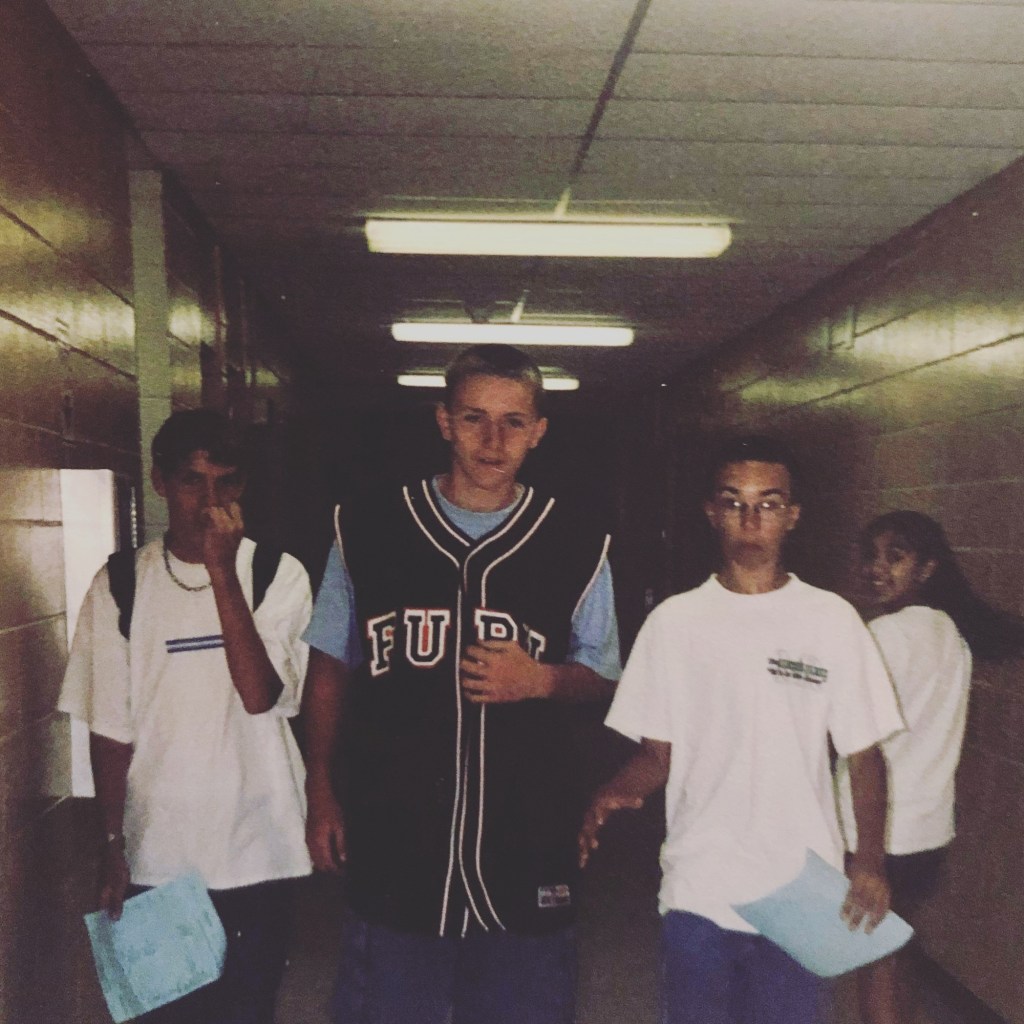
    So, it was February of 2000 and I was with my friend in his 1989 Buick. I just turned 15. The snowy landscape was visible for miles in our small Midwest farming town. My friend had his drivers license, I was too young to drive. Needless to say, I was very happy to ride shotgun on the plush seats.

    My friend puts on a song. My ears start to tingle.

    My songs bump in Houston like Scarface produced ’em
    You ain’t gotta like me, you just mad
    ‘Cause I tell it how it is, and you tell it how it might be…

    “Who is this?” I ask.

    “Puff Daddy” My friend says condescendingly.

    See, I didn’t listen to very much cool music growing up.

    I bought my first album in elementary school. Friends (Original soundtrack). I didn’t have a clue what to listen to back then and this weird mix of coffee house and alternative rock songs was not highly talked about in school.

    When I looked further into this”Puff Daddy” guy, I became enamored with the sunglasses, the cool videos, and the red leather pants. Now, for context, in 2000 ,”looked further” meant that I opened the little folded paper inside the CD case. I gleaned whatever I could from the various TV show appearances, Making the Band, talk shows, MTV interviews, and even picked up albums from anyone on Diddy’s Bad Boy Records. (See, Black Rob, Notorious B.I.G., Craig Mack, Faith Evans, The Lox).

    Sean Combs aka Puffy, aka Puff Daddy aka P. Diddy aka Diddy wasn’t that good of a lyricist. The albums weren’t the best. But it was his persona that stuck with me.

    Skipping to September, 2024. Sean “puffy” Combs gets arrested on charges related to using his empire to control women and sexually abuse them. The charges also include racketeering and sex trafficking. Along with these charges other allegations involved forced sexual acts with minors, sex parties known as “freak-offs” lasting up to 48 hours, and associations with sexual abuse of minors.

    It doesn’t stop there; other stories outside of the main charges started popping up. For instance, baby oil bottles filled with GHB used to manipulate people into sexual acts. Reports of various recordings from the 250 cameras inside the Diddy house. Also, various accusations implicating celebrities including some of the most famous people in Hollywood and professional sports.

    Mind blown right? Give a human being all the money, power, and influence they could want and It turns out some people use it to indulge their sickest desires.

    “Well, I would never….” A thought many people have.

    But the truth is, let’s say tomorrow you woke up and had all the money and notoriety as some of today’s modern celebrities. On top of that, you were surrounded by people who were normalizing the fulfillment of their deepest desires. Don’t you think there would be decisions made that you wouldn’t have agreed to before?

    Most people are not that good. They are scared. Scared to get caught and judged. But as society continues to deteriorate, it moves away from any sense of morality. As a result, normalization of deviant acts continue to increase.

    From where I stand human beings are not living as intended, as God-centered as we were made to be. If we replace the source of authority with our feelings, we become delusional. Further, as truth seems relative and holding people accountable is viewed as unfair, we lack checks and balances. Further tolerance leads to acceptance and eventually into participation.

    As history has taught us, societies rise and fall, America is not so special to avoid such things. We have to take in to account that an increasingly immoral and corrupt society will continue to breed an acceptance for further deviated behaviors.

    Diddy isn’t anything new. Nothing other than a celebrity who bought in to the idea that he was something special. We’ve all been in a position to assert some sort of power for our benefit. His power was vast and his “benefit” was to harm others. Our power might be used to slander or steal (as a former Napster user, guilty).

    We are all capable of atrocities. Any one of us has the potential to think that we are special, that the rules do not or should not apply. We think we don’t need authority, that we don’t need God. In fact, to a self-centered person, God is an interference on the presumed “good” they want to do.

    Self-indulgence runs rampant throughout the history of mankind. From Cain who killed his brother Abel, to kings and royalty, and tyrants throughout history. The more we look at the past, the more we see the same thing today.

    Modern celebrities are no different with the way they are viewed as deities among mere mortals. If you think you are different, or “you would never” you’ve got a whole history of other “good” humans who did some atrocious things who said the same thing.

    Just be honest with yourself. Judging separates you from relating to others. When you get disgusted, ask what inside of you it is that disgusts you. When you see Diddy or any other celebrity engaging in behaviors that you judge, just remember that you have done some things in your life you aren’t so proud of but justified at the time. Be willing to identify areas for self-improvement. Pray for guidance to recognize the shortcomings in your life that need addressing.

    All day…err day.
  • This Will Solve Everything!

    This Will Solve Everything!

    Glad you’re here. Glad you decided to do this for yourself. I find that people willing to take the helping hand and in turn, humble themselves, do better in life than those who don’t.

    What is “better?” Well, it’s better than…

    Better than…being prideful, greedy, selfish, masking, denial, prideful.

    Humility in asking for help is better than all the rest of the “successful” traits.

    Humility is simply better than pride and tastes so much sweeter when experienced than does, arrogance or stupidity.

    Yes, to be humble is to be wise. Humility shows you that you can benefit from anyone at anytime, so it’s good to listen.

    What solves your problem then isn’t the solution, but the next problem.

    You want to lose weight, so you starve yourself. Thirty-five pounds later your problem is solved right? You wanted to lose weight right? You should be content now.

    But wait, your life is now more miserable than it was before. Why, well, you now have something to lose, or in this case, gain. You could gain the weight back and be the piece of crap you were before.

    You can’t go back there. You have to keep the weight off, if not lose more.

    You reinforce the belief that only certain versions of yourself are good enough to be admired, the weight-loss part, the thinner legs and slightly flatter stomach. You have to depend on the weight loss to make you happy because it cost you so much.

    But you still aren’t happy.

    So you get fat again and say “I accept me for me.” But now you are the model of yourself you so harshly judged when you were thinner, when you “had it all together.”

    Your willpower was used to get you something you thought you wanted. But you were lied to. Your solution to your identified problem is now your new problem and so on and so forth.

    Humble yourself and allow yourself to see moment to moment what you live for, and be really honest about it.

    You wanted to be sexy, wanted to be wanted, looked at, coveted. Maybe you nobilize that you wanted to feel better, and that might be true. But honestly, what is your problem, other than the fact that you are living for things you think you should live for. You assess yourself based on a measuring stick that was formed from your environment.

    Your pride says you know what to do. Your god-like self says that you alone came up with the solution. Your worst and most destructive parts have led you to a false sense of control that is actually a jail cell.

    I promised you this post would solve your problems. SO here it goes. It’s not the problem your mind tells you is a problem that needs to be solved. You don’t need to lose weight. You don’t need to be better. You need to identify the underlying repetitive narrative that tells you the same thing-feeding you what the problem is. You need to see your brain and body for what they are and stop trying to solve and fix. The resolve here is to sit and wait.

    Yes, patience and quiet.

    You create more problems by doing too much. Life isn’t measured in how much work you do. Life is given to us to be experienced and to do so with a mind focused on the highest things.

    “Whatever you do in word or deed, do it for the Lord, giving thanks through God the Father” Colossians 3:17.

    Serve your highest value in everything and you will discover that your problems are solved because they were never really the problem at all.

  • The Subtle Art of Caring

    The Subtle Art of Caring

    I am fortunate to get to hear stories everyday. Sometimes I wonder how many people wonder if I still care or not?

    I would hope that my presentation is one that demonstrates care, but what if there’s something I am unaware of that comes across as uninterested in the other person?

    But yet, to try to seem like we care isn’t really caring. To actually care requires us to no longer try to depict caring, but to feel what the other person feels.

    But then, how do we find the space for care and compassion for other people around us when we may be struggling ourselves?

    I find that it’s not about our initial thoughts that determine if we care or not, but to care is more about noticing our habitual first thoughts and choosing to act based on what matters the most.

    As humans we are designed to be together in community. I would gamble on the idea that if you dig deep enough, you do care about community. Even if you focus on yourself to be praised by that community. A reason why self-established god status is because you believe it is good for people to praise you, just like you might think it’s good to praise yourself. No god is going to think it’s not good for the people to praise them.

    As a general rule, we desire good for one another. So, although short-sided and misguided, self-promotion can be an attempt to do good.

    But how can we care about people in the right way,?

    1. We were given two ears to hear and one mouth to speak. Yes, all you philosophers out there, people loooooove to get advice, but often listening can show you care so much more.
    2. You can improve your ability to acknowledge the thoughts and then checking the thoughts against what matters to you and then choosing what action aligns with who you want to be.
    3. You want to be good, then do good.

    Good then comes down to thinking if you were that person, what would you want/need in this situation. If you like to talk like I do, then I love it when I get someone to listen to me. I love it when even though the person might not fully get what I am talking about, they can see my passion and because they want me to feel cared for, they care about hearing me talk about my passion.

    These people I like to talk with, nod, acknowledge my ideas, ask questions, even propose an alternative perspective. The best people first try to see what I am saying before they impose their ideas.

    So, thinking about the people I have enjoyed talking to, I work to mimic these people. Because of my own selfish nature, I need models to show me what a listener does to show they care. And no, it’s not being fake to do this, but it’s to live as the person I want to be.

    Now, smiling and nodding along is great, but there is so much more to caring. And this is important:

    Within a healthy relationship, I also like when I am challenged. When questioned with intent to help me see something differently I am grateful for it. I mean, I am initially defensive in my head, but with time and practice I can see how feedback is exactly what I need. So, I also use the relationship and understanding I believe I have with people to share the same challenges or alternative perspective to them. All of this is under the umbrella of caring for people’s good and wellbeing.

    Although the long-term goals of other people may be different than what we want for them, in the short time together we can demonstrate care and compassion by listening. We can improve at removing the expectation that we have to fix or answer everyone.

    Remember, when caring for others, it’s not about you.

    From where I stand, if someone comes to you with a problem, it’s good to listen. After the conversation you might find that the initial “problem” they had wasn’t really the problem. People have a desire to be heard. So, if we do to others as we would like to have done to us, we don’t give advice, correct, or even reprimand (although there is a time and place for all of these things), listen first. Then, through caring and empathetic ears we can ask ourselves what sort of conversations do we like to have and who do we think of when we imagine absolute kindness and caring at it’s best within a conversation.

  • Be Better

    Be Better

    I should be reading my book, but I’m not.

    I shouldn’t have eaten so much peanut butter earlier, but I did.

    I should get more rest, but I don’t.

    I should….

    I’m not doing what I aught to be doing. Not what I want to be doing, I do plenty of that. In fact, some days, that’s all I do. But continuing to do what I want instead of the good things I don’t leads to misery, yet I end up choosing this repeatedly.

    But why? What mechanism in my brain doesn’t allow me to naturally do what I should be doing? Or in positive terms, why don’t I do more good things?

    I want good (or seemingly good) things, but instead I do everything I can to not do those things. I do the things which end up reinforcing the person I don’t want to be. So, why not just do the opposite of what I WANT and finally be the version of me I expect myself to be.

    But my will, my being, it is weak and my dreams lie at the crossroads of hard work and I don’t want to blvd.

    I believe that what is familiar is what the mind will always revert to without mindful intervention. But the question is, just how early in the process does one need to step in consciously to be able to stop the resulting familiar/“bad” behavior?

    Do I need to monitor my bagel in the morning because it could lead to crumbs, which triggers thoughts around mess and therefore stimulate stress which wears me down and causes my resolve to be better to deteriorate and I end up doing what I don’t want to do?

    Or is it earlier than the bagel, it’s at the grocery store when I bought the bagels? Or why do I buy bagels and not something else?

    What about my general thoughts on food anyway? Why don’t I eat more veggies instead of a bagel? Is the bagel an unsavory, familiar behavior from previous failures to do what I should be doing?

    And further back and further back…one quickly realizes that what we think we can control, or will, we can’t.

    So, how do I get to be the person I want to be if I continue to neglect what I should be doing? At this point, beating myself up for not doing something isn’t helping, so there has to be another way, right?

    In his book, Renovation of the Heart, the Philosopher and theologian Dallas Willard wrote about this concept of heart within Scripture.

    Jesus came to humans as God incarnate to first teach. He crossed into the human realm, where we live, in our space and time to present the best information humanity has ever heard. Here’s why our wills are not good enough to do what we need to do:

    Our brains are built to work a certain way that science still cannot fully figure out. However, throughout the Bible and throughout all of human history, man is shown to be fallible, leading to selfishness, corruptness, wars, greed, (spelling and grammatical errors as well) and constant toiling for more than what we need or have. Our hearts, or the main driving force behind why we really do what we do is faulty from the start based on the information and genetics from those who came before us, and those before them. Sin, yes sin altered humanity further from the creator and indulging in the self.

    How did Sin or rather placing our wills in place of God’s affect us so negatively, well, man is finite, God is infinate. You tell me who should be in charge. One who created, loves, and knows us better than we ever will and know the best, ultimate plan for the soul, or us, who at our best is saturated to the core in beliefs and actions that are very short-sighted.

    Descartes was right, “I think therefore I am.” Not just in the sense that because we can think we know we exist, but because how we think about ourself, or what we believe about ourself will then determine every decision thereafter putting us in tough spots or the wrong places regarding where we actually should be.

    If you think you are a loser, then you will make loser decisions. If you think you are the best at everything, nobody will like being around you.

    If man lives alternatively from God’s perfect design resulting in selfishness and self-centered and therefore self-righteousness, then shouldn’t we stop trying to do or be something and instead center ourselves as a creation and then an adopted child in the house of God?

    You see, psychology does a great job of explaining many great thinking concepts, and research reaffirms some things. But psychology without including our relationship to God falls incredibly short and then places too much weight on the person to actively try and change to become this “better person.”

    We believe many things to be good and right, but what if the foundation of our beliefs is faulty? Just what if what you think to be good because it feels good or feels acceptable is really just the same faulty thing over and over again?

    In summary, because this is a blog post and not a thesis, you can’t will your way to being a better person, you can only attempt to do more outward things, which has value, but it doesn’t change the insides, it doesn’t touch the heart of the matter.

    Faith, in the fact that humans, animals, the planet, galaxy, every molecule, atom, and quark are all based on God’s word holding it all together, then places Faith in the words of Christ from whom we can actually learn how to be these “better” people. Not from our will or effort, by the opposite actually, buy willingly giving up our wills to God’s will and practicing the act of submission that the almighty God, the most intelligent, creative, loving, compassionate, understanding being who holds all of life and material together, knows what He is doing.

    Look, if life is this continued cycle of trying and failing, and trying again, then why not just meditate on the possibility that nothing will get better, really, internally, without a willingness to place the compassionate creator as the driving of your heart and what you want.

    “Your will be done, on earth as it is in heaven.” – Matthew 6:10

    God has given us a choice to either keep our heart closed and keep trying to drive our own program or to open that heart from the inside to let Him in to drive it towards where we aught to be.

    “For whoever would save his life will lose it, but whoever loses his life for my sake will find it.”- Matthew 16:25

    From where I stand, even if it’s a minor possibility that what I said here, what Scripture says, and theologians much smarter than me have said is true, then it’s worth the effort to think about.

    This could actually be the change you’re looking for to finally, “be better.”